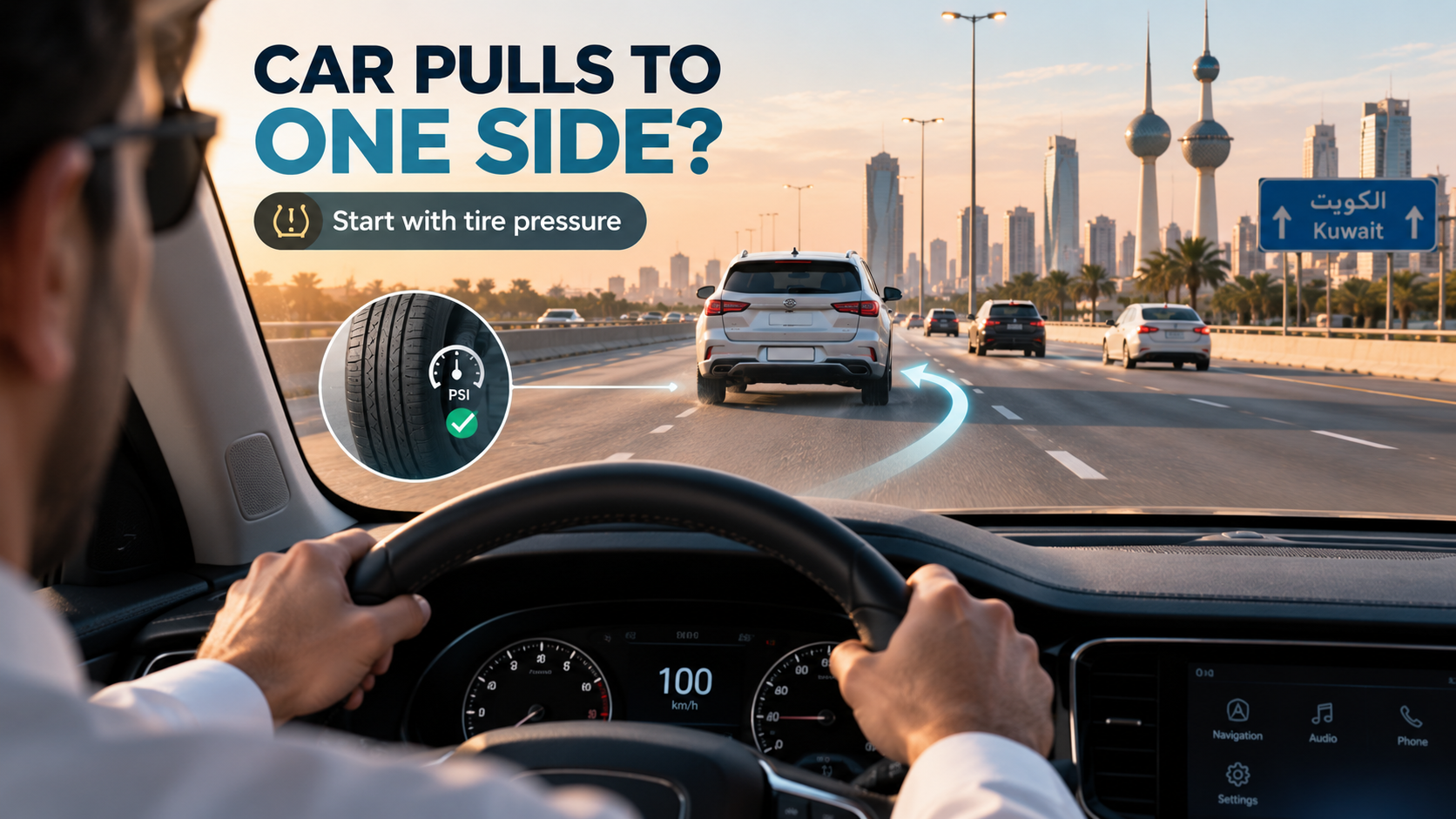
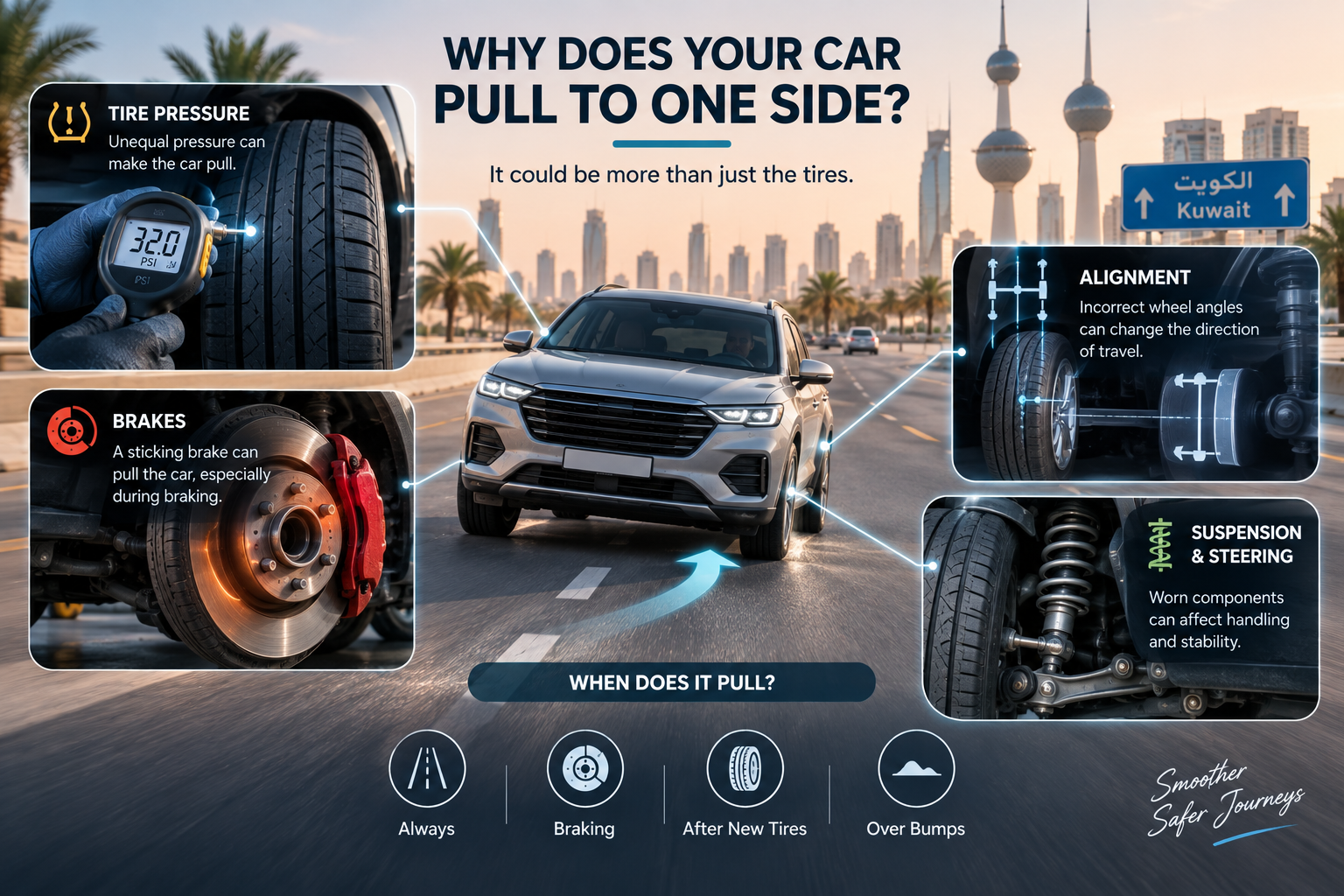
A Car pulls to one side is usually a sign that something is affecting your vehicle’s tires, alignment, steering, suspension, or braking system. Sometimes the cause is as simple as different tire pressures on the left and right sides. In other cases, the problem may come from incorrect wheel alignment, a tire with unusual wear or construction, a sticking brake, or a worn suspension component.
A slight change in direction can be easy to ignore, especially on a straight highway. However, if you constantly need to correct the steering wheel to keep the vehicle moving straight, the issue deserves attention. Driving with a persistent pulling problem can make the car less predictable and may also accelerate tire wear.
The good news is that many causes can be identified through a proper tire and vehicle inspection. Before replacing your tires or paying for unnecessary repairs, it is important to understand what the pulling behavior is telling you.
Start With the Tires
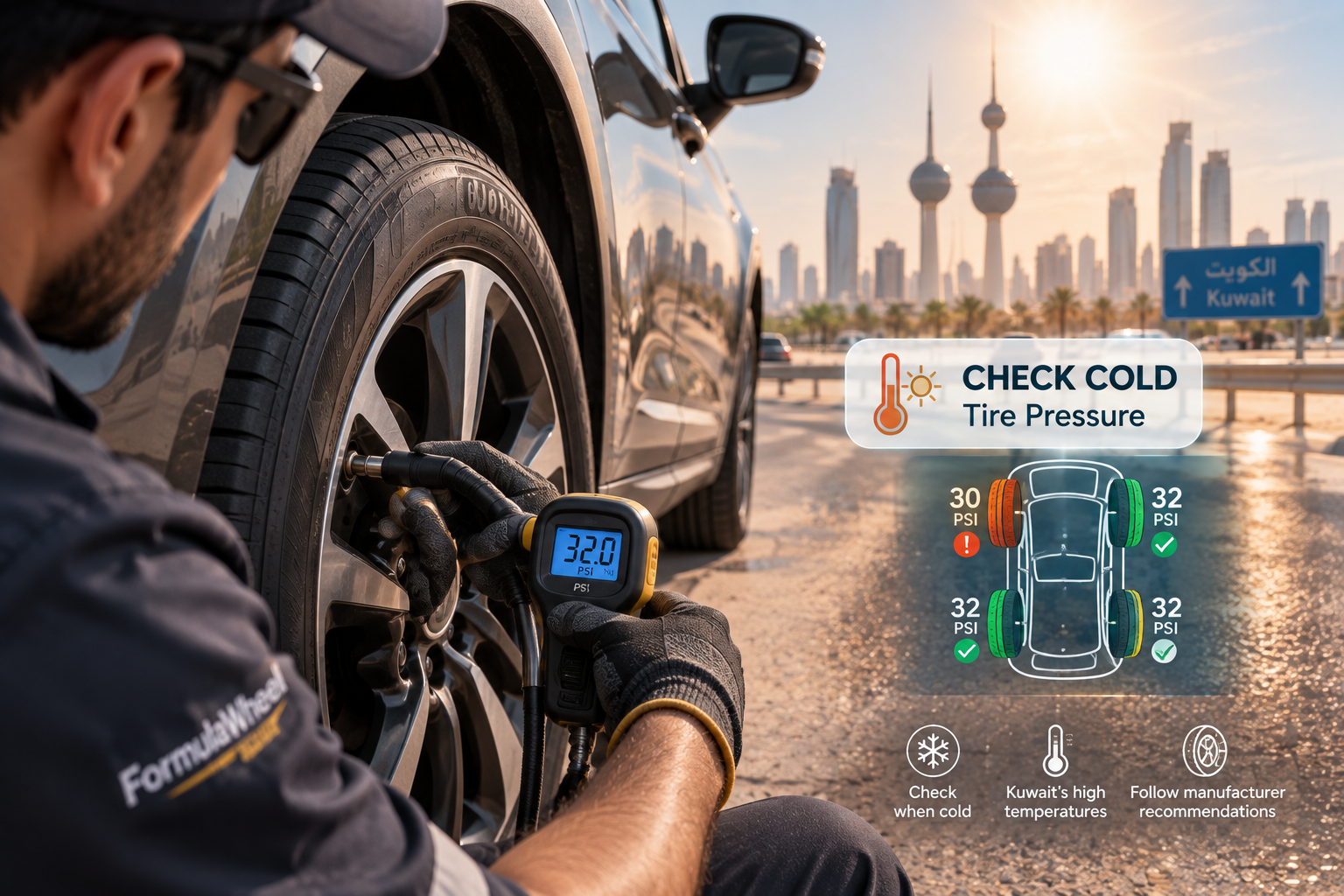
The first thing to check when a vehicle pulls to one side is tire pressure.
If one front tire has noticeably lower pressure than the other, the vehicle may naturally move toward that side. Different pressures can change the shape, contact area, and rolling resistance of the tires.
For example, if the left front tire has significantly lower pressure than the right front tire, the vehicle may tend to pull toward the left.
This is particularly important in Kuwait, where high temperatures can cause tire pressures to fluctuate. Drivers should check tire pressure regularly when the tires are cold and follow the pressure recommended by the vehicle manufacturer rather than relying on the maximum pressure printed on the tire sidewall.
A pressure check is quick, inexpensive, and should be one of the first steps before investigating more complicated causes.
When Alignment Is the Real Problem
Wheel alignment is another common reason for a vehicle that refuses to track straight.
Your vehicle’s wheels are designed to sit at specific angles relative to the road and each other. When those angles move outside the intended specifications, the car may pull left or right.
Alignment can be affected by:
- Hitting potholes
- Contact with curbs
- Road impacts
- Suspension repairs
- Worn steering components
- Incorrect wheel or tire installation
A car with an alignment problem may also show unusual tread wear. You might notice that one edge of a tire is wearing faster than the rest of the tread.
However, alignment problems do not always produce obvious tire wear immediately. If your vehicle consistently drifts in one direction, an alignment inspection can help determine whether the wheel angles are responsible.
The Tire Itself Can Cause Pulling
Not every tire problem is visible.
Some tires can create a pulling sensation because of differences in their internal construction, stiffness, or wear characteristics. This is sometimes described as tire conicity or tire pull.
A tire can appear properly inflated and still influence the direction of the vehicle.
This is one reason simply looking at the tread is not always enough to diagnose a pulling problem. A professional technician can inspect the tires and wheels and determine whether one tire is contributing to the issue.
If the pulling started after installing new tires, the tires, installation, wheel position, and alignment should all be checked before assuming that the vehicle has a mechanical fault.
Don’t Forget the Brakes
A vehicle pulling strongly to one side may sometimes have a braking-related problem.
For example, a sticking brake caliper can create additional resistance on one wheel. The vehicle may pull toward the affected side, particularly during braking, and the wheel may become unusually hot.
Other warning signs can include:
- Burning smells
- Uneven brake pad wear
- The vehicle pulling more when braking
- One wheel becoming significantly hotter than the others
- Reduced braking performance
Brake problems should not be treated as a tire-only issue. If the pulling is particularly noticeable when you press the brake pedal, have the braking system inspected promptly.
Suspension and Steering Can Change Vehicle Direction
Your tires are the only part of the car directly touching the road, but they depend on the steering and suspension systems to maintain the correct position.
Worn suspension or steering components can change how the wheels respond while driving. Damaged bushings, worn ball joints, steering components, or other suspension parts may cause unstable handling and directional changes.
You may notice that the vehicle feels different over bumps or that the steering does not return to its normal position after turning.
In these situations, replacing tires alone will not solve the underlying problem. The vehicle needs a complete inspection to determine whether a mechanical component is affecting wheel position or handling.
Could the Road Be Causing It?
Sometimes the car is not actually malfunctioning.
Road surfaces are not always perfectly flat. Many roads have a slight slope designed to help water drain away. This can make a vehicle naturally drift toward one side of the road.
Wind can also influence a vehicle, particularly at higher speeds or on open highways.
This means you should not immediately assume there is a mechanical problem if the car moves slightly in one direction on a particular road.
A useful test is to observe whether the vehicle pulls consistently on different roads and under similar driving conditions. If the behavior changes significantly depending on the road surface, road slope may be contributing to what you feel.
How to Tell What Is Actually Causing the Pull
Pay attention to when the pulling occurs.
If the car pulls continuously, start with tire pressure and alignment.
If it pulls mainly when braking, investigate the brake system.
If the problem appeared immediately after fitting new tires, check tire installation, tire condition, wheel position, and alignment.
If the steering feels unstable over bumps, suspension or steering components may need inspection.
If the vehicle only drifts on certain roads, road slope or surface conditions may be part of the explanation.
These clues do not replace professional diagnosis, but they can make the inspection much more efficient.
Should You Replace the Tires?
Not necessarily.
If incorrect tire pressure is the problem, adjusting the pressure may resolve the issue. If alignment is responsible, an alignment service may be enough. A mechanical brake or suspension problem requires the appropriate repair.
However, if the tires are worn, damaged, aged, or unsuitable for the vehicle, replacement may be the better solution.
When buying new tires, make sure the replacement matches your vehicle’s required size, load index, and speed rating. Choosing tires based only on price can create compromises in braking, comfort, handling, and durability.
For drivers who spend significant time on Kuwait’s highways, daily city roads, or long-distance routes, selecting a tire designed for the way the vehicle is actually used can make a meaningful difference.
Choose the Right Tires With FormulaWheel
If your vehicle has been pulling to one side and the tires are worn or due for replacement, this is a good opportunity to reassess your tire choice rather than simply installing another set of the same type.
At FormulaWheel, you can explore tire options for different vehicles and driving requirements, making it easier to choose a suitable replacement for your car.
The right tire should provide the combination of handling, braking, comfort, durability, and heat resistance that matches your driving conditions. Once the tires are installed, correct inflation and proper alignment are equally important for getting the best performance from them.
If your current tires are damaged or worn and you are ready for a replacement, FormulaWheel is a convenient place to start comparing your options and finding tires suited to your vehicle.

Final Thoughts
A vehicle that pulls to one side should not automatically be blamed on the tires. Tire pressure, wheel alignment, tire characteristics, brakes, suspension, steering components, road slope, and driving conditions can all influence how a car tracks on the road.
Start with the simple checks, especially tire pressure, and pay attention to when and how strongly the vehicle pulls. If the behavior continues, a professional inspection can identify whether the problem is related to the tires or another part of the vehicle.
And when your tires genuinely need replacing, choosing the right tire for your car and driving conditions is just as important as making sure it is correctly installed and maintained.
FAQ
Why does my car pull to one side while driving?
Common causes include unequal tire pressure, wheel alignment problems, tire defects or wear, brake issues, and suspension or steering problems. Road slope and strong wind can also create a temporary pulling sensation.
Can low tire pressure make a car pull?
Yes. A significant pressure difference between tires, especially on the front axle, can cause the vehicle to pull toward the tire with lower pressure.
Does wheel alignment affect tire pulling?
Yes. Incorrect wheel alignment can change the direction in which the vehicle naturally travels and may also cause uneven or premature tire wear.
Why does my car pull after getting new tires?
Possible causes include tire pressure differences, tire position, tire characteristics, incorrect installation, or an existing alignment problem. The vehicle should be inspected before assuming the new tires are defective.
Should I replace my tires if my car pulls to one side?
Not always. The cause may be pressure, alignment, brakes, suspension, or another mechanical issue. If the tires are worn or damaged, however, replacement may be necessary.
Is it dangerous to drive a car that pulls to one side?
A persistent or strong pulling problem can affect vehicle control and braking behavior. It is best to have the cause inspected rather than continuing to drive with the problem unresolved.