
Uneven Tire Wear is more than a cosmetic problem. The way a tire’s tread is wearing can provide valuable clues about what is happening between the tire, wheel, suspension, and road.
A tire that is wearing heavily on one edge, losing tread across the center, or developing a scalloped pattern may be showing the effects of incorrect pressure, poor wheel alignment, worn suspension components, or an unsuitable driving setup.
The good news is that identifying the pattern early can sometimes prevent further damage and extend the life of the remaining tread. The bad news? If you simply replace the tire without fixing the reason it wore unevenly, the new set can develop the same problem.
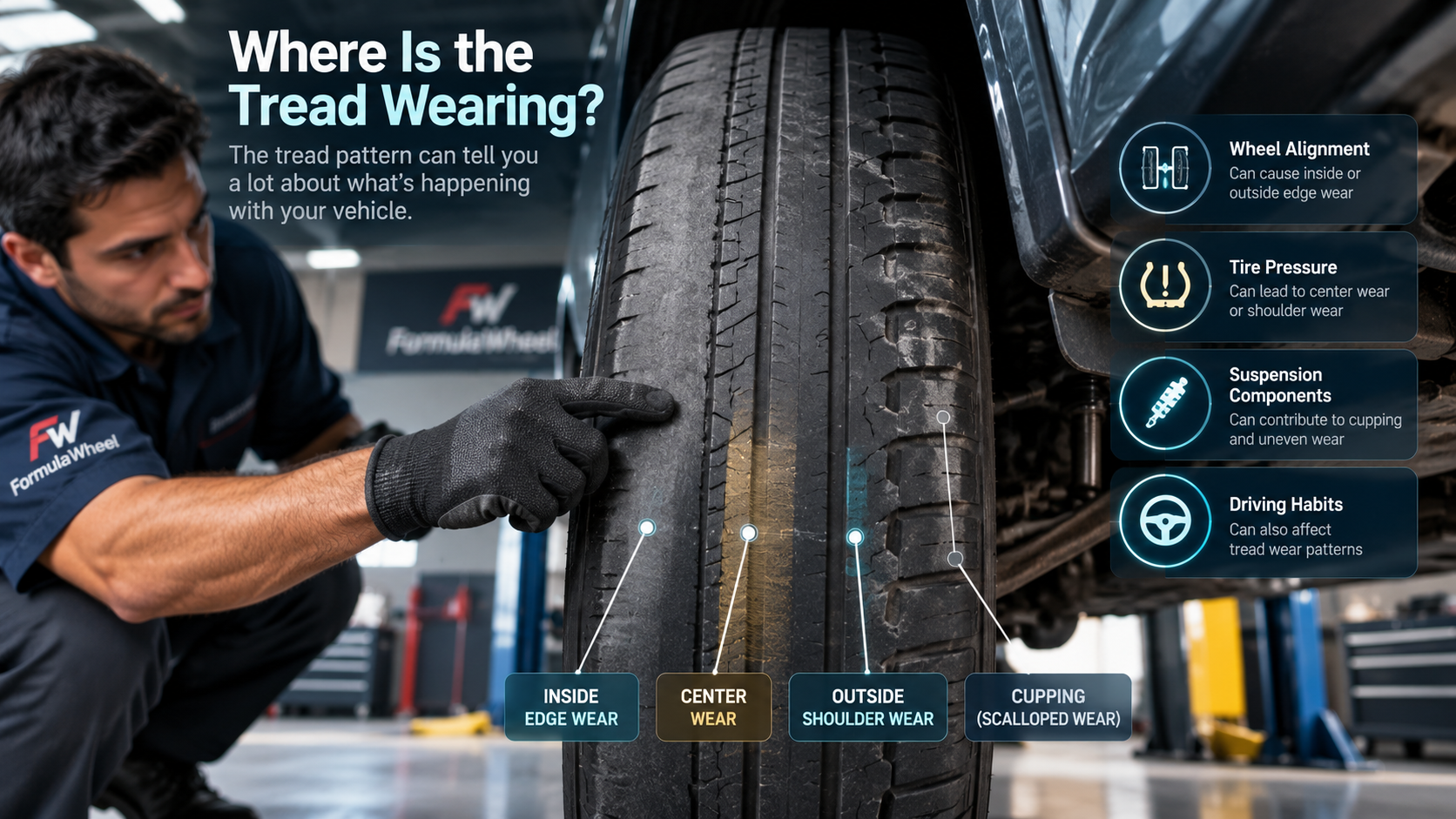
Start by Looking at the Tread Pattern
Before buying replacement tires, take a close look at how the tread is disappearing.
Different patterns can point toward different causes. You do not need to be a tire expert to spot the basics.
Run your hand gently across the tread and compare the feel from one section to another. Look at both edges and the center of the tire.
If one tire looks dramatically different from the others, that is another useful clue.
The most important question is not simply “How worn is the tire?” but “Where is it wearing, and why?”
When the Inside Edge Wears Faster
Heavy wear along the inside shoulder can be associated with wheel alignment problems, particularly excessive negative camber.
The wheel may be sitting at an angle that places more load on the inner section of the tread than the rest of the tire.
The result can be surprisingly difficult to notice from outside the vehicle. The outer tread may still appear acceptable while the inside edge is approaching the end of its usable life.
This is one reason checking only the visible portion of the tire is not enough.
If you notice inside-edge wear, an alignment inspection can help determine whether the wheel angles are within the vehicle manufacturer’s specifications.
Outside Shoulder Wear Tells a Different Story
When the outer shoulder is wearing substantially faster than the center or inner section, the cause may be different.
Incorrect tire pressure can contribute to abnormal shoulder wear, while aggressive cornering or certain suspension and alignment conditions can also influence how the tread contacts the road.
Do not immediately assume that adding or removing air will solve the issue.
The correct inflation pressure is determined by the vehicle manufacturer, and other mechanical factors may need to be checked as well.
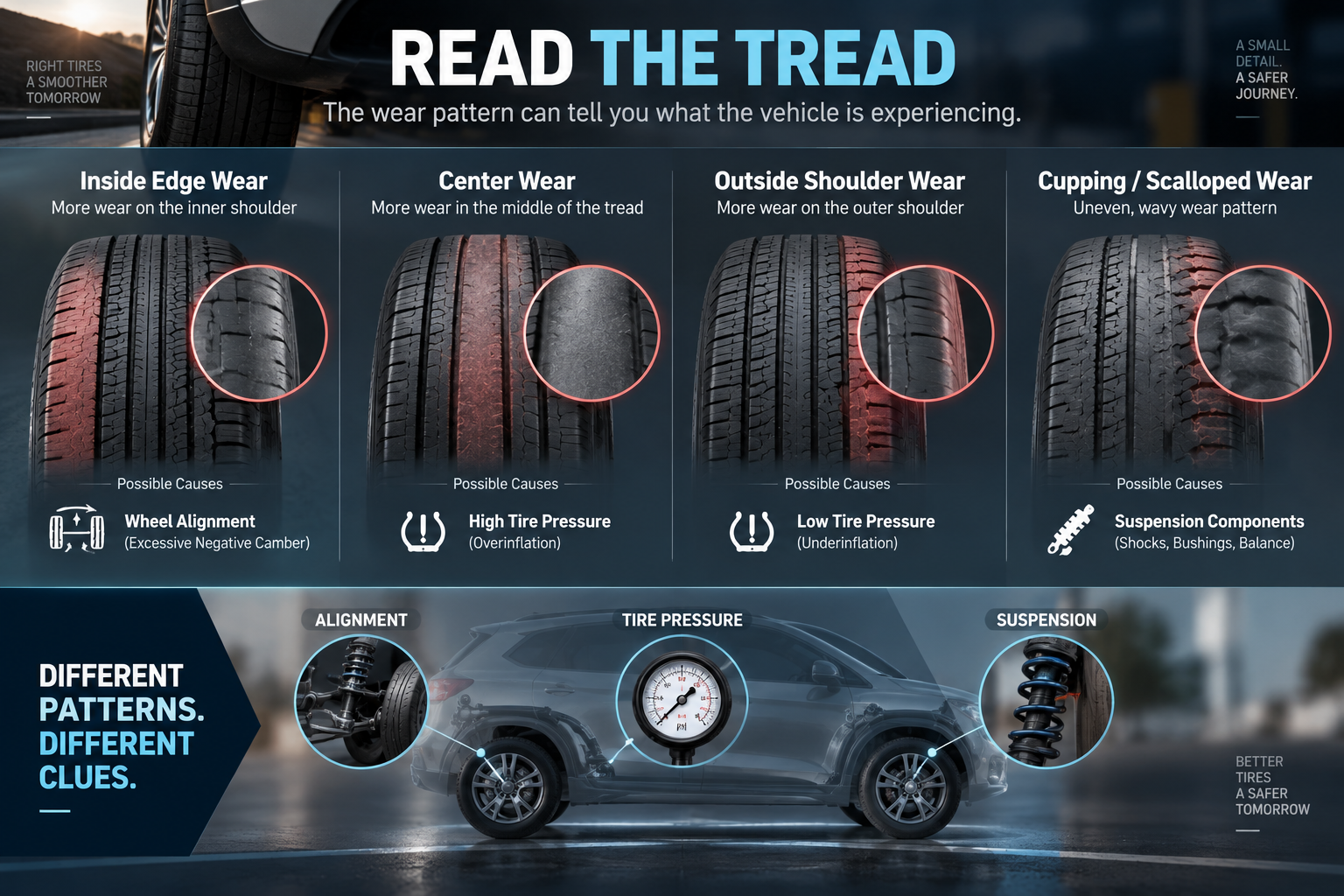
Center Tread Wear and Tire Pressure
A tire that appears significantly more worn through the center of the tread than the shoulders can indicate prolonged overinflation.
When a tire is inflated beyond the vehicle’s recommended pressure, the shape of its contact patch can change, potentially concentrating more load toward the center.
However, tread wear alone is not enough to prove the cause.
Tire design, driving conditions, vehicle loading, and inflation history all matter. If the pattern is obvious, check the actual pressure against the manufacturer’s recommendation and have the tire inspected.
Shoulder Wear Can Also Point to Underinflation
The opposite pattern can occur when a tire is consistently underinflated.
The shoulders may carry more of the load, producing accelerated wear toward both edges.
This is particularly important because underinflation is not just a tread-life issue. It can increase tire flexing, rolling resistance, and heat generation.
For drivers covering long distances or spending significant time on highways, maintaining the correct pressure is an important part of tire safety.
A pressure check should be performed when the tires are cold, using the recommended vehicle specification rather than a generic PSI figure.
What Is Cupping or Scalloped Wear?
Some tires develop a repeating series of high and low spots across the tread. This is often described as cupping or scalloping.
Unlike simple uniform wear, this pattern can sometimes be linked to problems with wheel balance, alignment, or suspension components.
A worn shock absorber, for example, may affect how consistently the tire remains in contact with the road.
You may also notice increased road noise or vibration alongside the unusual tread pattern.
When this happens, replacing the tire alone may not solve the problem. The underlying vehicle components should be inspected first.
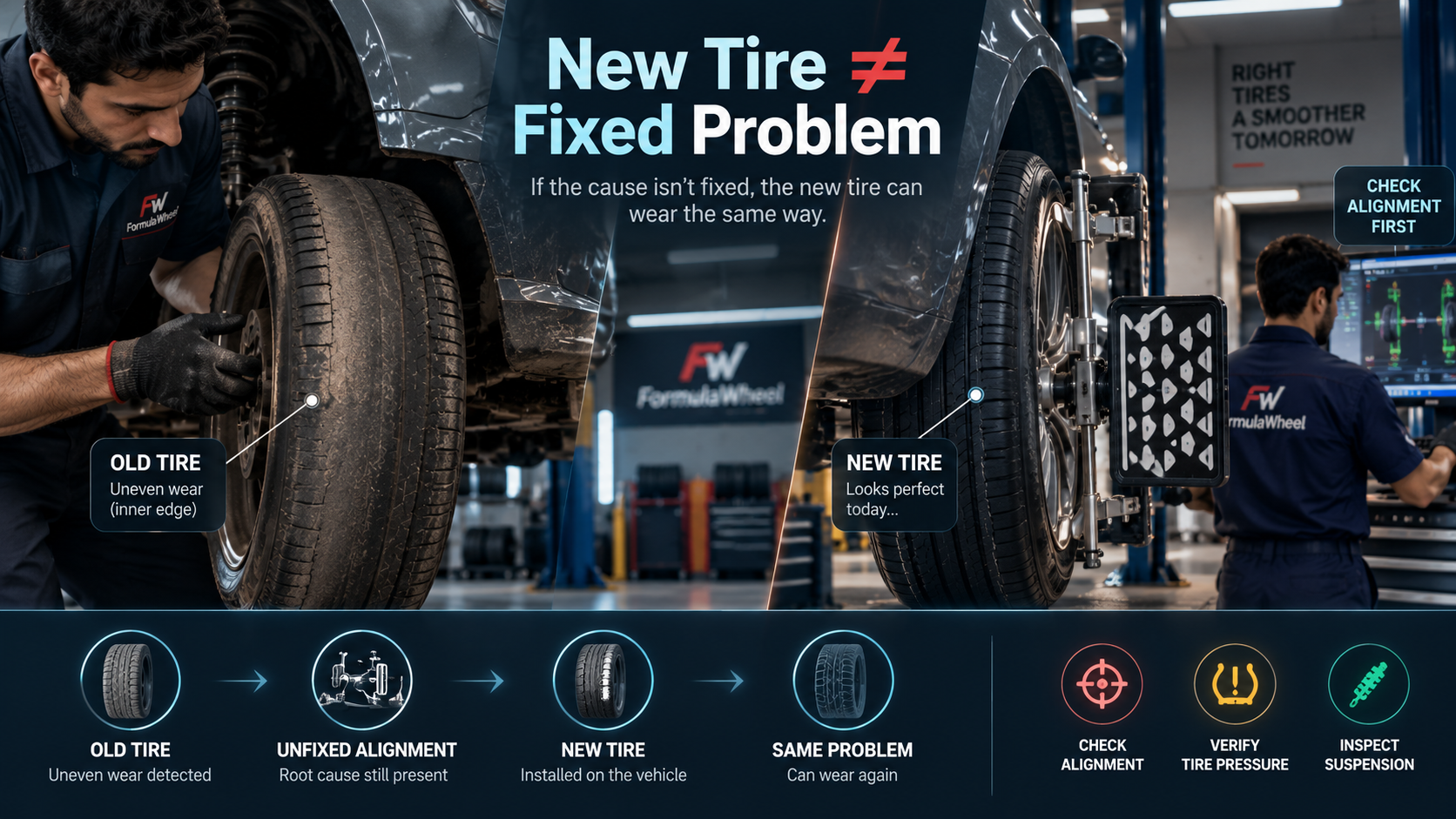
Can Bad Alignment Destroy New Tires?
Yes, incorrect alignment can cause a new tire to wear much faster than expected.
Even when the vehicle feels relatively normal, incorrect wheel angles can create excessive friction across part of the tread.
Over time, the result can be premature wear on one side of the tire.
This is particularly frustrating because the driver may have invested in a high-quality tire only to find that its tread life is dramatically reduced.
If a previous set developed severe one-sided wear, checking alignment before installing the next set is a smart move.
Suspension Problems Can Hide Behind Tire Wear
Not every unusual tread pattern starts with the tire.
Suspension components influence how the wheel moves and how consistently the tire contacts the road.
Worn bushings, shocks, control-arm components, and other suspension parts can alter that relationship.
If uneven wear appears together with unusual handling, knocking sounds, bouncing, or instability, the suspension deserves attention.
A complete diagnosis looks at the entire system rather than treating the tire as an isolated component.
Does Tire Rotation Prevent Uneven Wear?
Regular tire rotation can help distribute wear more evenly, depending on the vehicle’s drivetrain, tire type, and approved rotation pattern.
Front tires can experience different forces from rear tires because they may handle steering, braking, and different portions of the vehicle’s load.
Rotating tires according to the vehicle manufacturer’s recommendations can help prevent one axle from wearing significantly faster than another.
However, rotation cannot correct an underlying alignment, pressure, or suspension problem. It may distribute the wear, but it will not eliminate its cause.
Kuwait Driving Can Add Extra Stress
Kuwait’s combination of high temperatures, hot road surfaces, heavy traffic, and long highway journeys makes tire condition particularly important.
Repeated exposure to heat can accelerate tire aging, while incorrect pressure can further increase operating stress.
Road impacts can also affect wheels and suspension components, potentially creating conditions that later appear as unusual tread wear.
For that reason, visual inspection should become part of normal vehicle maintenance rather than something reserved for the moment a tire looks completely worn out.

When Uneven Wear Means It Is Time for New Tires
Not every unevenly worn tire needs immediate replacement, but certain conditions should not be ignored.
Replacement may be necessary when:
- The tread has reached the manufacturer’s replacement limit
- The tire has severe shoulder damage
- There are cracks or bulges
- The tire has structural damage
- Wear has become unsafe or significantly reduced grip
- The tire has been damaged after prolonged underinflation
If one tire is worn much more severely than the others, a technician should also determine whether replacing a single tire or a complete set is appropriate for the vehicle.
Don’t Replace the Tire Until You Find the Cause
This is the most important lesson with uneven wear.
Imagine replacing a worn front tire without checking alignment. The new tire may initially look perfect, but if the wheel is still operating at an incorrect angle, the same section of tread can begin disappearing again.
The same principle applies to incorrect pressure and suspension problems.
New tires cannot permanently fix a mechanical problem.
They can only provide a fresh starting point once the cause of the abnormal wear has been addressed.
A Smarter Way to Choose Your Replacement Tires
When replacement is necessary, choose the tire based on your vehicle and driving conditions rather than selecting solely by price.
Consider:
- Correct tire dimensions
- Load index
- Speed rating
- Expected annual mileage
- City versus highway driving
- Ride comfort
- Road noise
- Heat resistance
- Tread durability
For a daily-driven vehicle in Kuwait, the right tire should provide a practical balance rather than chasing a single specification.
Buy the Right Tires Without Guessing
If you have discovered Uneven Tire Wear, this is the ideal time to look beyond simply replacing the rubber.
FormulaWheel can help you identify the correct replacement tires for your vehicle while taking your driving needs into account. Whether you need a comfortable touring tire for daily commuting, a durable option for long highway trips, or a tire suited to a more demanding driving environment, the right fitment and specification matter.
Instead of buying another set and hoping the problem disappears, get your tire condition and vehicle setup checked first. Then choose your replacement tires with confidence through FormulaWheel.
When your safety, comfort, and tire investment are all riding on four contact patches, choosing the right set is money well spent.
Frequently Asked Questions
What causes uneven tire wear?
Common causes include incorrect tire pressure, wheel alignment problems, worn suspension components, wheel imbalance, lack of rotation, and certain driving habits.
Why are my tires wearing on the inside?
Inside-edge wear can be associated with alignment conditions such as excessive negative camber. An alignment inspection can determine whether the wheel angles are correct.
Why are my tire shoulders wearing faster?
Shoulder wear can be caused by incorrect inflation, although alignment, suspension condition, and driving behavior can also contribute. The tire should be inspected before changing the pressure.
Can low tire pressure cause uneven wear?
Yes. Prolonged underinflation can increase wear toward the shoulders and can also increase tire flexing, rolling resistance, and heat.
Can high tire pressure wear out the center of a tire?
Excessive inflation can change the tire’s contact pattern and may contribute to faster center tread wear. Always follow the vehicle manufacturer’s recommended pressure.
Can alignment cause tires to wear quickly?
Yes. Incorrect alignment can place excessive load on one section of the tread, causing premature or one-sided wear.
Does tire rotation fix uneven tire wear?
Rotation can help distribute future wear more evenly, but it cannot repair an underlying alignment, pressure, or suspension problem.
Should I replace all four tires if one has uneven wear?
It depends on the vehicle, tread-depth difference, tire condition, and drivetrain. A professional inspection can determine whether one, two, or all four tires should be replaced.
Can I keep driving with unevenly worn tires?
If the wear is severe, handling and braking performance may be compromised. Have significantly or unusually worn tires inspected before continuing normal driving.
Where can I buy replacement tires?
FormulaWheel offers tire options for different vehicles and driving requirements. Providing your vehicle model, year, and current tire size helps identify an appropriate replacement.