
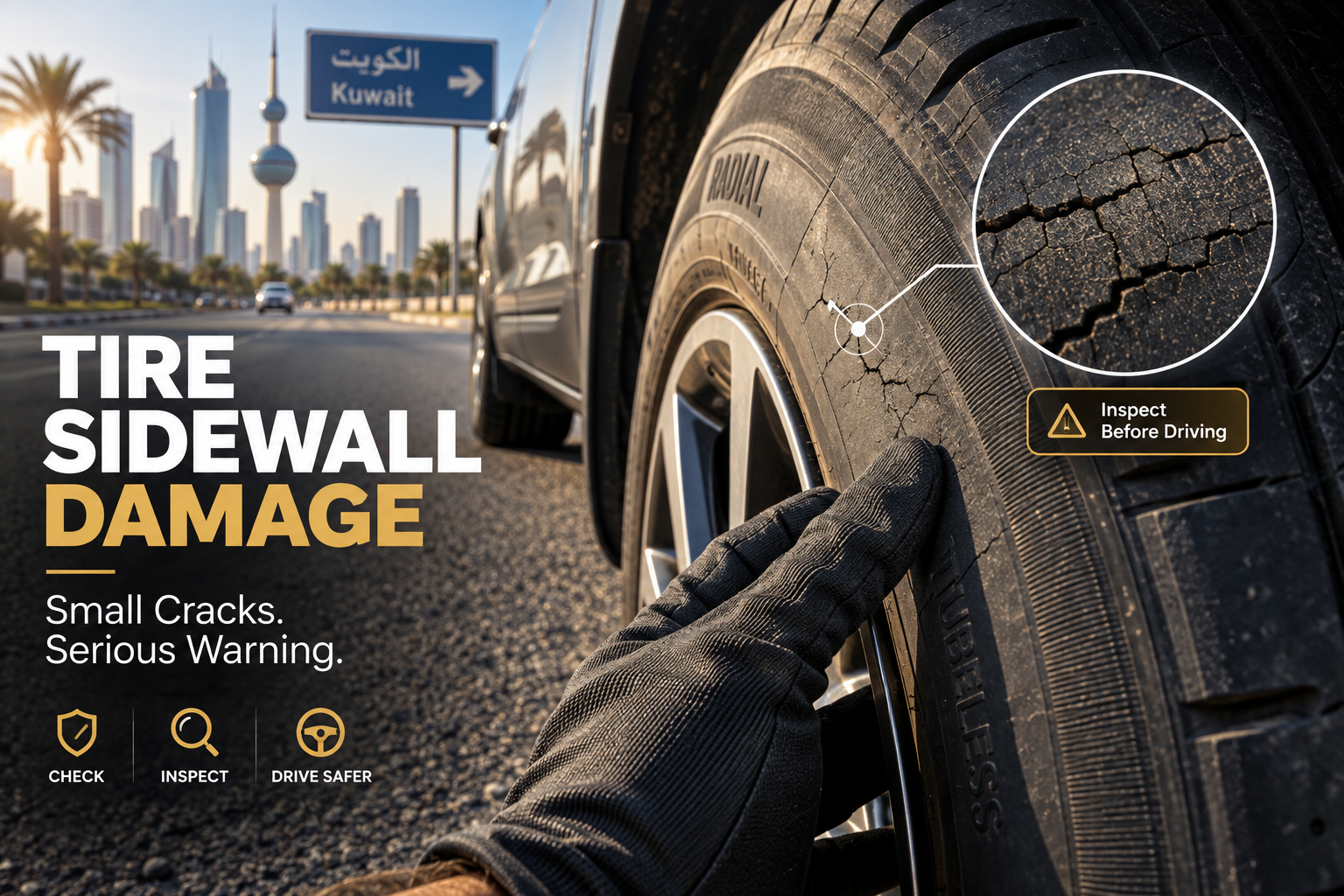
Tire Sidewall Damage can affect a tire’s safety, durability, and ability to support your vehicle. Unlike the tread, the sidewall is not designed to be repaired in the same way after serious structural damage. Cracks, deep cuts, bulges, and bubbles may indicate that the tire has been weakened and needs immediate inspection.
Kuwait’s high temperatures, road debris, potholes, and contact with curbs can increase the risk of tire damage. Some problems are easy to notice, while others may develop internally after a strong impact.
Understanding the different types of sidewall damage can help you identify safety risks, avoid unnecessary repairs, and know when replacing a tire is the safest option.
What Is the Tire Sidewall?
The sidewall is the vertical section of the tire between the tread and the wheel rim. It helps protect the tire’s internal structure and allows the tire to flex as the vehicle moves over different road surfaces.
The sidewall also contains important information, including:
- Tire size
- Load index
- Speed rating
- Manufacturing details
- Brand and model information
Because the sidewall flexes during driving, damage in this area can affect the tire’s structural strength. Even if the tread looks healthy, a damaged sidewall may create a serious safety concern.
Common Types of Sidewall Damage
Cracks and Dry Rot
Small cracks may appear when rubber ages or is exposed to intense sunlight, heat, and unsuitable storage conditions. This is often called weather checking or dry rot.
Minor surface marks do not always mean immediate tire failure, but deep or widespread cracking requires professional inspection.
The risk increases when cracks appear alongside:
- Tire aging
- Frequent exposure to heat
- Low tire pressure
- Visible rubber deterioration
- Long periods of vehicle inactivity
Do not ignore cracks simply because the tire still holds air.
Cuts and Scrapes
Sidewall cuts can occur after contact with sharp objects, road debris, curbs, or damaged road edges.
A shallow surface scrape may be less serious than a deep cut, but it can be difficult to judge the extent of internal damage without inspection.
If a cut exposes internal cords or extends deeply into the rubber, the tire may no longer be safe for use. Avoid attempting to repair serious sidewall cuts with plugs or patches.
Bulges and Bubbles
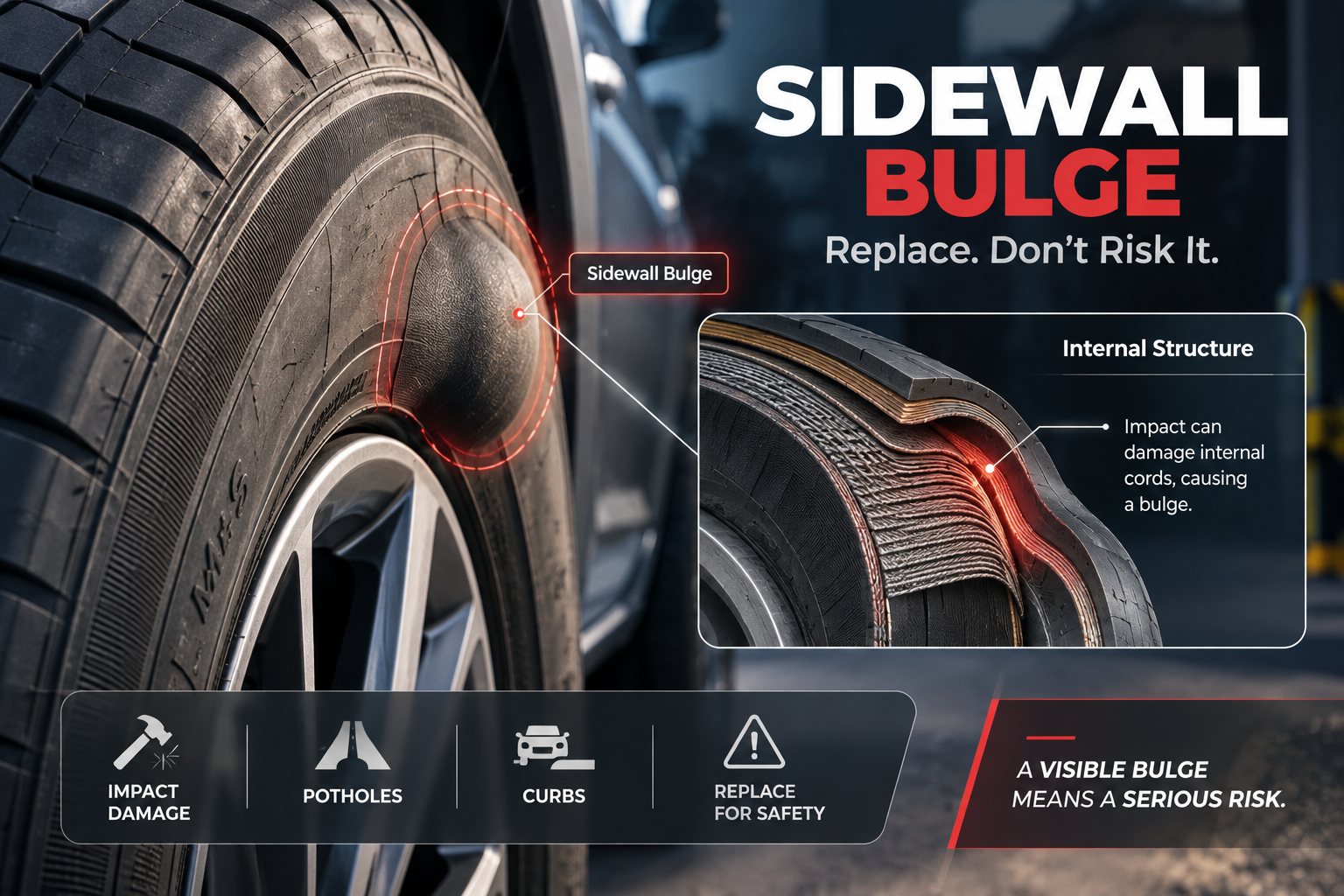
A bulge or bubble is one of the most important sidewall warning signs.
It may develop when an impact damages the tire’s internal cords. Common causes include hitting potholes, curbs, or road obstacles at speed.
A bulge means the tire’s internal structure may be compromised. It can increase the risk of sudden tire failure, particularly at highway speeds or under heavy loads.
A tire with a visible sidewall bulge should be replaced rather than repaired. If you notice a bubble, avoid driving on the tire and arrange a professional inspection or replacement.
Why Kuwait’s Heat Matters
High temperatures can accelerate rubber aging and increase the stress placed on tires. Although tires are designed to operate across a range of temperatures, excessive heat combined with incorrect inflation, heavy loads, or long highway journeys can increase wear.
To protect your tires:
- Check pressure when tires are cold.
- Avoid driving with visibly damaged tires.
- Keep tires away from unnecessary prolonged sunlight when possible.
- Follow the vehicle manufacturer’s load recommendations.
- Inspect sidewalls regularly.
- Replace old or deteriorated tires when necessary.
Correct inflation is especially important. Underinflated tires can flex excessively and generate additional heat, while overinflation can affect ride comfort and handling.
Can Sidewall Damage Be Repaired?
In most cases, serious sidewall damage cannot be safely repaired.
Tread punctures in certain areas may sometimes be repairable according to professional tire-repair standards. However, the sidewall flexes more than the tread and plays an important role in the tire’s structural support.
Repairs are generally not an appropriate solution for:
- Sidewall bulges
- Deep cuts
- Exposed internal cords
- Severe cracking
- Structural impact damage
A technician should inspect the tire and determine whether replacement is required. Continuing to use a structurally damaged tire can create unnecessary safety risks.

When Should You Replace a Damaged Tire?
You should arrange an inspection immediately if you notice visible damage. Replacement may be necessary when the tire has a bulge, deep cut, exposed cords, serious cracking, or other structural deterioration.
You should also consider the tire’s age and overall condition. A tire with acceptable tread depth may still require replacement if its rubber has deteriorated or its sidewall has weakened.
When replacing one tire, ask a professional whether the other tires have compatible tread depth, specifications, and wear levels. In some situations, replacing tires in pairs or as a complete set may provide more consistent handling.
Always choose a replacement tire that matches the vehicle’s approved size, load index, and speed rating.
How to Inspect Your Tire Sidewalls
A quick inspection can help you identify visible warning signs before they become more serious.
Check the sidewalls for:
- Cracks
- Cuts
- Bulges
- Scratches
- Exposed cords
- Unusual deformation
- Embedded objects
Inspect both the outer and, when safely accessible, the inner sidewall. Some damage may be hidden from normal viewing angles.
If you notice a sudden pressure loss, vibration, unusual handling, or visible damage after hitting a pothole, have the tire inspected as soon as possible.
Find Replacement Tires With FormulaWheel
If your tire sidewall is damaged, aged, or showing signs of deterioration, choosing the right replacement is essential for maintaining safe and reliable driving.
At FormulaWheel, you can explore tire options for different vehicles and driving requirements. Whether you drive mainly in the city, travel frequently on highways, or face demanding road conditions, the right tire should match your vehicle’s specifications and everyday usage.
Before purchasing, confirm the correct tire size, load index, speed rating, and suitable performance characteristics.
Visit FormulaWheel to explore replacement tires and find an option suitable for your vehicle.
Final Thoughts
Tire sidewall damage should never be ignored. Cracks, deep cuts, bulges, and exposed cords can indicate structural problems that may affect driving safety.
Regular inspections, correct tire pressure, careful driving, and timely replacement can help reduce the risks associated with damaged tires. If you notice a bulge or serious cut, avoid driving on the tire and seek professional assistance.
Choosing suitable replacement tires from a reliable provider such as FormulaWheel can help you maintain dependable handling, comfort, and safety.

FAQ
Is tire sidewall damage dangerous?
Yes. Serious sidewall damage can weaken the tire’s internal structure and increase the risk of failure. A professional inspection is recommended.
Can a damaged tire sidewall be repaired?
Serious sidewall damage, including bulges and deep cuts, generally cannot be safely repaired. Replacement is usually required.
What causes tire sidewall cracks?
Cracks can develop because of aging, heat, sunlight, improper storage, and rubber deterioration. Deep or widespread cracks require inspection.
Can I drive with a sidewall bulge?
No. A sidewall bulge may indicate internal structural damage. Avoid driving on the tire and arrange professional inspection or replacement.
Does hot weather damage tire sidewalls?
High temperatures can accelerate rubber aging and increase tire stress, particularly when combined with underinflation, heavy loads, or long journeys.
Should I replace one tire or two?
The correct choice depends on tire wear, vehicle type, drivetrain, and manufacturer recommendations. A tire professional can advise whether one, two, or all tires should be replaced.