
Tires Make Noise While Driving for several reasons, including tread design, road surface, tire pressure, uneven wear, or a problem with the wheel or suspension system. Some tire noise is normal, but a sudden or increasingly loud sound may indicate an issue that requires inspection.
Kuwait’s hot climate, changing asphalt conditions, and frequent highway driving can influence tire noise. A soft humming sound may come from normal contact between the tire and road, while loud whining, thumping, or roaring can indicate uneven wear, incorrect pressure, or mechanical problems.
Understanding when the noise occurs and how it changes with speed can help you identify the cause and decide whether your tires need maintenance or replacement.
Is Tire Noise Always a Problem?
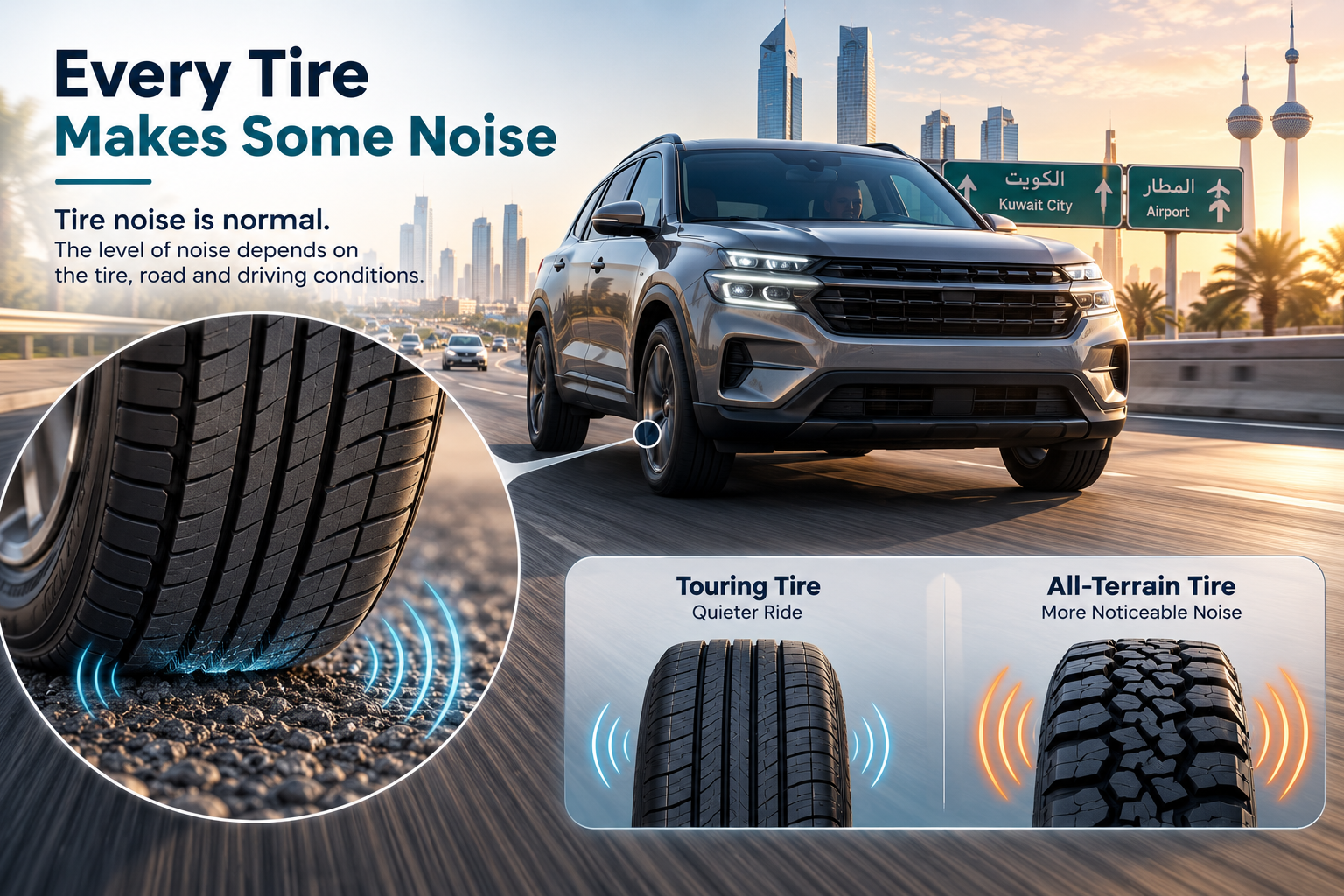
Every tire produces some noise while moving. The tread contacts the asphalt, moves air through its grooves, and creates sound. The level of noise depends on several factors:
- Tread pattern and rubber compound
- Tire width
- Driving speed
- Road surface
- Tire pressure
- Vehicle insulation
Performance tires may prioritize handling, while all-terrain tires often produce more noise because of their deeper and larger tread blocks. Touring and highway tires are generally designed to provide a quieter and more comfortable driving experience.
The important distinction is whether the noise is consistent and normal or whether it has appeared suddenly or become louder over time.
Common Causes of Noisy Tires
Tread Design and Road Surface
Some tire patterns naturally produce more road noise than others. Tires with large tread blocks and wide grooves can be useful for desert or off-road driving but may sound louder on paved roads.
The same tires can also sound different on smooth and rough asphalt. If the noise changes significantly between roads, the surface may be contributing to the sound.
However, a sudden increase in noise should not automatically be blamed on the road.
Uneven Tire Wear
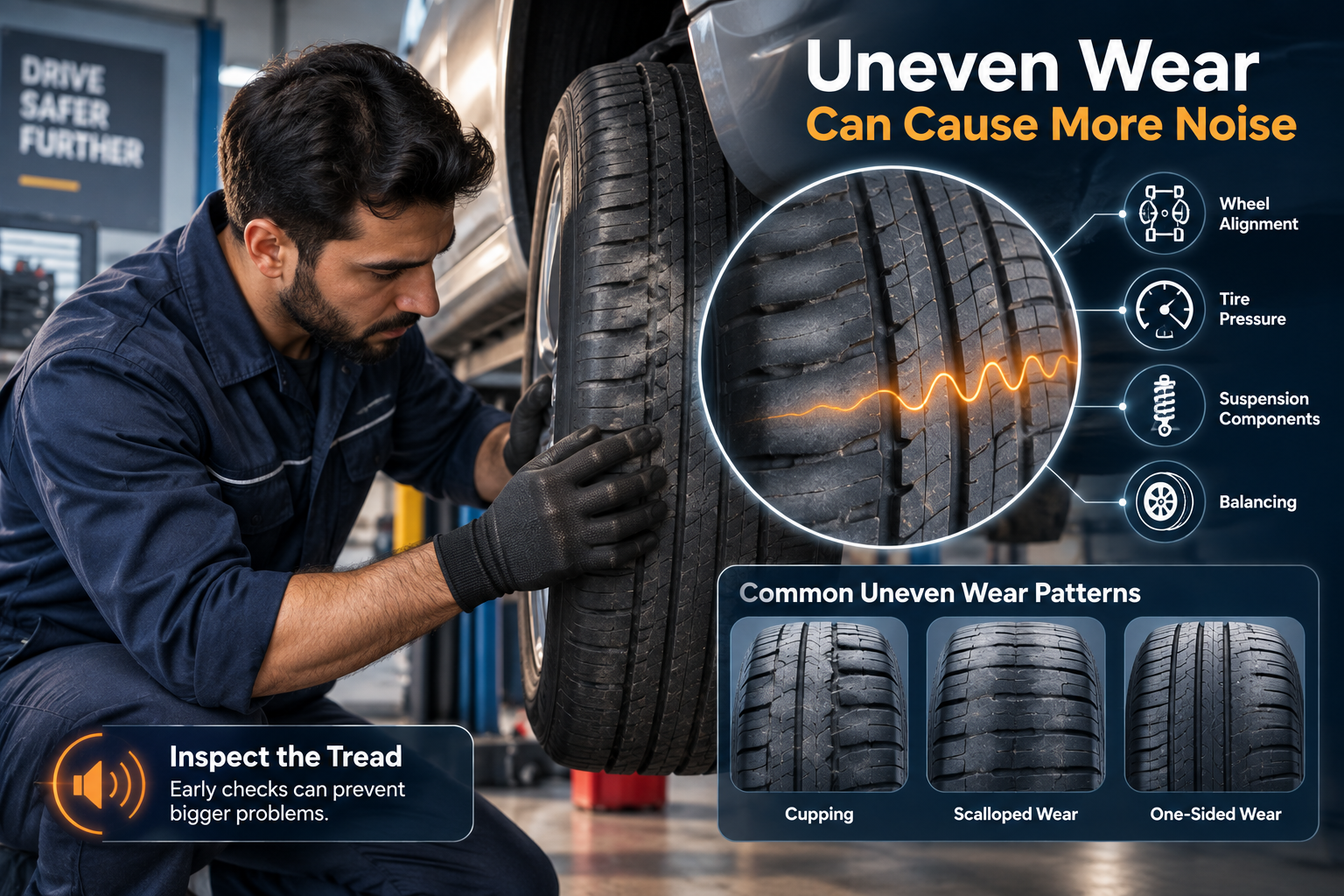
Uneven tread wear is a common cause of repetitive humming, buzzing, or thumping sounds. Irregular wear can create high and low areas across the tread, making the tire louder as speed increases.
Possible causes include:
- Incorrect wheel alignment
- Incorrect tire pressure
- Poor wheel balancing
- Worn suspension components
- Insufficient tire rotation
Cupped or scalloped wear may be difficult to notice at first. If your tires are noisy and show unusual wear, inspect the tires and check the alignment before installing replacements.
Incorrect Tire Pressure
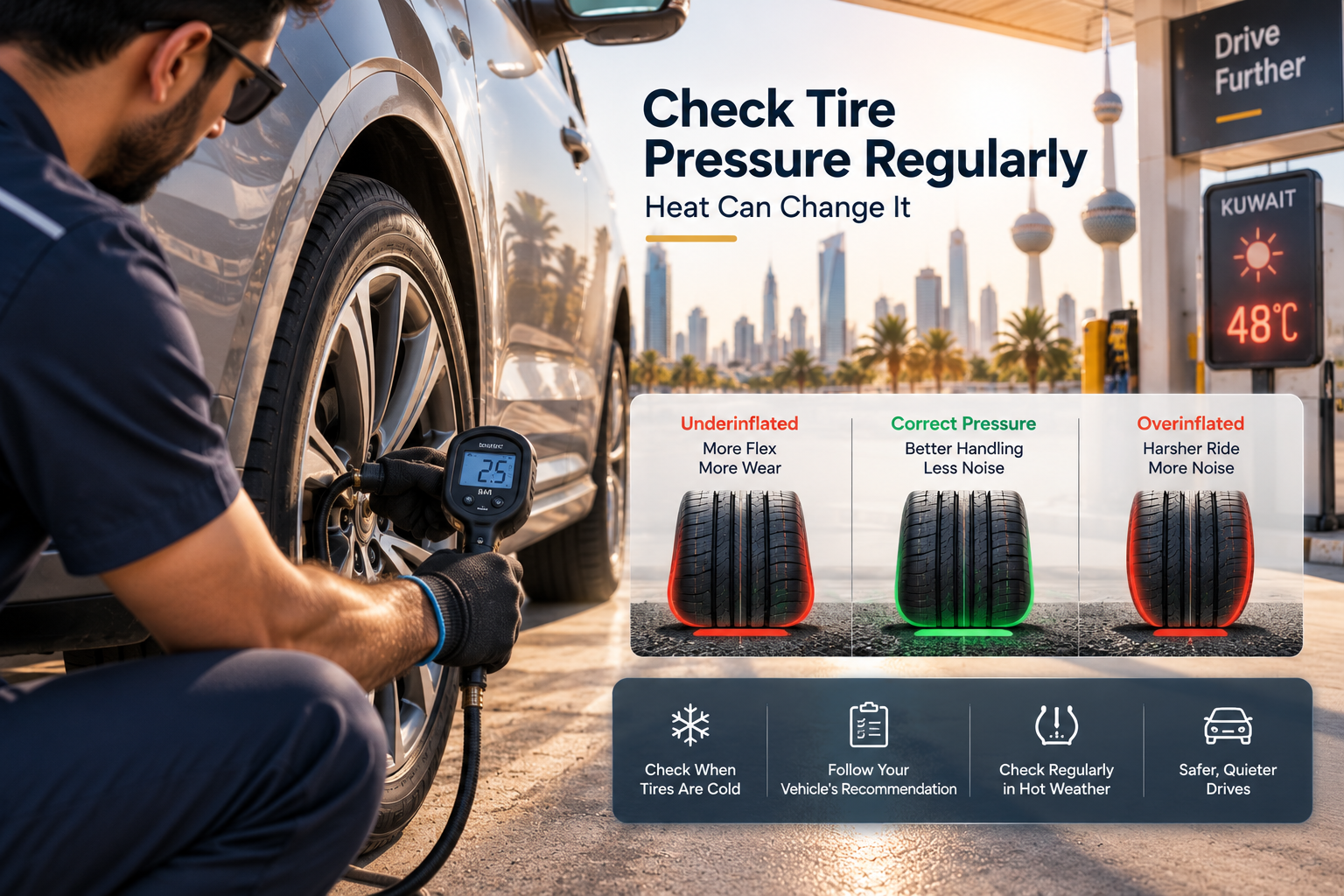
Tire pressure affects road noise, comfort, handling, and tread life.
Overinflated tires may feel harder and transmit more road texture into the cabin. Underinflated tires can flex excessively, increase rolling resistance, and change the way the tread contacts the road.
Check tire pressure when the tires are cold and follow the vehicle manufacturer’s recommended pressure. In Kuwait’s high temperatures, regular pressure checks are particularly important.
The correct pressure can help maintain consistent handling and reduce unnecessary wear and noise.
Wheel Bearing Problems
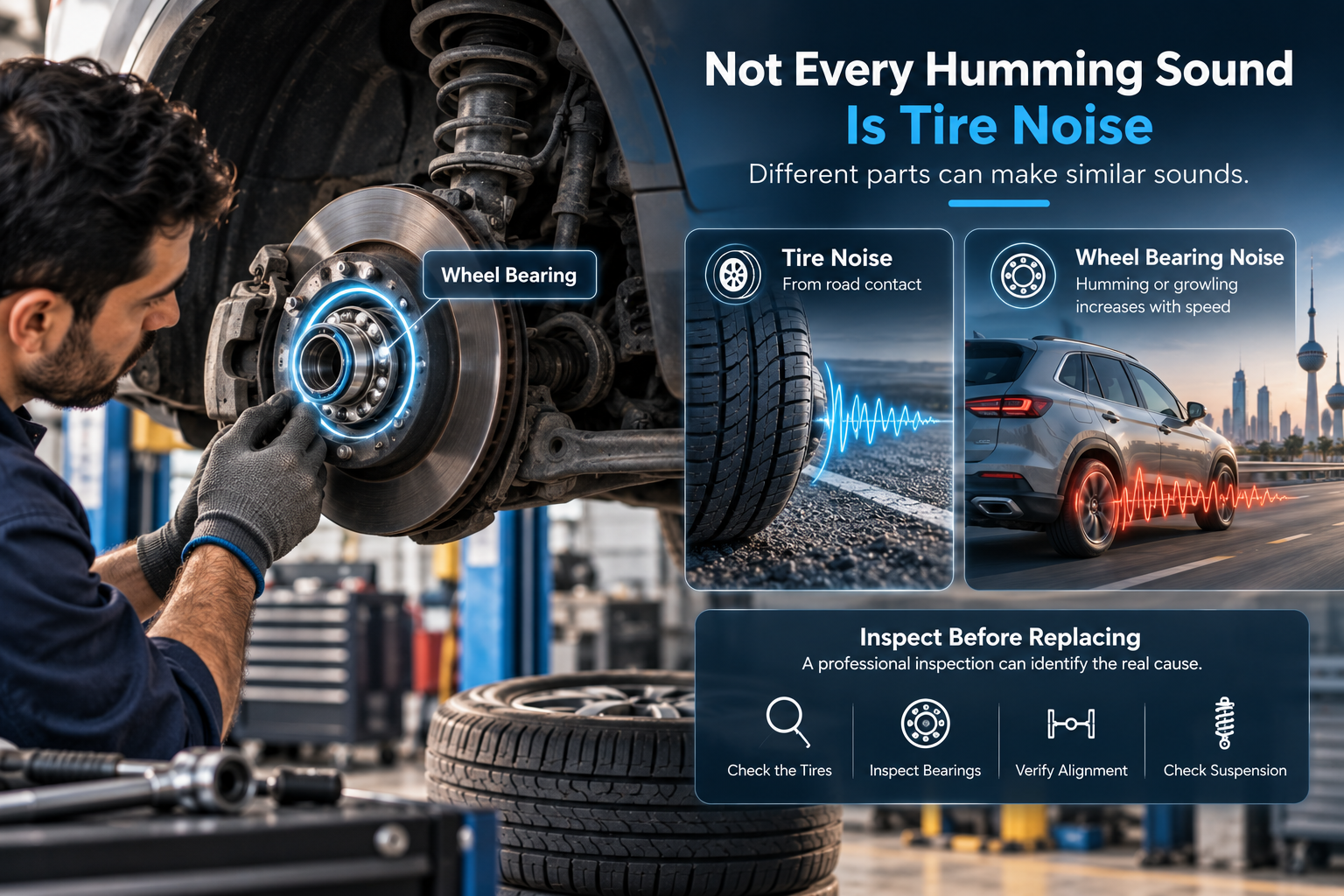
A worn wheel bearing can create a humming, growling, or rumbling sound that increases with speed. In some cases, the noise changes when the vehicle turns.
Because bearing noise can resemble tire noise, drivers should not assume that every humming sound comes from the tread.
Have the vehicle inspected if the noise is accompanied by grinding, handling changes, unusual wheel movement, or a noticeable change during cornering. Mechanical problems should be addressed promptly.
How Can You Identify the Source?
Pay attention to the timing and behavior of the sound:
- Noise increases with speed: Check tire wear, tread design, and wheel bearings.
- Noise changes on different roads: Road surface may be contributing.
- Noise appears after installing tires: Inspect tire pressure, installation, fitment, and alignment.
- Noise comes with uneven tread: Check alignment, balancing, and suspension.
- Noise changes while turning: A wheel bearing or another mechanical component may be involved.
These observations can help a technician diagnose the problem more efficiently, but they do not replace a professional inspection.
Ways to Reduce Tire Noise
You can reduce unnecessary tire noise by following a few maintenance practices:
- Maintain the recommended tire pressure.
- Rotate tires according to the manufacturer’s instructions.
- Check for irregular tread wear.
- Keep wheel alignment within specification.
- Inspect suspension and steering components.
- Select tires suitable for your usual roads.
- Replace damaged or excessively worn tires.
If cabin comfort is your priority, consider touring or comfort-oriented tires designed for reduced road noise. However, noise should not be the only selection factor. Braking, wet grip, load capacity, heat resistance, and durability are equally important.
When Should You Replace Noisy Tires?
Noise alone does not always mean that replacement is necessary. A tire may simply have an aggressive tread pattern or produce more sound on a particular road surface.
Replacement may be appropriate when the tire has:
- Severe or irregular tread wear
- Visible cracks or damage
- Sidewall bulges
- Insufficient tread depth
- Excessive age
- Persistent problems that maintenance cannot resolve
If uneven wear is responsible for the noise, investigate the underlying cause before installing new tires. Otherwise, the replacement tires may develop the same problem.
Always select tires that match your vehicle’s approved size, load index, and speed rating.
Find Suitable Tires With FormulaWheel
If your current tires are producing excessive noise, showing irregular wear, or reaching the end of their service life, choosing a suitable replacement can improve your driving experience.
At FormulaWheel, you can explore tire options for different vehicles and driving conditions. Whether you mainly drive in the city, travel on highways, or need tires for demanding environments, the right choice should balance comfort, handling, durability, and safety.
Visit FormulaWheel to explore replacement tires that match your vehicle and driving requirements.
Final Thoughts
Tire noise can be caused by normal tread design, road conditions, incorrect pressure, uneven wear, or mechanical problems. Identifying when the noise occurs and whether it changes with speed or steering can help reveal the possible cause.
Regular inspections, correct tire pressure, proper alignment, and suitable tire selection can improve comfort and reduce unnecessary noise. If your tires are worn or damaged, replacing them with the right model can support a quieter and safer driving experience.
FAQ
Why do my tires make noise while driving?
Tire noise may result from tread design, road surface, incorrect pressure, uneven wear, or mechanical problems such as a worn wheel bearing.
Why do my tires hum at high speed?
The cause may be normal tread contact, uneven tire wear, or a wheel bearing issue. An inspection can help identify the source.
Can incorrect tire pressure cause tire noise?
Yes. Overinflation and underinflation can change tread contact, increase road noise, and contribute to uneven wear.
Are wider tires louder?
They can be, but noise also depends on tread design, rubber compound, road surface, and tire construction.
How can I reduce tire noise?
Maintain correct pressure, check alignment, rotate your tires, inspect tread wear, and choose tires designed for comfort and reduced road noise.
Should noisy tires be replaced?
Not always. Replacement may be necessary if the tires are damaged, excessively worn, or developing irregular tread patterns.