
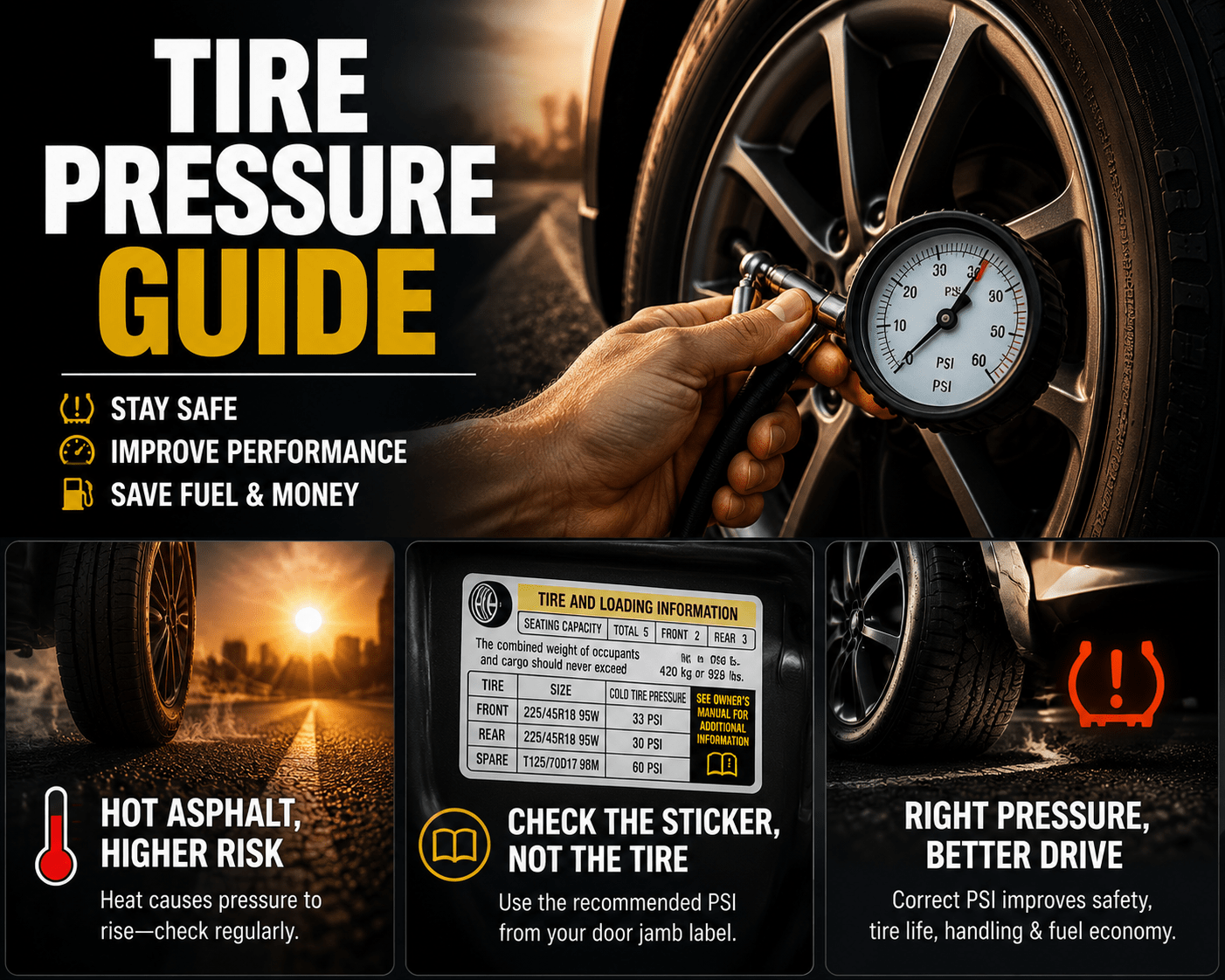
It’s 2 p.m. in July, the asphalt is shimmering, and your dashboard suddenly lights up with a tiny yellow tire icon you’ve never really paid attention to before. Maybe you shrug it off. Maybe you pull over and stare at your tires, which look… fine? That quiet moment of confusion is exactly where this tire pressure guide starts, because what’s happening under your car right now is a lot more interesting and a lot more important than most drivers realize.
Here’s the part that surprises people: heat doesn’t just make you uncomfortable behind the wheel. It’s actively changing the pressure inside every one of your tires, sometimes by more than you’d guess, and it’s doing it whether you notice or not. That’s the whole reason this tire pressure guide exists: to explain what’s really going on, and what to actually do about it before it becomes a problem on the highway instead of a warning light in your driveway.
The Physics Hiding Inside Your Tires
Air expands when it heats up. That’s not a tire fact; it’s just physics the same reason a sealed bag of chips puffs up on a hot dashboard. Your tires are basically sealed containers of air, so when the temperature climbs, the air inside pushes outward with more force, and your PSI reading climbs right along with it. This is the mechanical reality every tire pressure guide is really trying to explain, whether it says so plainly or not.
The rule of thumb most technicians use is simple: for every 10°F (about 5.6°C) change in temperature, tire pressure shifts by roughly 1 PSI. That doesn’t sound dramatic on its own. But here’s where this tire pressure guide gets a little more urgent: ambient air temperature isn’t the number that matters most. Pavement temperature is. On a scorching afternoon, asphalt in direct sun can run 40 to 60°F hotter than the air above it, and your tires are in constant contact with that surface at highway speed. Combine that with friction heat from driving, and it’s entirely realistic for a tire to run 4 to 8 PSI higher than its proper “cold” pressure by the time you check it.
Why This Matters More Than It Sounds
An 8 PSI swing might not sound like much until you picture what it actually does. Overinflated tires develop a smaller, harder contact patch with the road, which reduces grip exactly when summer heat is already working against you. Push things further long highway stretches, a heavy load, tires that were already a little over spec and you’re edging toward the kind of heat buildup that leads to a blowout, which is about as unwelcome a surprise as driving offers.
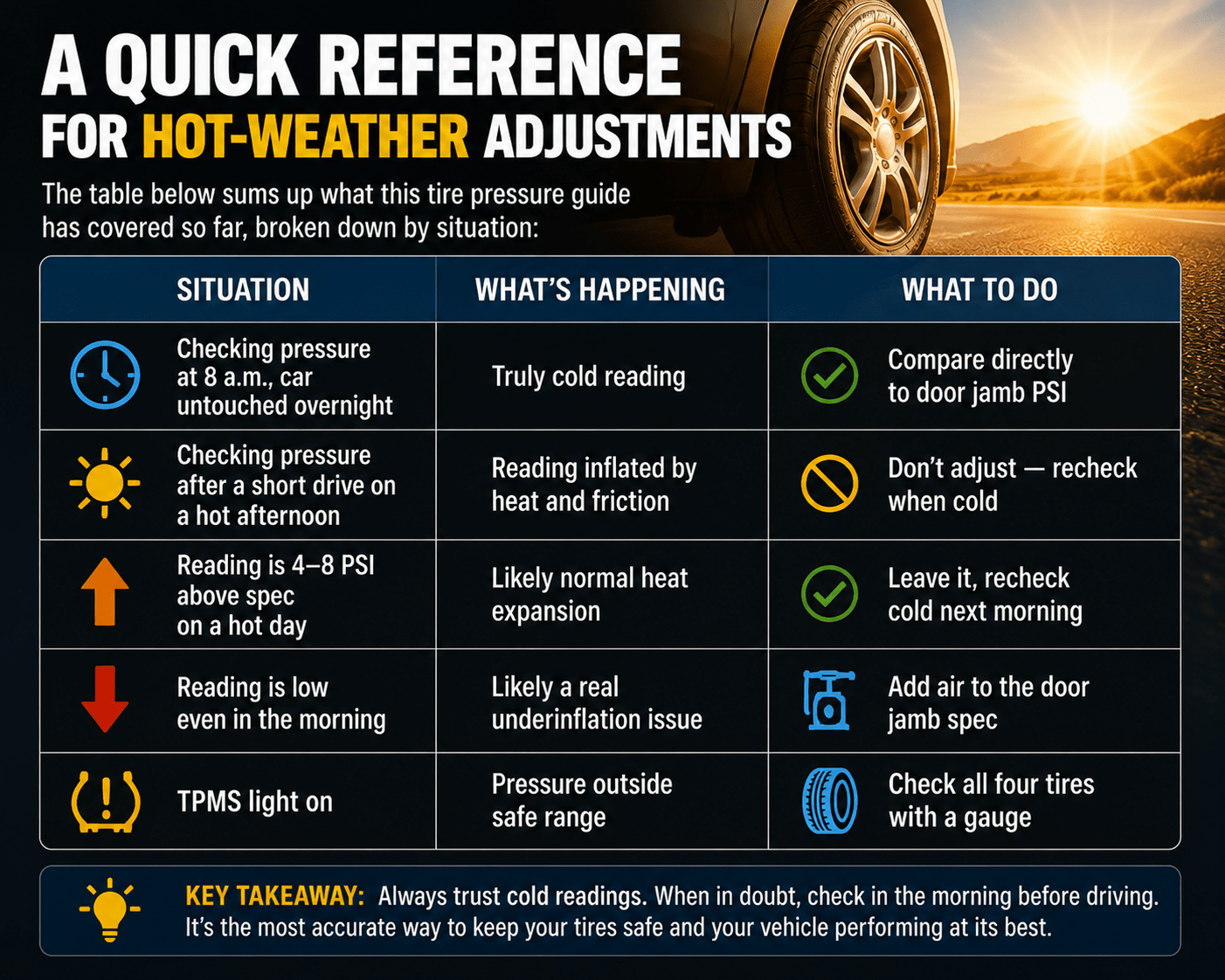
This is the point where a lot of well-meaning drivers make things worse without realizing it. They check their pressure mid-afternoon, see a hot reading of 38 PSI against a 35 PSI target, and let air out to “fix” it. Then their tires cool overnight, and they wake up 3 to 5 PSI under the recommended pressure, quietly undermining fuel economy, tread wear, and handling until the next hot afternoon repeats the whole cycle. If there’s one habit this tire pressure guide wants you to walk away with, it’s this: never adjust pressure on a hot tire. Always check and set it cold.
What “Cold” Actually Means Here
“Cold” doesn’t mean winter; it means the tire hasn’t been driven on for at least three hours, or ideally checked first thing in the morning before the sun and the road have had a chance to heat things up. That’s the only condition under which the number on your gauge should be compared against the recommended PSI on your door jamb sticker.
If you can only check your tires after they’ve already warmed up, say, on the way to work, there’s a reasonably reliable workaround this tire pressure guide can offer: add roughly 1 PSI of target pressure for every 10°F difference between the temperature where the tire was last set cold and the temperature right now. It’s not perfect, but it’s far better than comparing a hot reading directly against a cold spec.
The TPMS Light Isn’t Always Telling the Whole Story
Your car’s tire pressure monitoring system is a genuinely useful safety net, but it isn’t the full picture, and leaning on it alone is one of the more common mistakes this tire pressure guide keeps running into. TPMS typically only triggers once pressure drops meaningfully below the safe range; it won’t necessarily warn you about a slow overinflation from heat, and it won’t catch small differences between tires that are still technically “fine.”
That gap is exactly why a good tire pressure guide always comes back to the manual gauge, not the dashboard light, as the real source of truth. A manual gauge check, done cold, once a month and before long trips, catches problems the dashboard light simply isn’t designed to flag yet.
Frequently Asked Questions
Is it normal for tire pressure to rise in summer? Yes. A rise of a few PSI on a hot day is completely normal and doesn’t necessarily mean you need to let air out, especially if the reading was taken after driving or in direct sun. The number that matters is your cold morning reading.
Should I lower my tire pressure in summer? No, not based on a hot reading. Lowering pressure because a hot tire reads high often leaves you underinflated once the tire cools, which creates more problems than it solves. Always set pressure when the tire is cold.
How much can pavement heat actually raise tire pressure? More than most drivers expect. Between ambient heat, direct sun on asphalt, and friction from driving, it’s realistic to see 4 to 8 PSI above a tire’s cold pressure on a hot day.
What’s the safest time to check tire pressure in summer? Early morning, before the car has been driven and before the sun has had time to heat the pavement, gives the most accurate “cold” reading to compare against your door jamb sticker, the single most useful habit this tire pressure guide can leave you with.
Can extreme heat cause a tire blowout even if pressure looks fine? Yes, particularly if a tire is already underinflated, since that increases internal friction and heat buildup. This is one of the reasons a monthly gauge check matters more in extreme heat than in mild weather.
Where to Get Your Tires Checked Properly
If you’re not sure whether your current pressure is actually safe for the kind of heat Kuwait sees for months at a time, it’s worth having a professional take a look rather than guessing from a dashboard light, which is really the whole point of this tire pressure guide in the first place. Formula Wheel is a well-established tire and wheel retailer in Kuwait that can check your tire pressure properly, advise on the right PSI for your specific vehicle and tire type, and stock a wide range of replacement tires if heat cycling has taken a toll on yours over time.
The Takeaway
That little yellow warning light isn’t trying to alarm you; it’s trying to have a conversation your tires have been having with the weather all along. Checking pressure cold, resisting the urge to “correct” a hot reading, and keeping an eye on things monthly rather than only when the light comes on is really all this tire pressure guide is asking of you. If you remember nothing else from this tire pressure guide, remember that: check cold, trust the door jamb number, and don’t chase a hot reading. It takes about five minutes, and it’s a habit that quietly protects your handling, your fuel economy, and on the hottest days of the year, quite possibly your safety.