
Wheel offset, often stamped as “ET” on the back of the wheel, is the distance in millimeters between a wheel’s mounting surface and its centerline. A positive offset tucks the wheel inward, closer to the suspension. A negative offset pushes the wheel outward, closer to the fender, for a wider stance. A zero offset sits exactly between the two. Getting Wheel Offset right keeps a wheel from rubbing the fender, brake caliper, or suspension, and it’s one of the most important numbers to check before buying any aftermarket wheel.
What Does ET Mean on a Wheel?
The “ET” stamped or cast into most wheels stands for “Einpresstiefe,” a German term that translates to “insertion depth.” It’s simply the industry’s shorthand for Wheel Offset, expressed as a number in millimeters, such as ET35, ET+45, or ET-12.
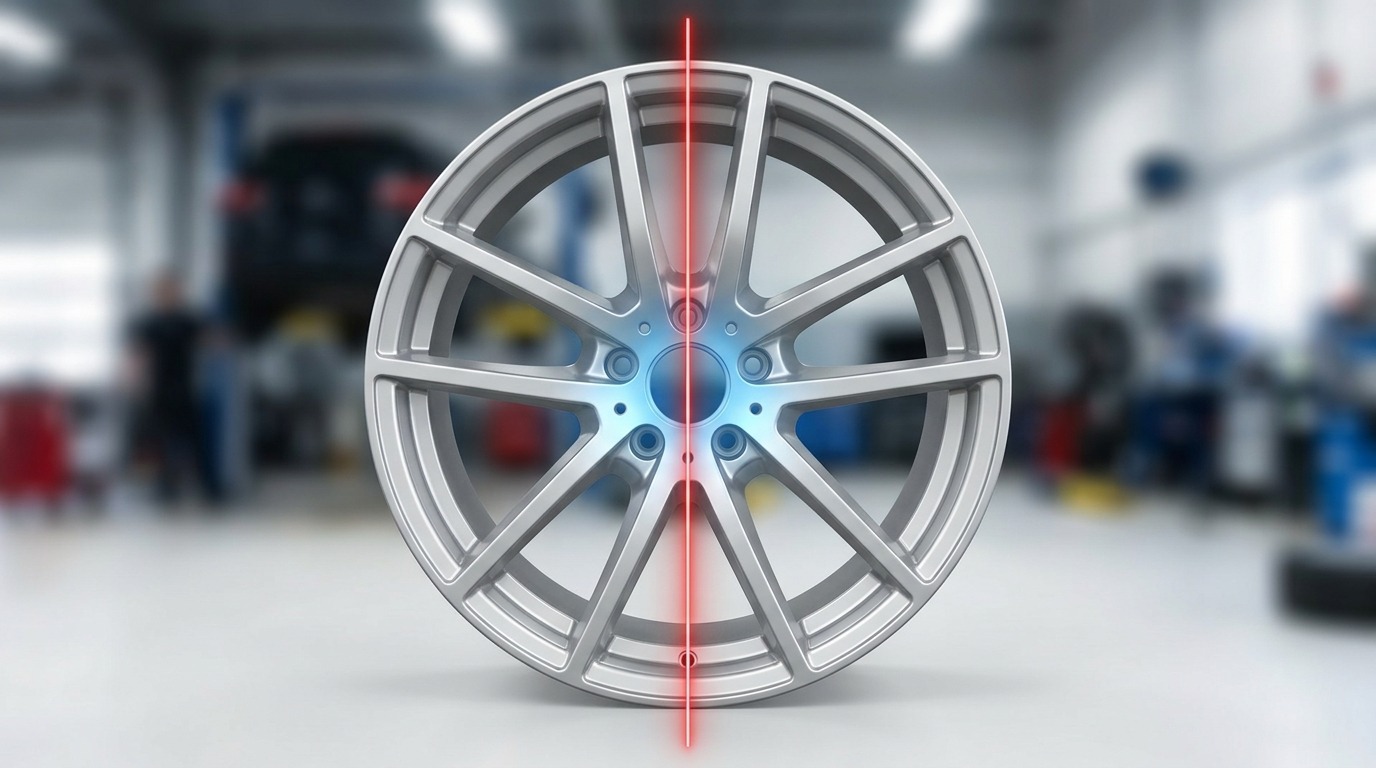
To picture what that number actually measures, imagine slicing a wheel in half from front to back. The centerline is the exact midpoint of that slice. Wheel Offset is the distance between that centerline and the wheel’s mounting surface — the flat face that bolts directly to the vehicle’s hub. This single measurement is what fitment charts and wheel boxes refer to when they list an ET number.
Positive, Negative, and Zero Offset Explained
Wheel Offset comes in three basic types, and knowing the difference is the key to understanding how a wheel will actually sit once it’s installed:
- Positive offset (+): the mounting surface sits toward the outer, street-facing side of the wheel, ahead of the centerline. This pulls the wheel inward, tucking it closer to the suspension. Most modern factory cars, SUVs, and trucks use a positive offset, commonly ranging from around +18mm to +50mm depending on the vehicle type.
- Negative offset (–): the mounting surface sits toward the inner, brake-facing side of the wheel, behind the centerline. This pushes the wheel outward, creating a wider, more aggressive “deep-dish” stance. Negative offset is common on lifted trucks, off-road builds, and some performance vehicles chasing a wider footprint.
- Zero offset (0/ET0): the mounting surface sits exactly on the centerline, splitting the wheel evenly between its inner and outer halves. True zero offset is less common on modern passenger vehicles but does appear on some trucks, trailers, and certain aftermarket wheels.
Knowing which of these three categories your current setup falls into is the starting point for any conversation about changing Wheel Offset.
Wheel Offset vs Backspacing: What’s the Difference?
Wheel Offset and backspacing both describe how a wheel sits relative to the hub, but they’re measured differently and aren’t interchangeable.
- Offset is measured in millimeters from the wheel’s true centerline to the mounting surface, and it can be positive, negative, or zero.
- Backspacing is measured in inches from the wheel’s inner edge to the mounting surface, and it’s always a positive number regardless of the wheel’s actual offset.
Backspacing matters most for confirming inner clearance around suspension and brake components, while offset gives the fuller picture of how the wheel sits within the wheel well as a whole. Most fitment guides list both numbers together, since Wheel Offset alone doesn’t capture inner clearance the way backspacing does, and relying on just one number is a common cause of avoidable rubbing issues.
How Wheel Offset Affects Fitment and Handling
Changing Wheel Offset doesn’t just change how a vehicle looks — it changes real mechanical relationships that affect handling and component clearance:
- Fender clearance: a lower or more negative offset pushes the wheel outward, increasing the risk of rubbing against the fender or wheel liner, especially at full steering lock or under suspension compression.
- Suspension and brake clearance: a higher positive offset pulls the wheel inward, which can create interference with brake calipers, control arms, or other suspension components if taken too far.
- Scrub radius: offset changes affect the vehicle’s scrub radius, which influences steering feel and braking stability. Large offset changes can make steering feel heavier, twitchier, or less predictable than stock.
- Stance and tire fitment: a wider, more negative offset allows for a bolder look and can accommodate wider tires, which is why off-road and lifted trucks often move toward lower or negative offsets compared with factory settings. This tire-clearance trade-off is one of the most common reasons builders revisit their Wheel Offset after a suspension lift.
How to Choose the Right Wheel Offset
- Start with your factory offset as a baseline. It’s usually stamped on the back of your current wheels (look for something like ET35 or ET+40) or listed in your owner’s manual.
- Make small adjustments, not big jumps. Many fitment guides recommend staying within about 15–20mm of your stock Wheel Offset, since larger changes increase the risk of rubbing or handling changes.
- Factor in wheel width. A wider wheel at the same offset will sit further out than a narrower one, so width and offset need to be considered together, not separately.
- Check clearance at full lock and over bumps. Fitment issues often only show up when the steering is turned all the way or the suspension compresses fully, so a static check in the driveway isn’t always enough.
- Get a second opinion for aggressive builds. If you’re chasing a significantly different Wheel Offset than stock for a wider stance or larger tires, a fitment specialist can confirm the exact number will clear everything on your specific vehicle.
Wheel Offset Quick Reference

Frequently Asked Questions
What is a good wheel offset for my car? The safest starting point is your vehicle’s factory offset, since that number is already engineered to clear your brakes and suspension. From there, most guides suggest staying within about 15–20mm of that baseline unless you’ve confirmed clearance for a bigger change.
What does negative wheel offset do? Negative offset pushes the wheel outward from the hub, creating a wider stance and a deeper-dish look. It’s common on off-road and lifted trucks that want extra clearance for wider tires, but it increases the risk of rubbing against the fender.
What does positive wheel offset do? Positive offset pulls the wheel inward, tucking it closer to the suspension and brakes. It’s the more common setup on modern factory vehicles because it keeps the wheel safely within the wheel well.
Is a higher or lower wheel offset better? Neither is universally better — it depends on the vehicle and the goal. A higher (more positive) offset favors fender clearance and stability, while a lower or negative offset favors a wider stance, but each comes with different clearance trade-offs against brakes and suspension. The right Wheel Offset always depends on what the build is trying to achieve.
How do I find my current wheel offset? Check the back of the wheel near the mounting surface or the spokes for a stamped or cast marking such as ET35, ET+45, or ET-12. If it isn’t visible, your owner’s manual or a wheel fitment specialist can confirm the factory number.
Final Thoughts
Wheel Offset might look like a small number, but it’s one of the most important specs to get right before buying any wheel. It determines whether a wheel tucks safely inside the fender or pushes out for a bolder stance, and it directly affects clearance around brakes, suspension, and steering feel.
Whatever look you’re going for, starting with your factory offset and making small, confirmed adjustments is the safest way to get a wheel that both fits and performs as it’s supposed to.