Nissan Patrol Y62/Y63 wheel and tire size selection matters more when you want to move away from the factory setup. The Y62 and Y63 are large, heavy SUVs, so changing the wheel diameter, tire size, width, or Offset can affect ride comfort, handling, clearance, steering, and overall vehicle balance.
Many Patrol configurations come with factory wheel sizes such as 18 or 20 inches, depending on the model year, market, and trim. However, you can sometimes use a smaller wheel with a suitable tire, provided there is enough clearance around the brakes and the complete wheel specification is compatible with the vehicle.
For owners considering desert driving, rock crawling, or larger 33, 35, and 37-inch tires, choosing the wheel and tire as a complete package matters more than simply choosing the biggest possible tire.
What Are the Factory Wheel Sizes?
Nissan Patrol Y62 and Y63 models can come with different factory wheel and tire combinations, depending on the vehicle specification.
18-inch and 20-inch wheels are common factory options, but exact specifications vary by trim and market.
The factory setup is designed to provide a balance between:
- Ride comfort
- Steering response
- Braking
- Vehicle stability
- Tire sidewall height
- Wheel clearance
- Overall vehicle weight
Before changing your wheels, check the exact tire size and wheel specification on your Patrol. The vehicle label, owner’s manual, or current tire sidewall provides the right starting point.

Can You Install 17-Inch Wheels on a Patrol?
Potentially, yes—but don’t assume it just because a 17-inch wheel has a smaller diameter.
A smaller wheel leaves more room for a taller tire sidewall, which can help with desert driving and rough terrain. However, the wheel must clear the Patrol’s brake components and have the correct width, Offset, bolt pattern, and load capacity.
If the exact 17-inch wheel is compatible with your particular Y62 or Y63, it can be an attractive option for off-road use.
A taller sidewall can provide additional cushioning over rough surfaces and allow a more practical tire setup for some off-road applications.
18 vs 20 Inch Wheels
The difference between 18 and 20 inches isn’t just visual.
A 20-inch wheel generally offers less sidewall at a similar overall tire diameter. This can provide sharper road response and a more modern appearance, but the lower sidewall offers less cushioning against sharp impacts.
An 18-inch wheel can provide more sidewall with an appropriate tire size, creating a useful balance between road performance and off-road capability.
For a Patrol that spends most of its time on paved roads, 20 inches may suit the owner’s priorities. For mixed city, highway, and desert use, 18 inches can offer a more versatile platform.
What About 33-Inch Tires?
A 33-inch tire is a relatively moderate size for a large 4×4 compared with 35 or 37 inches.
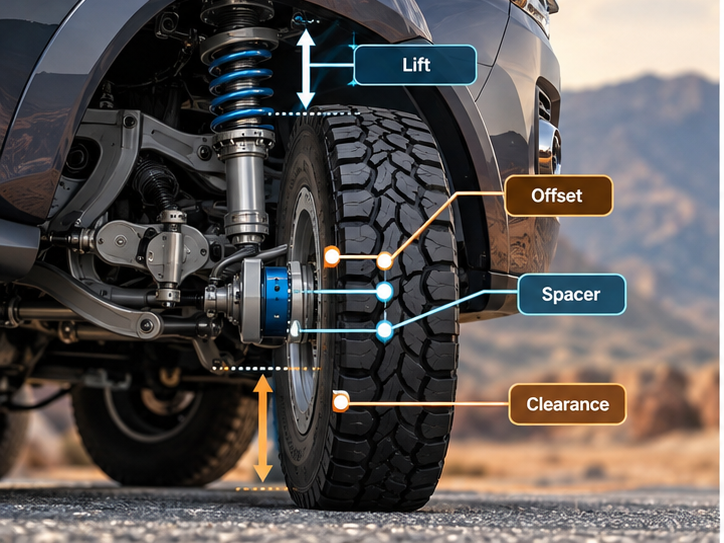
The exact fit depends on the tire’s actual width and diameter, wheel width, Offset, suspension, and available clearance.
A 33-inch setup can be attractive for owners who want:
- More ground clearance
- More sidewall
- Better suitability for light off-road use
- A balanced daily-driving setup
It can be especially practical when the Patrol remains a daily driver.
Moving to 35-Inch Tires
A 35-inch tire creates a more substantial change.
The larger diameter and potentially greater width can affect clearance around the fender, suspension, steering components, and wheel well.
Depending on the exact setup, owners may need to consider:
- Suspension Lift
- Wheel Offset
- Tire width
- Fender clearance
- Steering clearance
- Alignment
The key point is to select a 35-inch tire with the wheel, not buy it separately.

What About 37-Inch Tires?
A 37-inch tire is generally better suited to a more heavily modified Patrol.
At this size, clearance becomes much more important. Consider not only how the tire looks when the vehicle is parked, but also what happens during steering and suspension compression.
A 37-inch setup can affect acceleration, braking, fuel consumption, steering, speedometer accuracy, and drivetrain load.
For serious off-road builds, these compromises may be acceptable. For a Patrol used mainly for daily commuting, a smaller setup may provide better overall balance.
Patrol Y62/Y63 Fitment Comparison
| Setup | Wheel Size | Tire Size | Best For | Lift | Spacer | Fitment Consideration |
|---|---|---|---|---|---|---|
| Factory Comfort | 18–20″ | Factory size | City & Highway | No | No | Best overall factory balance |
| Mild Off-Road | 18″ | 33″ | City + Desert | Usually No* | Usually No* | Good balance of comfort and clearance |
| Desert Focus | 17–18″ | 33–35″ | Sand & Desert | May be needed* | Depends on Offset* | More sidewall and off-road flexibility |
| Serious Off-Road | 17–18″ | 35″ | Desert + Technical Trails | Often considered* | Depends on wheel fitment* | Check fender, steering, and suspension clearance |
| Extreme Build | 17–18″ | 37″ | Rock Crawling & Extreme Off-Road | Typically Required* | May be required* | Requires detailed clearance and suspension planning |
Important: Lift and Spacer requirements are not determined by tire diameter alone. Check exact tire dimensions, wheel width, Offset, brake clearance, suspension setup, and the specific Y62/Y63 configuration before installation.
Which Wheel and Tire Setup Is Best for Desert Driving?
For desert use, the goal is not necessarily to use the largest wheel.
A smaller compatible wheel with a taller sidewall can be advantageous because the extra sidewall provides more cushioning over rough terrain.
An 18-inch setup, or a compatible 17-inch configuration where appropriate, may therefore appeal to an owner who prioritizes desert use.
The tire itself is equally important. Select a suitable all-terrain or desert-oriented tire based on the vehicle, terrain, load, and manufacturer’s specifications.
Tire pressure also plays an important role in sand driving and should be managed according to the vehicle, tire, and terrain.
What About Rock Crawling?
Rock crawling places even greater demands on the tire and wheel package.
A suitable setup prioritizes:
- Strong sidewall protection
- Appropriate tire construction
- Off-road traction
- Sufficient clearance
- Correct wheel width
- Suitable Offset
A smaller wheel with more tire sidewall can help on technical terrain, provided it clears the brakes.
For serious rock crawling, however, tire size alone does not create capability. Suspension travel, drivetrain, clearance, gearing, and the overall vehicle build also matter.
Does Offset or Spacer Matter?
Absolutely.
Wheel Offset determines how far the wheel sits inward or outward. Changing Offset can affect clearance between the tire and suspension components as well as the fender.
A Spacer can move the wheel outward, but it should not be treated as a universal solution for poor fitment.
In many cases, selecting the correct wheel width and Offset from the beginning is a better approach.
Always verify the complete combination before installing a larger tire.
Does a Larger Tire Need a Lift?
Not necessarily—but the larger the tire, the more carefully you need to evaluate clearance.
A moderate tire upgrade may work with limited modification on some Patrol configurations. Larger 35- or 37-inch tires can require additional suspension or body-clearance work depending on the wheel and tire dimensions.
A Lift should therefore be considered as part of the complete fitment plan rather than as a guaranteed requirement for a particular tire diameter.
Build Your Patrol Setup With FormulaWheel
If you’re upgrading a Nissan Patrol Y62 or Y63, FormulaWheel can be the starting point for selecting the right tire and wheel combination.
Whether you want to keep the factory-style 18– or 20-inch setup, move to a compatible 17-inch wheel, or build a larger 33-, 35-, or 37-inch off-road setup, the right choice depends on your vehicle specification and how you actually drive.
Visit FormulaWheel to explore available wheels and tires and choose a setup designed around your Patrol’s requirements.
Final Thoughts
The best Nissan Patrol Y62/Y63 setup is not necessarily the largest wheel or tire.
Factory 18- and 20-inch wheels provide a strong starting point, while a compatible 17-inch setup can offer additional sidewall for certain off-road applications. A 33-inch tire can provide a practical upgrade, while 35- and 37-inch tires require increasingly careful planning around clearance, Offset, Lift, and vehicle modifications.
For city and highway driving, prioritize balance and comfort. For desert use, consider wheel diameter, sidewall, tire construction, and pressure management. For rock crawling, focus on clearance, sidewall protection, traction, and the complete suspension setup.
The right combination keeps the Patrol balanced, safe, and capable for how you actually use it.
FAQ
What are the factory wheel sizes for the Nissan Patrol Y62 and Y63?
Factory wheel sizes vary by model year, market, and trim. 18- and 20-inch configurations are common, so always verify the exact specification of your vehicle before purchasing.
Can I install 17-inch wheels on a Nissan Patrol?
A compatible 17-inch wheel may be possible on some configurations, but you must confirm brake clearance, width, Offset, bolt pattern, and load capacity first.
Are 18-inch wheels better than 20-inch wheels for desert driving?
An 18-inch wheel can provide more sidewall with the right tire, which may help with off-road comfort and rough terrain. The exact tire and vehicle setup still matter.
Can a Patrol use 35-inch tires?
You may be able to fit a 35-inch tire, depending on the vehicle, wheel, tire width, Offset, suspension, and available clearance. Additional modification may be necessary.
Can a Patrol use 37-inch tires?
You can use 37-inch tires on modified Patrol builds, but they require careful planning for clearance, suspension, steering, drivetrain load, and overall vehicle balance.
Do I need a Lift for larger Patrol tires?
Not every larger tire requires the same Lift. Fitment depends on actual tire dimensions, wheel Offset, suspension, and clearance throughout steering and suspension movement.
Are Spacers necessary for larger tires?
Not always. The correct wheel Offset may provide the required clearance without Spacers. If you consider a spacer, it should be specifically matched to the vehicle and wheel setup.