
Choosing the right Jeep Wrangler wheel and tire size can transform your vehicle’s performance on highways, sandy trails, and rocky terrain. The right setup improves traction, ground clearance, and off-road capability while maintaining the comfort and handling you need for everyday driving.
However, the best combination depends on your Wrangler generation, trim, factory wheel package, and suspension setup. A Jeep Wrangler Sport may have different fitment limits from a Rubicon, and a Wrangler JL may differ from an older JK.
Jeep Wrangler Factory Wheel and Tire Sizes
Jeep Wrangler factory specifications vary by model year, trim, and market. Many Wrangler configurations use 17-inch wheels, while some versions offer 18-inch or larger wheels. Original tire sizes also vary, so check your vehicle’s door-jamb tire placard or owner’s manual before selecting an upgrade.
For off-road builds, drivers often consider 33-, 35-, or 37-inch tires. These are overall tire diameters, not wheel sizes, and each step up can affect clearance, gearing, steering, and braking.

Jeep Wrangler Wheel and Tire Size Comparison
The sizes below are common options to evaluate for suitable Wrangler configurations, not guaranteed direct-fit recommendations for every model.
| Wheel size | Tire size or diameter | Typical use |
|---|---|---|
| 17 inch | 265/70R17 | Daily driving and light trails |
| 17 inch | 285/70R17 | Mixed road and off-road use |
| 17 inch | 33×12.50R17 | More sidewall and off-road capability |
| 17 inch | 35×12.50R17 | More demanding off-road builds |
| 17 inch | 37×12.50R17 | Specialized builds with verified clearance |
| 18 inch | 275/70R18 | Road and light off-road driving |
| 18 inch | 285/70R18 | Balanced highway and trail use |
| 20 inch | 275/55R20 | Road-focused custom setups |
Before purchasing, confirm the bolt pattern, wheel width, offset, load rating, brake clearance, and actual tire dimensions. Some tire sizes may require different wheels or suspension modifications, even when the nominal diameter appears suitable.
17 vs. 18 vs. 20 Inch Wheels
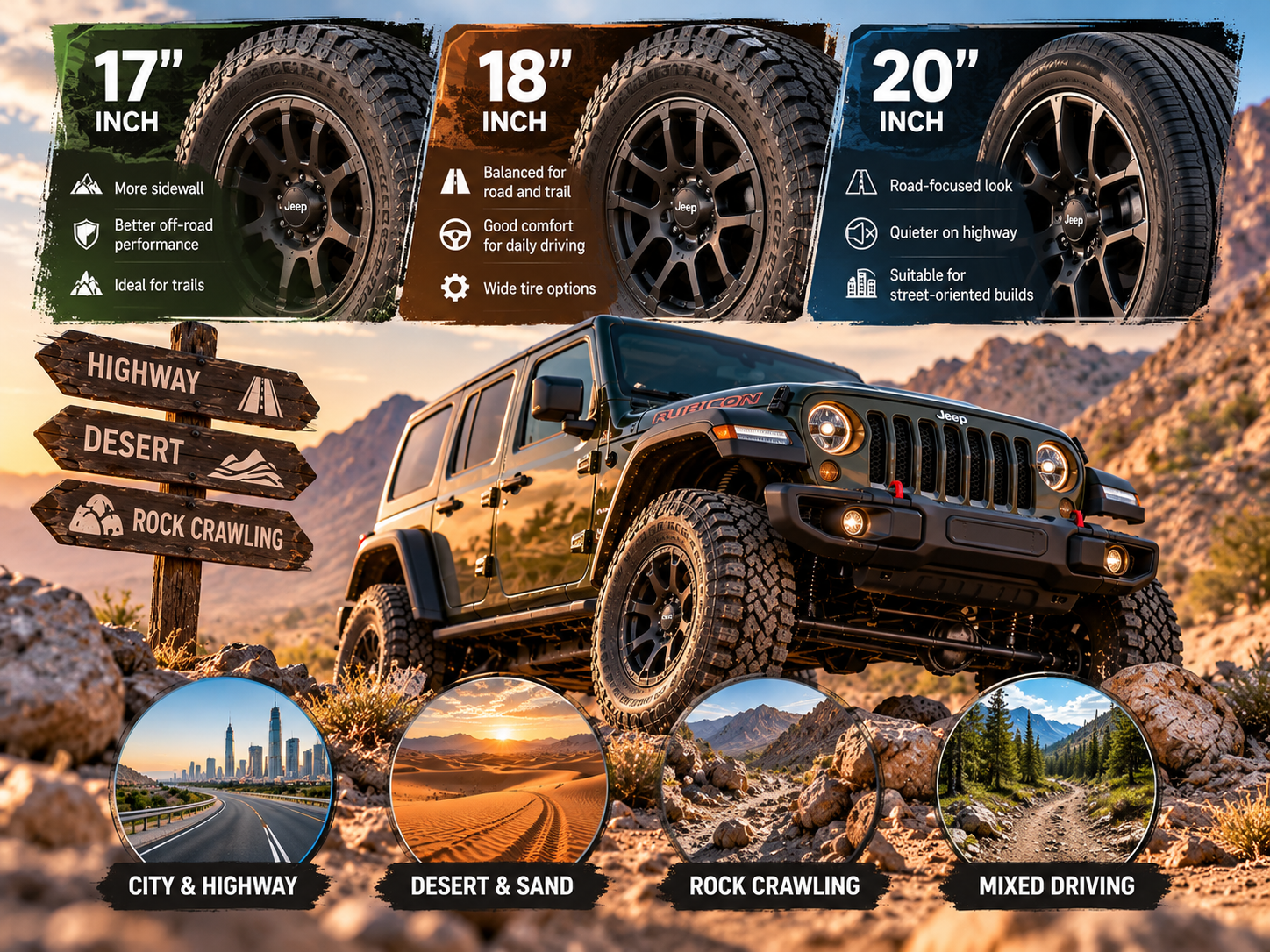
17-inch wheels: Often a strong choice for Wrangler owners who prioritize off-road performance. A compatible 17-inch wheel provides more tire sidewall, which helps on uneven terrain. Check brake clearance, especially on certain trims and modified vehicles.
18-inch wheels: Offer a practical balance for drivers who split their time between city roads, highways, and moderate trails. Tire availability and sidewall height depend on the size you choose.
20-inch wheels: Can create a road-focused appearance and work well for some street-oriented builds. However, the reduced sidewall of many 20-inch tire combinations can be less suitable for rocky trails where tire protection and controlled air pressure matter.
Can a Jeep Wrangler Run 33-, 35-, or 37-inch tires?
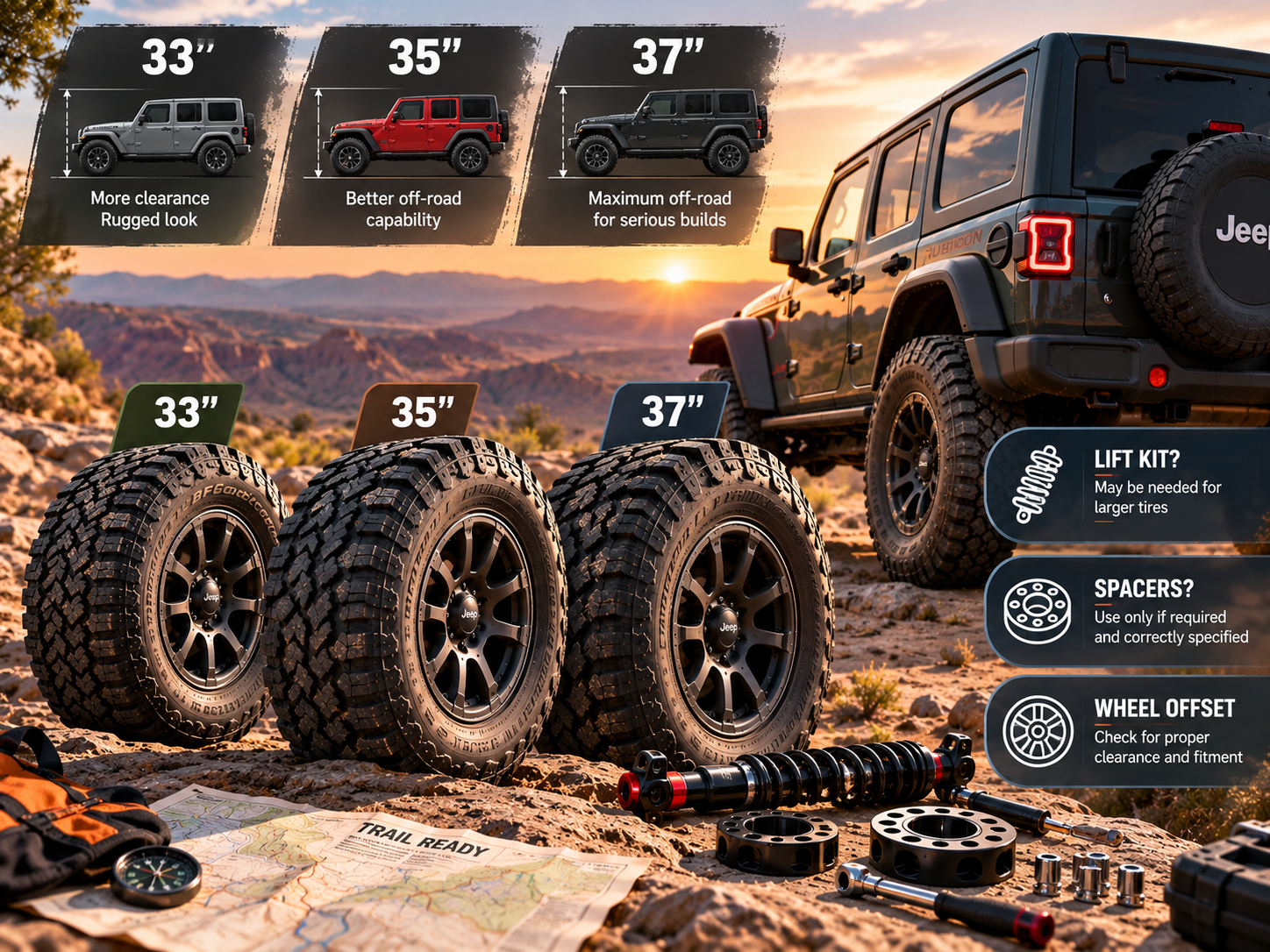
33-inch tires: A popular upgrade for drivers who want improved ground clearance and a more rugged look without moving immediately to an extreme setup. Fitment still depends on the exact Wrangler and wheel specifications.
35-inch tires: Can offer more clearance and off-road capability. Depending on the model, wheel offset, suspension travel, and intended use, you may need a lift or other adjustments.
37-inch tires: Usually better suited to carefully planned off-road builds. They may require additional suspension and clearance work and can affect gearing, braking performance, steering loads, and fuel economy. A lift alone does not guarantee proper fitment.
Always test clearance through steering movement and suspension compression, not just while the vehicle is parked on level ground.

Wheel Offset, Lift Kits and Spacers
Wheel offset affects how far the wheel sits inward or outward. The wrong offset can cause rubbing against suspension components or bodywork, or make the tires extend farther beyond the fenders.
A lift kit may create more room for larger tires, but it changes suspension geometry and doesn’t automatically resolve every clearance issue. Wheel spacers should not be used as a default solution; they must be correctly specified and installed.
For a reliable setup, evaluate tire diameter, wheel width, offset, steering clearance, and suspension travel together. Larger tires can also affect speedometer accuracy and may require gearing or calibration changes.
Choosing Jeep Wrangler Tires for Different Terrains
- City and highway: Consider highway-terrain or road-friendly all-terrain tires for a quieter ride and predictable handling.
- Desert and sand: Choose all-terrain tires with appropriate load capacity and durable sidewalls. Adjust tire pressure based on the terrain and the manufacturer’s guidance.
- Rock crawling: Prioritize traction, sidewall protection, and a setup that allows adequate clearance throughout suspension travel.
- Mixed driving: An all-terrain tire can be a practical compromise for owners who commute during the week and explore trails on weekends.
In hot climates such as Kuwait, inspect tire condition regularly and check pressure when tires are cold. The right load rating and proper maintenance matter as much as choosing a larger size.
Find the Right Jeep Wrangler Tires at FormulaWheel
At FormulaWheel, explore tire options that match your Wrangler and driving style. Before ordering, confirm your model year, trim, current wheel specifications, and intended tire size. This helps narrow your options and reduces the risk of fitment problems after installation.
Final Thoughts
The best Jeep Wrangler wheel and tire size depends on how you use your vehicle. A compatible 17-inch setup is often a practical starting point for off-road driving, while 18- and 20-inch wheels can suit other priorities. Choose 33-, 35-, or 37-inch tires only after checking the complete fitment requirements for your specific Wrangler.
Frequently Asked Questions
What is the standard tire size for a Jeep Wrangler?
No single size fits every Wrangler. Factory tire sizes vary by generation, model year, trim and market. Check your vehicle’s tire placard or owner’s manual.
Are 17-inch wheels better for off-roading?
They can be an excellent option because compatible 17-inch wheels allow tires with taller sidewalls. However, brake clearance and wheel specifications must be verified.
Can I install 35-inch tires on a Jeep Wrangler without a lift?
It depends on the Wrangler generation, trim, wheel offset, and clearance requirements. Do not assume 35-inch tires will fit every stock Wrangler without rubbing.
Can a Jeep Wrangler use 37-inch tires?
Some Wrangler builds can accommodate 37-inch tires, but the setup may require suspension, clearance, or drivetrain-related changes. Have a professional check the complete configuration before installation.
Do larger tires affect fuel economy and handling?
Yes. Larger or heavier tires can affect acceleration, braking, fuel consumption, steering response, and speedometer accuracy. The impact depends on tire weight, diameter, gearing, and vehicle setup.