
Choosing the right Ford Raptor wheel and tire size can noticeably affect comfort, handling, ground clearance, and off-road performance. Whether you drive an F-150 Raptor or a Ranger Raptor, the ideal setup depends on your model year, factory equipment, and how you use your truck.
For drivers who switch between highways, city roads, and desert trails, the goal is to find a combination that delivers dependable performance without sacrificing everyday drivability.
Ford Raptor Factory Wheel and Tire Sizes
The F-150 Raptor and Ranger Raptor have different dimensions and fitment requirements. Many versions use 17-inch wheels from the factory, but original tire sizes vary by generation, trim, and package.
The F-150 Raptor commonly uses a tire around 315/70R17, while the F-150 Raptor R has offered a 37-inch tire package. The Ranger Raptor commonly uses 285/70R17. Always confirm the specifications for your exact vehicle before ordering.
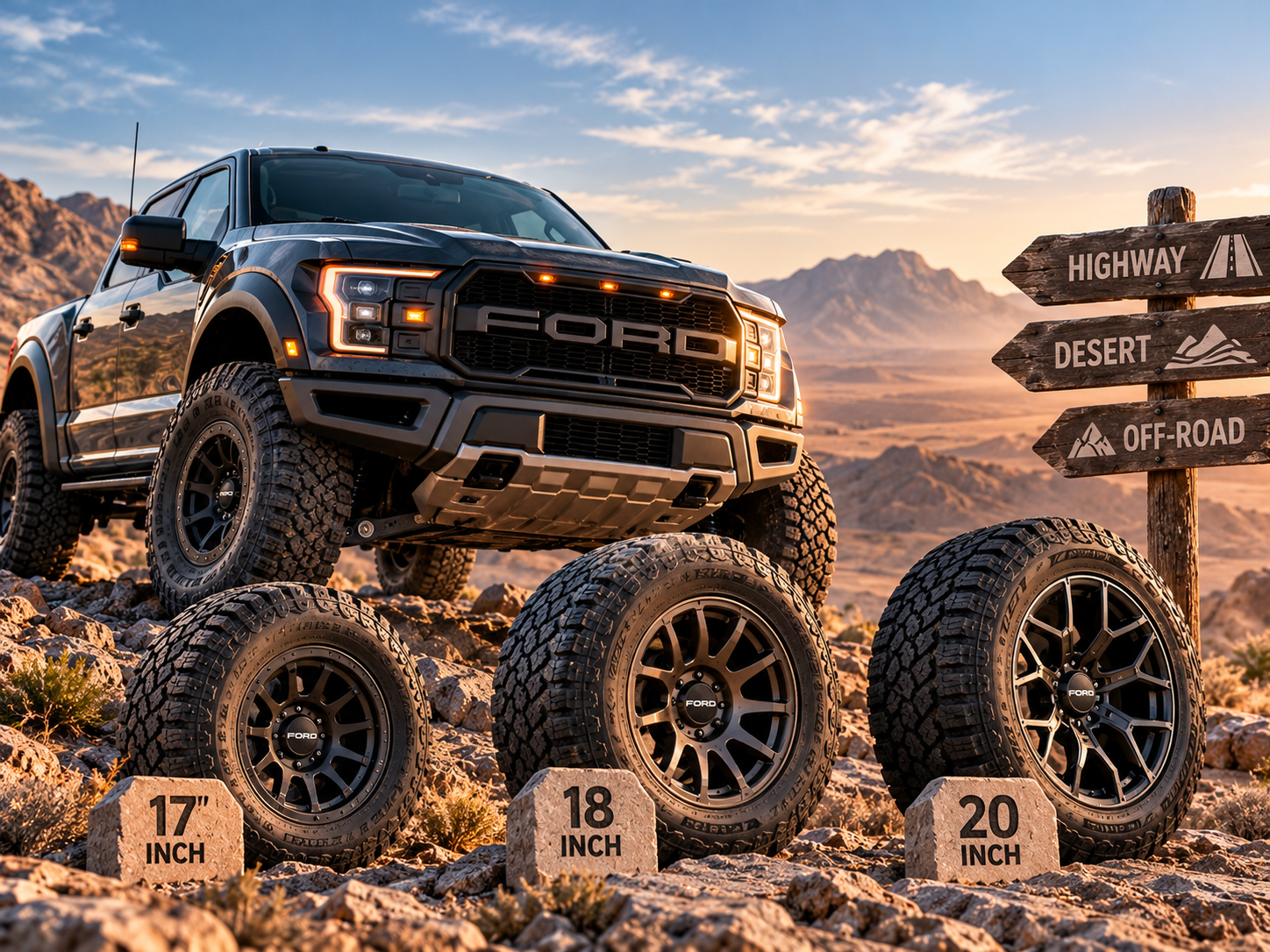
Ford Raptor Wheel and Tire Size Comparison
The following sizes are options to evaluate, not guaranteed direct-fit combinations for every Raptor.
| Wheel size | Tire size to consider | Best suited for |
|---|---|---|
| 17 inch | 285/70R17 | Ranger Raptor and moderate off-road setups, subject to fitment |
| 17 inch | 315/70R17 | F-150 Raptor-style all-terrain performance |
| 17 inch | 35×12.50R17 | Larger-tire builds with confirmed clearance |
| 17 inch | 37×12.50R17 | Specialized F-150 Raptor builds or compatible factory packages |
| 18 inch | 275/70R18 | Mixed highway and light off-road use, if compatible |
| 18 inch | 285/70R18 | Balanced road and trail setup, subject to clearance |
| 18 inch | 295/70R18 | Larger-tire conversion requiring careful checks |
| 20 inch | 275/60R20 | Road-focused custom setup, if wheel and brake fitment allow |
| 20 inch | 295/60R20 | Road and light-trail use, after clearance verification |
Important: A 17-inch wheel must clear the brakes and suspension components. Wheel diameter alone doesn’t determine compatibility. Before purchasing, check the bolt pattern, wheel width, offset, load rating, tire dimensions, and exact model year.
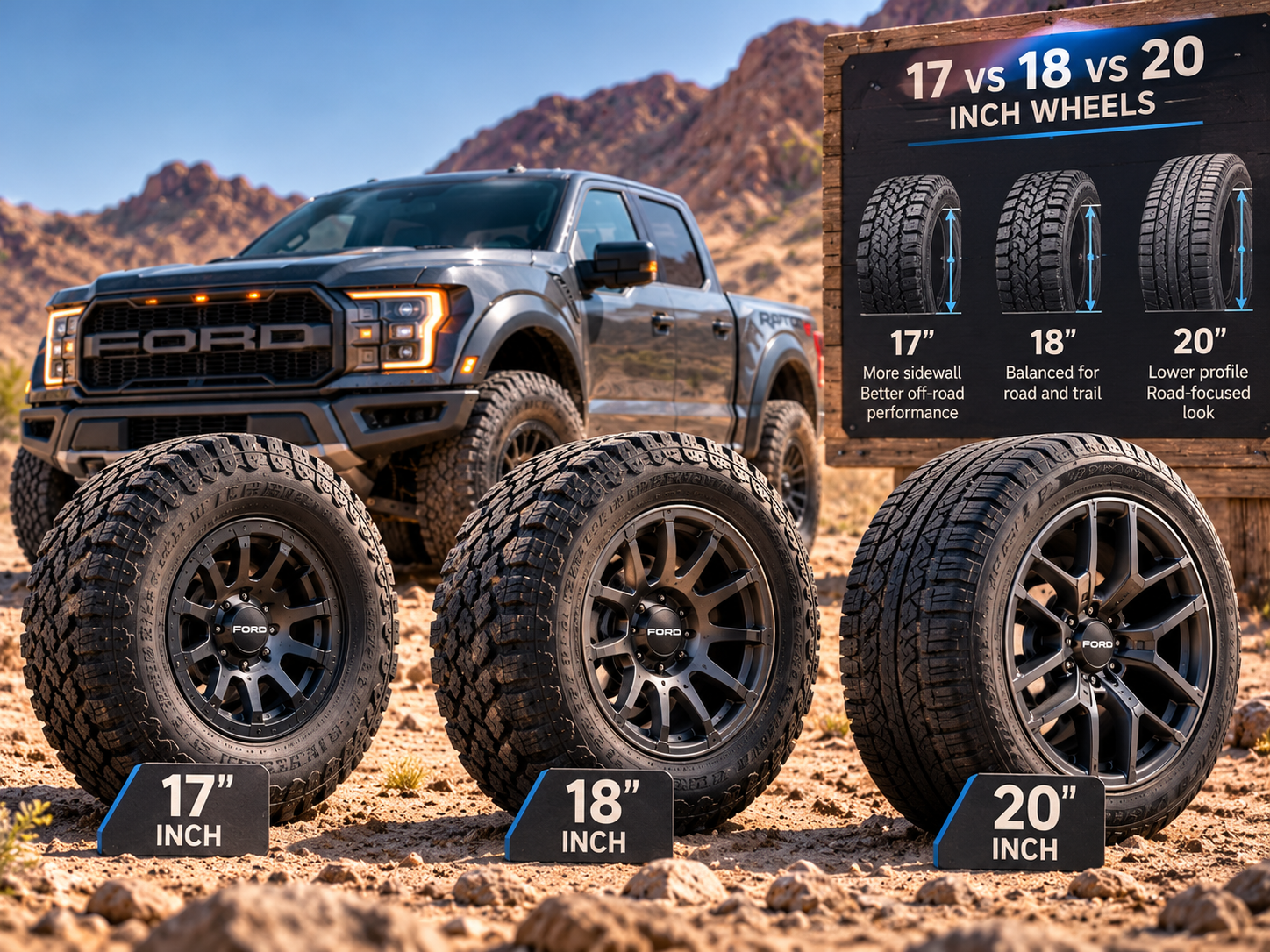
17 vs. 18 vs. 20 Inch Wheels
17-inch wheels: Often the preferred choice for serious off-road driving because they can accommodate tires with taller sidewalls. The extra sidewall can help on uneven terrain when tire pressure is adjusted appropriately. Confirm brake clearance, particularly on modified trucks.
18-inch wheels: A useful middle ground for drivers who want a mix of road comfort and trail capability. The final result depends on the tire’s overall diameter, sidewall height, and wheel specifications.
20-inch wheels: Can suit a road-focused Raptor build and offer a different look, but typically provide less sidewall at comparable tire widths. For demanding desert trails or rocky terrain, a properly fitted 17-inch setup may be more practical.
Do You Need a Lift Kit or Wheel Spacers?
Not necessarily. A larger tire does not automatically require a lift or spacers. Fitment depends on the tire’s actual dimensions, wheel offset and width, suspension travel, steering clearance, and the vehicle’s existing modifications.
A lift may create clearance for some combinations, but it doesn’t solve every rubbing issue. Spacers move the wheel outward and can change fender and suspension clearance, while also affecting wheel geometry. Use correctly specified components and have the complete setup inspected before driving off-road.
Choosing Tires for Highway, Desert and Off-Road Driving
- Daily driving and highway use: Consider highway-terrain or road-friendly all-terrain tires for quieter operation and predictable handling.
- Desert driving: Choose durable all-terrain tires with suitable load capacity and sidewall protection. Correct tire pressure for the terrain is also important.
- Rock crawling and demanding trails: Prioritize suitable sidewall strength, traction, and a wheel-and-tire combination that maintains adequate clearance throughout suspension travel.
In Kuwait’s hot conditions, tire condition, correct load rating, and regular pressure checks matter just as much as tire size. Avoid choosing a larger tire based on appearance alone; added weight and diameter can affect acceleration, braking, and fuel consumption.
Find the Right Ford Raptor Tires at FormulaWheel
At FormulaWheel, compare tire options for your driving style and build. Before ordering, confirm your Raptor’s model year, whether it is an F-150 or Ranger, current wheel specifications, and the intended tire size. This helps narrow the choices to options that suit your truck and driving needs.
Final Thoughts
The best Ford Raptor wheel and tire size depends on the exact model and your priorities. A factory-style 17-inch setup can be an excellent starting point for off-road use, while 18- and 20-inch wheels may suit specific custom or road-focused builds. Confirm fitment before buying, especially when moving to 35- or 37-inch tires.
Frequently Asked Questions
What is the factory tire size on a Ford Raptor?
It depends on the model. Many F-150 Raptors use 315/70R17, some F-150 Raptor R versions have a 37-inch package, and the Ranger Raptor commonly uses 285/70R17. Verify the exact year and trim.
Can I install 35-inch tires on a Ford Raptor?
Some Raptor configurations can accommodate 35-inch tires, but clearance depends on the vehicle, wheel dimensions, offset, and suspension setup. Do not assume every combination is a direct fit.
Can I fit 37-inch tires without a lift?
Some factory-equipped F-150 Raptor models offer 37-inch tires, but that doesn’t mean every Raptor can run them without modifications. Check the exact vehicle configuration and clearance.
Are 20-inch wheels good for off-roading?
They can work for light off-road use with suitable tires, but a compatible 17-inch setup generally offers more sidewall flexibility for demanding terrain.
Do I need wheel spacers for larger tires?
Not always. Spacers should only be considered after checking wheel offset, tire clearance, and suspension geometry. They are not a universal fix for rubbing.