
Choosing between Beadlock vs Bead Grip wheels is an important decision for 4×4 owners who regularly drive off-road. Both technologies are designed to help keep the tire bead securely seated on the wheel, especially when driving at lower tire pressures.
However, they use different designs and offer different advantages. Traditional Beadlock wheels use a mechanical clamping system, while Bead Grip wheels use a specially designed bead-seat area to improve tire retention without a traditional external locking ring.
So, which one is better for your off-road vehicle?
Beadlock vs Bead Grip: What Is the Difference?
The main difference is how each wheel helps retain the tire bead.
Beadlock wheels use a mechanical ring that clamps the tire’s outer bead against the wheel. This creates a physical connection designed to help prevent the tire bead from separating from the rim at very low inflation pressures.
Bead Grip wheels use a specially engineered bead-seat profile to improve the grip between the tire bead and wheel. They do not use the traditional external clamping ring found on conventional external Beadlock wheels.
Both systems aim to improve bead retention, but their engineering and operating characteristics are different.
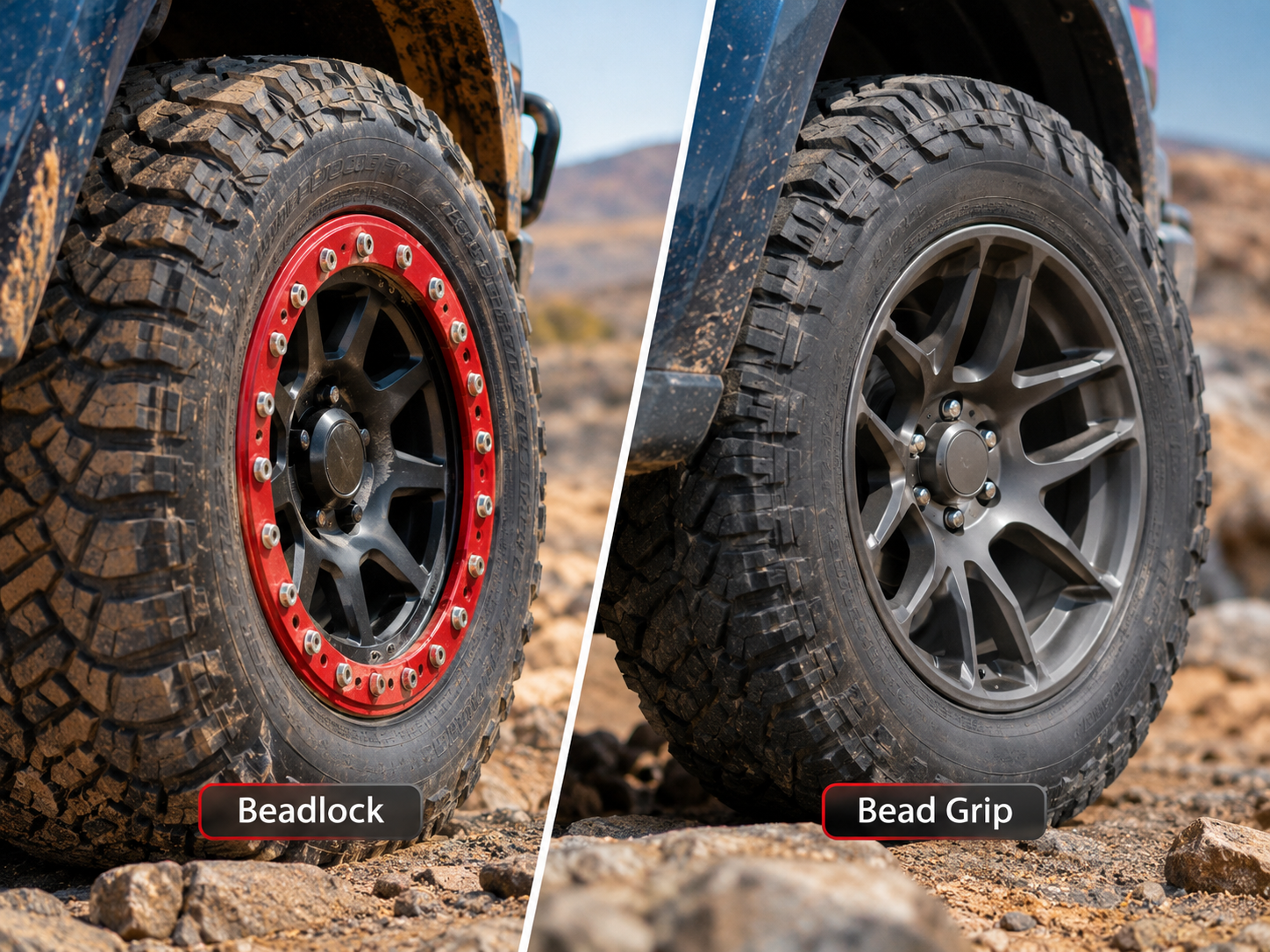
Beadlock vs Bead Grip: Main Differences
| Feature | Traditional Beadlock | Bead Grip |
|---|---|---|
| Bead retention | Mechanical clamping ring | Specially engineered bead-seat profile |
| External locking ring | Yes | No traditional external ring |
| Low-pressure off-roading | Designed for very low pressures | Designed to improve bead retention |
| Maintenance | Ring hardware requires inspection | No external ring bolts to maintain |
| Appearance | Distinctive locking-ring design | More conventional wheel appearance |
| Weight | Ring can add weight | Depends on wheel design |
| Street use | May face legal restrictions | Depends on wheel certification and local regulations |
| Best suited for | Specialized off-road applications | Drivers seeking improved bead retention without an external ring |
Actual performance depends on the wheel design, tire compatibility, vehicle weight, and driving conditions.
How Do Beadlock Wheels Work?
A traditional external Beadlock wheel has a removable outer ring secured with multiple bolts.
During installation, the tire’s outer bead is positioned between the wheel and the locking ring. The ring is then tightened according to the manufacturer’s specified procedure and torque settings.
This mechanical clamp helps keep the tire bead attached to the wheel when tire pressure is reduced.
Lower pressure can increase the tire’s contact patch and improve traction on certain off-road surfaces. However, it also increases the risk of debeading, particularly during hard cornering or when the tire is pushed sideways against rocks.
Beadlock wheels are therefore popular among rock crawlers and serious off-road enthusiasts.
How Do Bead Grip Wheels Work?
Bead Grip technology uses a specially shaped bead-seat area designed to increase tire retention.
Instead of clamping the tire with an external ring, the wheel’s bead-seat geometry helps resist tire bead movement when running reduced inflation pressures.
This approach can provide an alternative for off-road drivers who want improved bead retention without the additional external hardware of a traditional Beadlock wheel.
However, Bead Grip wheels are not automatically equivalent to true mechanical Beadlocks at every pressure. Always follow the wheel manufacturer’s approved tire-pressure limits and application guidelines.
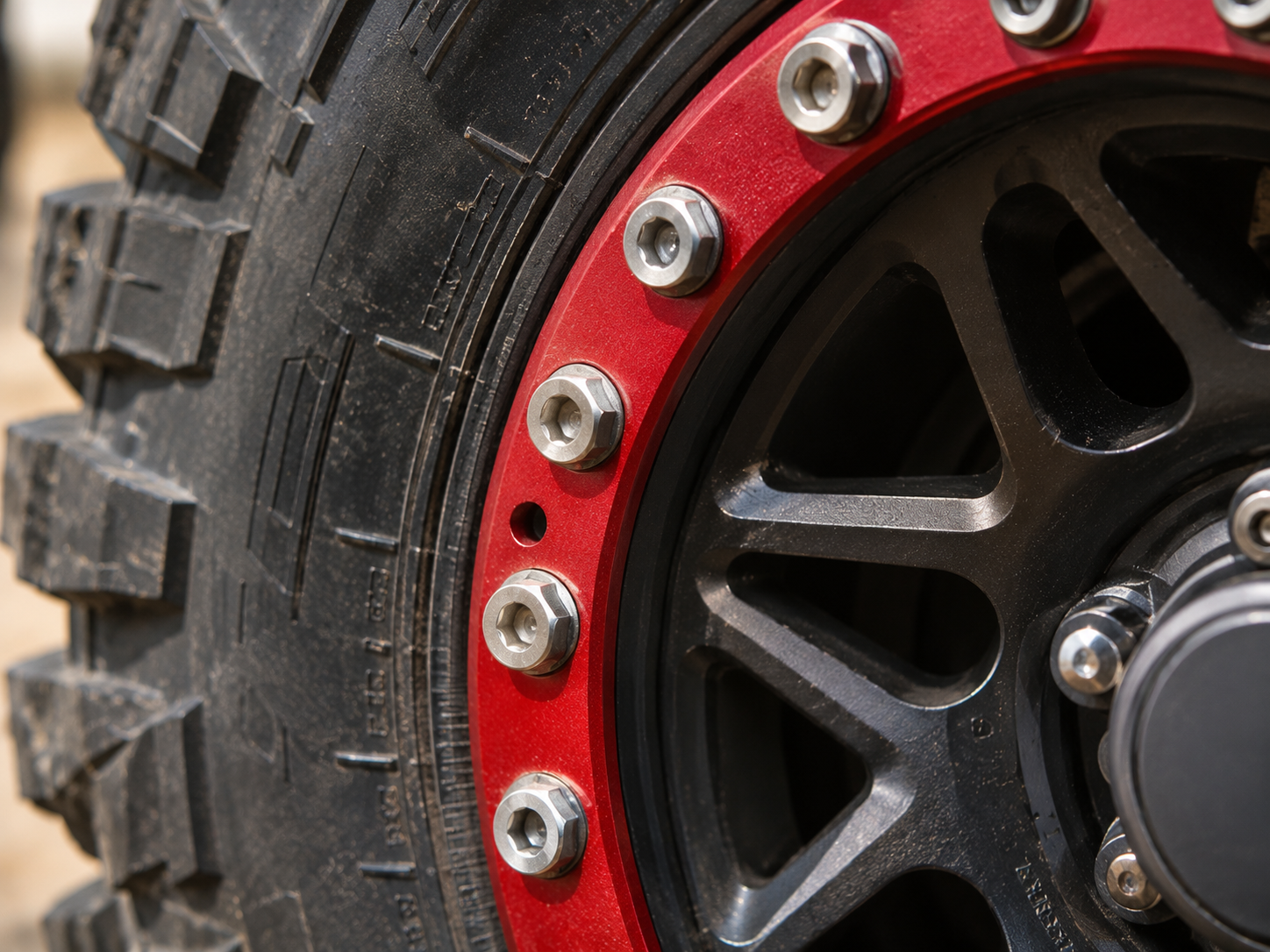
Which Is Better for Low-Pressure Off-Road Driving?
Both systems are relevant when driving at reduced tire pressure, but their capabilities are not identical.
Beadlock wheels are designed for applications where extremely low tire pressures and demanding off-road conditions make mechanical bead clamping valuable.
Bead Grip wheels can be a practical option for drivers who want enhanced bead retention while avoiding a traditional external locking ring.
The right choice depends on the terrain, vehicle weight, tire size, wheel specifications, and the manufacturer’s pressure recommendations.
Never assume that either system allows unlimited pressure reduction. Tire pressure should be adjusted carefully according to the tire and wheel manufacturers’ instructions.
Beadlock vs Bead Grip for Desert Driving and Rock Crawling
The best option depends on the type of off-roading you do.
Desert driving: Both technologies may be useful, but many desert drivers can achieve good performance with suitable tires and carefully managed pressure. A Beadlock is not automatically necessary for every sand-driving setup.
Rock crawling: Traditional Beadlocks can be especially useful because rocks can place significant sideways forces on tires. Bead Grip wheels may also offer improved retention, depending on the model and operating limits.
Mixed daily and off-road driving: Bead Grip wheels may appeal to drivers who want a more conventional wheel design without an external locking ring. Always check the wheel’s road-use certification.
Which Should You Choose: Beadlock or Bead Grip?
Choose traditional Beadlock wheels if you:
- Frequently drive demanding off-road trails.
- Need mechanical bead clamping for your intended application.
- Run very low tire pressures within approved limits.
- Accept additional hardware inspection and maintenance.
Choose Bead Grip wheels if you:
- Want improved tire bead retention without an external locking ring.
- Prefer a more conventional wheel design.
- Drive a mix of paved roads and off-road terrain.
- Find a model approved for your vehicle and intended use.
For most buyers, the decision should come down to actual off-road requirements, manufacturer specifications, and local road-use regulations—not appearance alone.
At FormulaWheel, explore wheel options and choose a setup that matches your 4×4, tire specifications, and driving conditions.
Frequently Asked Questions
What is the difference between Beadlock and Bead Grip wheels?
Traditional Beadlock wheels use an external mechanical ring to clamp the tire bead. Bead Grip wheels use a specially designed bead-seat profile to improve tire retention without a traditional external locking ring.
Are Beadlock wheels better than Bead Grip wheels?
Traditional Beadlocks can offer mechanical bead clamping for demanding low-pressure applications. Bead Grip wheels offer a different approach that may suit mixed-use drivers. The better option depends on the application and manufacturer’s specifications.
Can Bead Grip wheels run lower tire pressure?
They are designed to improve bead retention at reduced pressures, but the permitted pressure depends on the specific wheel and tire combination. Follow the manufacturer’s limits.
Are Beadlock wheels safe for highway driving?
Only use a Beadlock wheel on public roads if the exact product is approved for that use and complies with local regulations. Installation and maintenance must follow the manufacturer’s instructions.
Do Beadlock wheels require maintenance?
Yes. External Beadlock hardware should be inspected regularly, and ring bolts must be installed and tightened according to the manufacturer’s specifications.
Do I need Beadlock wheels for desert driving in Kuwait?
Not necessarily. Many drivers use conventional or Bead Grip wheels for desert trips. Your tire type, vehicle weight, driving style, and recommended tire pressure are important factors when choosing a wheel.