
Choosing between All-Terrain vs Mud-Terrain tires is a common question for 4×4 and SUV owners. Both types are designed to handle off-road conditions, but they offer different levels of comfort, traction, and road performance.
All-Terrain (AT) tires are built for a balance between paved roads and off-road driving. Mud-Terrain (MT) tires have more aggressive tread designs intended for challenging terrain, especially deep mud and loose surfaces.
So, which one is best for your vehicle? Let’s compare their differences and find out which option makes more sense for your driving conditions.
All-Terrain vs Mud-Terrain Tires: What Is the Difference?
The biggest difference between AT and MT tires is their tread design and intended use.
All-Terrain (AT) tires feature a moderately aggressive tread pattern designed for mixed driving. They are suitable for highways, city roads, desert tracks, and light-to-moderate off-road conditions.
Mud-Terrain (MT) tires feature larger tread blocks and wider grooves. Their design helps provide traction in deep mud, loose soil, and demanding off-road environments. They are generally more specialized for off-road use than AT tires.
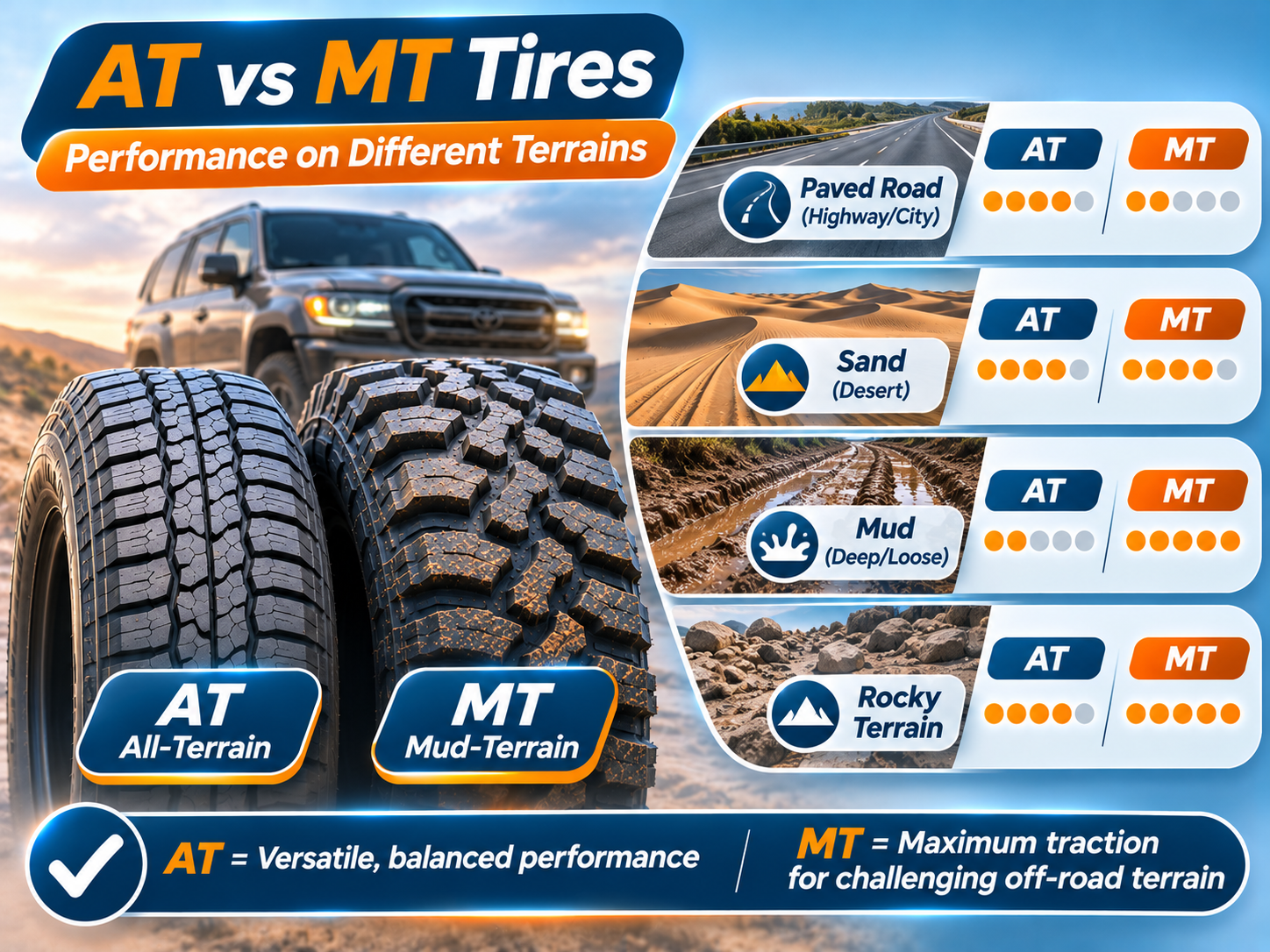
AT vs MT Tires: Main Differences
| Feature | All-Terrain (AT) | Mud-Terrain (MT) |
|---|---|---|
| Tread design | Moderately aggressive | Highly aggressive |
| Highway comfort | Generally better | Generally lower |
| Road noise | Usually quieter | Usually louder |
| Mud traction | Moderate to good | Usually better |
| Sand performance | Depends on tread and pressure | Depends on tread and pressure |
| Rocky terrain | Good with suitable construction | Strong off-road capability |
| Daily driving | More practical for most users | More specialized |
| Main purpose | Mixed road and off-road use | Challenging off-road conditions |
Actual performance depends on the tire model, construction, size, inflation pressure, and vehicle setup.
Which Is Best for Daily Driving: AT or MT Tires?
For most drivers who use their 4×4 every day, All-Terrain tires are the more practical choice.
AT tires generally offer:
- Lower road noise than aggressive MT designs.
- Better everyday comfort.
- More balanced handling on paved roads.
- Good versatility for occasional off-road trips.
- A practical combination of highway and off-road performance.
Mud-Terrain tires can also be driven on highways, but their aggressive tread patterns often produce more noise and a less comfortable ride. Depending on the model and driving conditions, they may also wear faster on paved roads.
If your vehicle spends most of its time in Kuwait city traffic and only occasionally visits the desert, AT tires are usually the more sensible option.
Which Is Better for Off-Road Driving?
The best choice depends on the type of terrain you encounter.
Deep mud and loose soil: MT tires generally have an advantage because their large grooves help clear mud and maintain traction.
Rocky trails: Both AT and MT tires can perform well. MT tires may offer aggressive traction, but sidewall construction, puncture resistance, and tire pressure are also important.
Desert sand: AT tires can be an excellent option for many desert drivers. However, MT tires are not automatically unsuitable for sand. Tread design, tire weight, vehicle weight, and correct inflation pressure all influence performance.
Neither AT nor MT tires are automatically better in every off-road situation.
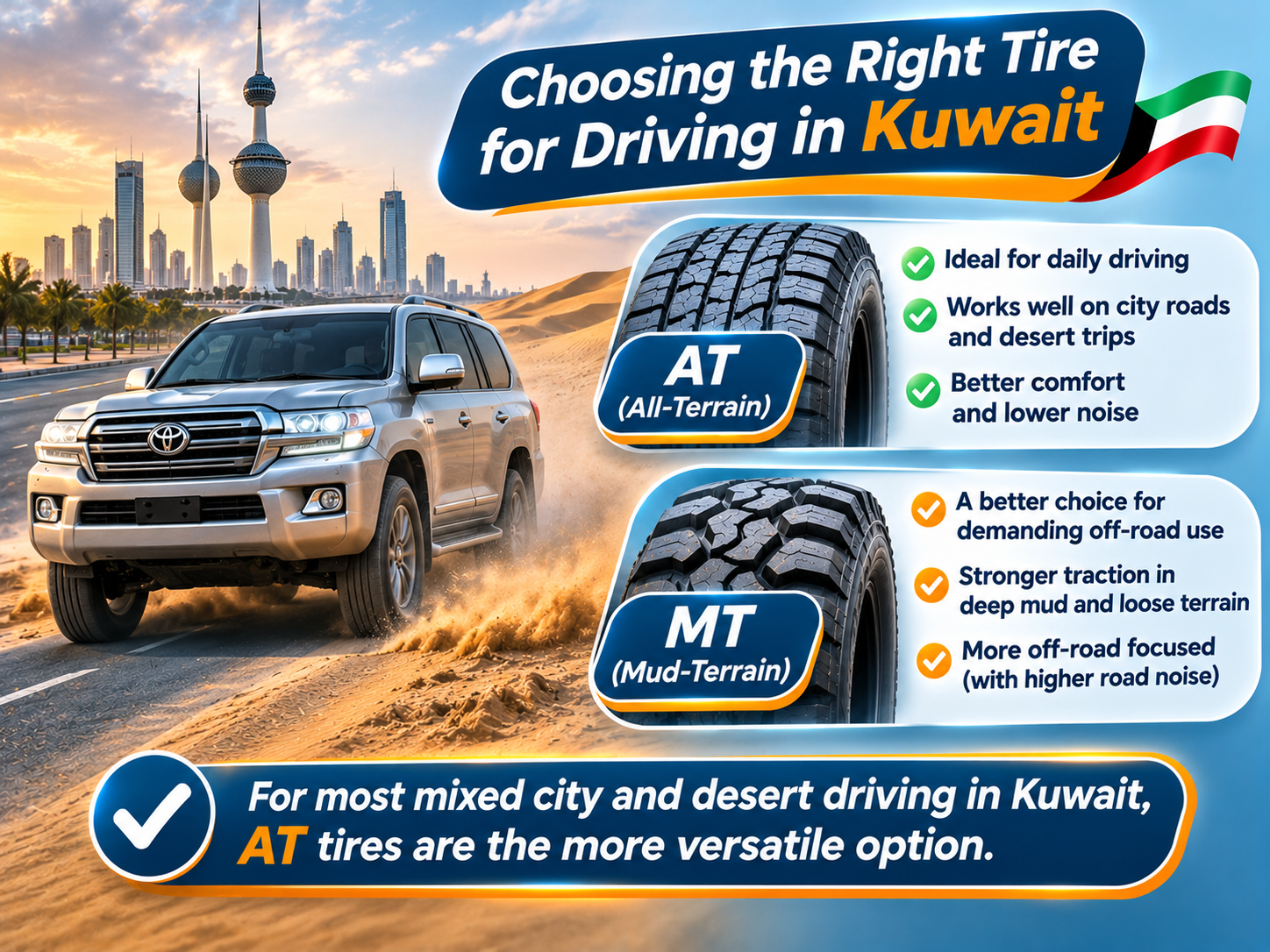
All-Terrain vs Mud-Terrain Tires for Kuwait
For many 4×4 owners in Kuwait, AT tires offer a good balance because vehicles often travel between paved roads and desert terrain.
Consider AT tires if you:
- Drive your vehicle daily.
- Take occasional weekend desert trips.
- Want a balance between comfort and off-road capability.
- Prefer lower road noise on highways.
Consider MT tires if you:
- Frequently drive through deep mud or difficult off-road terrain.
- Participate in demanding off-road activities.
- Prioritize aggressive off-road traction over highway comfort.
- Accept additional road noise and a more specialized driving experience.
For typical mixed city and desert driving, AT tires are often the more versatile option. However, your exact terrain and driving habits should determine the final choice.
Can You Replace AT Tires with MT Tires?
Yes, but switching from AT to MT tires requires more than choosing a different tread pattern.
Before buying, check:
- Tire size: Confirm that the new size is compatible with your vehicle.
- Wheel width: Make sure the wheel is within the tire manufacturer’s approved rim-width range.
- Load rating: The replacement tire must meet your vehicle’s load requirements.
- Clearance: Check suspension, fender, and steering clearance.
- Tire weight: Heavier tires can affect acceleration, braking, and fuel consumption.
Compare the specifications of the exact tire models you are considering. Two tires with the same size designation can have different weights, dimensions, and load ratings.
For additional technical information about tire selection and fitment, explore Tire Rack’s Tire Tech resources.
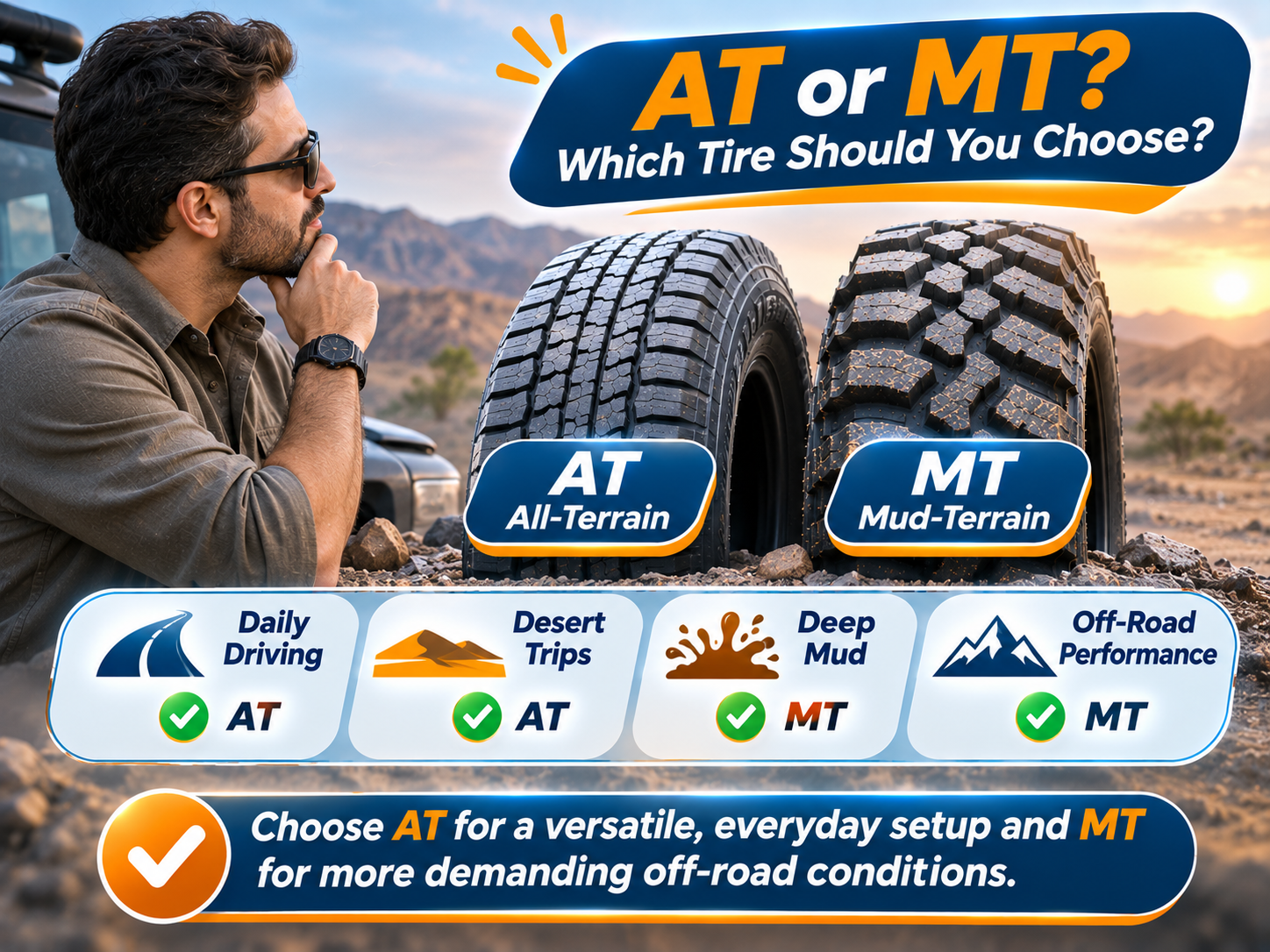
Final Verdict: Should You Choose AT or MT Tires?
Choose All-Terrain tires if you want a versatile option for daily driving, highways, and occasional off-road adventures.
Choose Mud-Terrain tires if your priority is demanding off-road driving, especially in deep mud and challenging terrain, and you are willing to compromise on some everyday comfort.
For most mixed-use SUV and pickup owners in Kuwait, AT tires are a strong starting point. However, frequent off-road enthusiasts may benefit from the specialized traction of a suitable MT tire.
At FormulaWheel, explore tire options and choose a setup that matches your vehicle, wheel specifications, and driving conditions.
Frequently Asked Questions
Are All-Terrain tires better than Mud-Terrain tires?
All-Terrain tires are generally better for mixed driving and everyday use. Mud-Terrain tires are usually better suited to demanding off-road conditions such as deep mud.
What is the difference between AT and MT tires?
AT tires are designed for a balance of road comfort and off-road capability. MT tires have more aggressive tread patterns designed for challenging off-road terrain.
Are MT tires louder than AT tires?
Generally, yes. Mud-Terrain tires often produce more road noise because of their larger tread blocks and open tread design.
Are All-Terrain tires good for desert driving?
Yes. Many AT tires work well in desert conditions, especially when paired with suitable tire pressure and proper driving technique.
Do Mud-Terrain tires wear faster on highways?
Some MT tires may wear faster during regular highway use. Actual wear depends on the tire compound, alignment, inflation pressure, rotation, and driving habits.
Can I use MT tires for daily driving?
Yes, but expect possible compromises in road noise, comfort, and fuel economy. Check the specific tire’s road-use suitability and specifications before buying.
Which tires are better for a Toyota Land Cruiser or Nissan Patrol in Kuwait?
AT tires are often a practical choice for mixed city and desert driving. MT tires may be more suitable for owners who regularly tackle demanding off-road terrain. Always confirm the correct tire size, load rating, and vehicle fitment.