
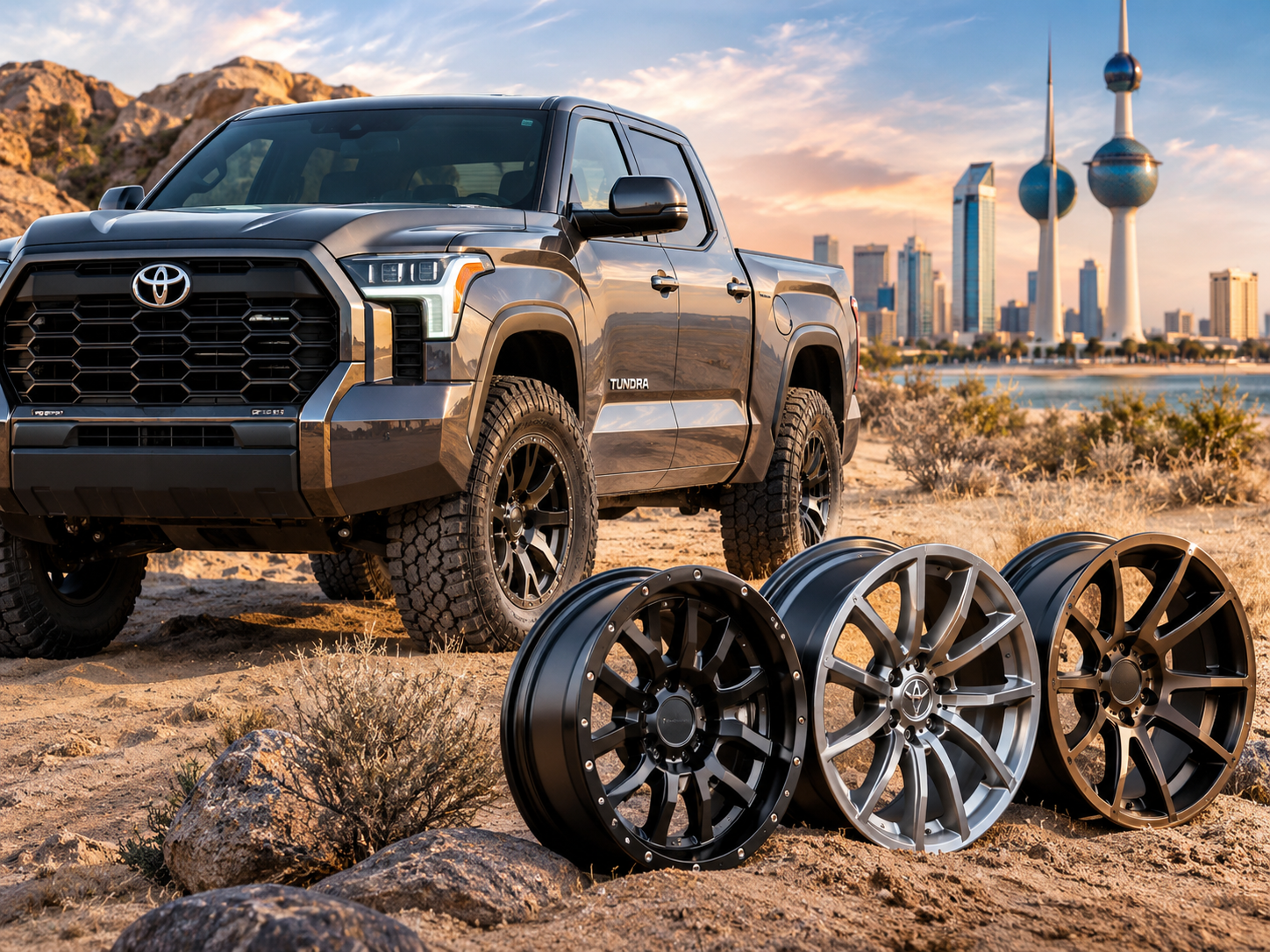
Choosing the right Toyota Tundra wheels can improve your truck’s appearance, handling, and off-road capability. Whether you drive through Kuwait City, travel on highways, or explore desert trails, selecting the correct wheel setup is essential.
However, the best rims are not simply the largest or most aggressive-looking options. Wheel diameter, width, offset, bolt pattern, and load capacity must all match your Tundra’s specifications.
This guide explains how to choose suitable Toyota Tundra wheels for everyday driving and demanding conditions across Kuwait and the GCC.
1. Choose the Right Toyota Tundra Wheel Size
Toyota Tundra wheel specifications vary by model year and trim. Different versions may come with different factory wheel and tire combinations.
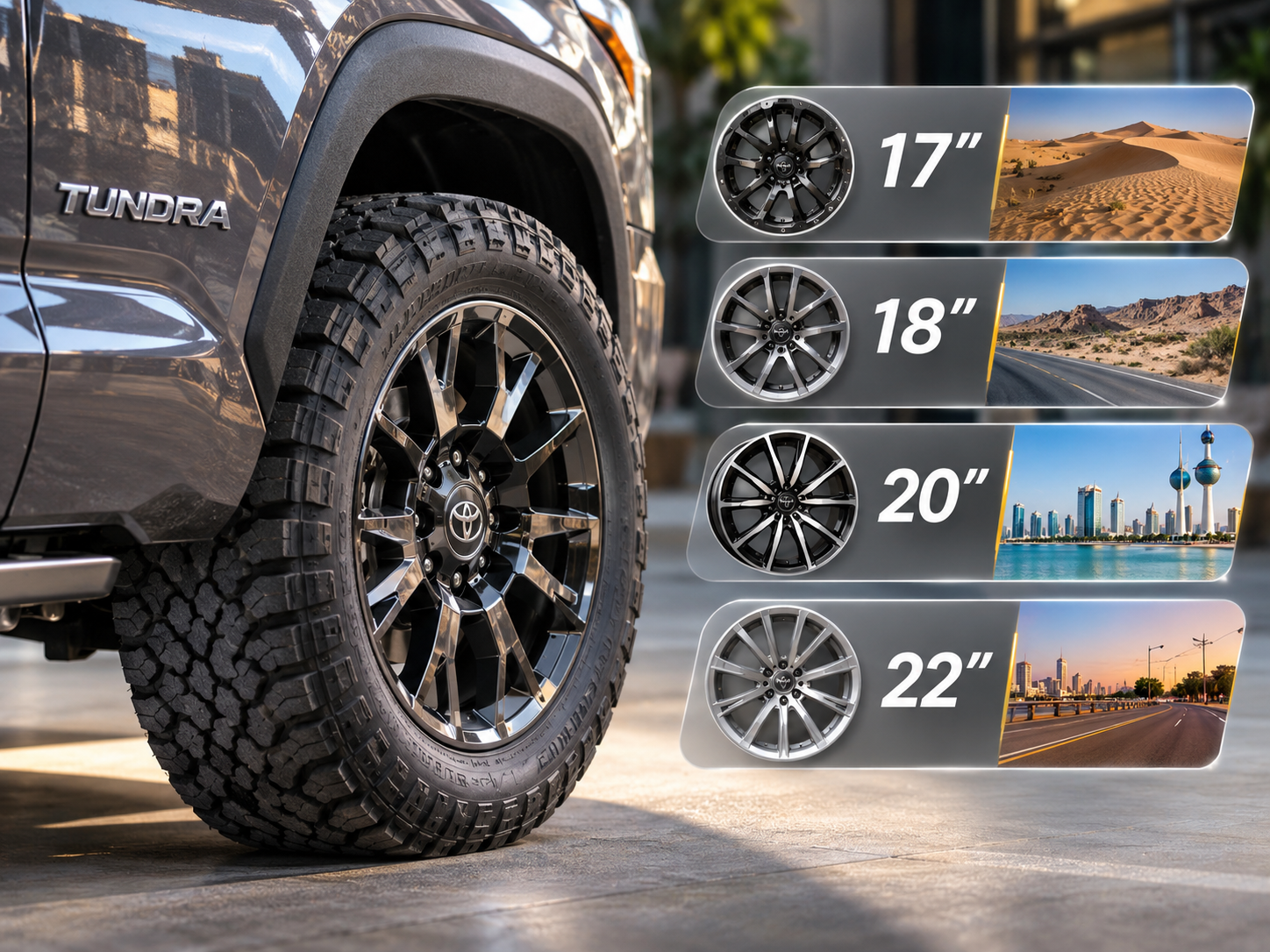
Common aftermarket wheel diameters worth considering include:
| Wheel Diameter | Best Use |
|---|---|
| 17-inch | Off-road-focused builds and selected all-terrain setups |
| 18-inch | Balanced daily driving and off-road applications |
| 20-inch | Street-focused styling and larger wheel appearance |
| 22-inch | Custom street builds, subject to careful fitment checks |
These are aftermarket size options, not guaranteed factory-compatible fitments for every Tundra.
For Kuwait drivers, 17- and 18-inch setups can be attractive when maintaining a practical tire sidewall is important. A larger sidewall can provide more cushioning on rough surfaces, depending on tire construction and pressure.
Before purchasing, confirm the approved tire sizes, brake clearance, and overall diameter for your exact truck.
2. Understand Wheel Offset Before Buying
Wheel offset determines how far the wheel sits inward or outward relative to its mounting surface.
The three main configurations are:
- Positive offset: The mounting surface is closer to the outer face of the wheel, positioning it farther inward.
- Zero offset: The mounting surface is aligned with the wheel’s centerline.
- Negative offset: The mounting surface is closer to the inner face, positioning the wheel farther outward.
A more aggressive negative offset can give a Toyota Tundra a wider stance, but it may also increase tire contact with fenders, suspension components, and mudguards.
For everyday driving in Kuwait, prioritize a setup that maintains proper clearance and avoids unnecessary changes to steering geometry.
Do not select offset based only on appearance. Check the exact wheel width, tire dimensions, suspension setup, and vehicle generation together.
3. Check the Bolt Pattern and Center Bore
One of the most important steps when shopping for Toyota Tundra wheels is confirming the bolt pattern.
Many modern Tundra generations use a 6×139.7 mm bolt pattern, but you should verify the exact specification for your model year and market before ordering.
Also check:
- Center bore compatibility.
- Correct lug nut seat and thread specifications.
- Wheel mounting hardware.
- Brake caliper clearance.
- Hub-centric fitment requirements.
A wheel with the wrong bolt pattern or mounting hardware should never be forced onto the vehicle.
4. Choose Wheels with the Right Load Rating
The Toyota Tundra is a full-size pickup, so wheel load capacity deserves special attention.
A wheel may look strong and still be unsuitable for a heavy truck.
Before buying, consider:
- The wheel manufacturer’s rated load capacity.
- Your truck’s gross vehicle weight rating (GVWR).
- Axle weight ratings.
- The vehicle’s intended passenger and cargo load.
- Tire load index and compatibility.
For desert trips, towing, and heavy-duty use, never assume that an off-road appearance means a wheel is suitable for the application.
Choose properly rated wheels from manufacturers that provide clear technical specifications.
5. Which Wheel Style Is Best for Kuwait Driving?
Your ideal Toyota Tundra wheels depend on how you use your truck.
| Wheel Style | Recommended Use | Main Advantage |
|---|---|---|
| Lightweight alloy | Daily driving | Reduced unsprung mass compared with heavier alternatives |
| Off-road alloy | Desert and trail driving | Rugged designs and application-specific options |
| Forged wheels | Performance-focused builds | Manufacturing precision and potentially high strength-to-weight performance |
| Street-style wheels | Urban driving | Wider design and finish choices |
In Kuwait’s hot climate, wheel selection should be combined with proper tire pressure, regular inspections, and attention to tire condition.
Dust, sand, and rough surfaces also make regular wheel cleaning and inspection worthwhile.
6. Common Toyota Tundra Wheel Fitment Mistakes
Avoid these common mistakes when upgrading your truck:
- Buying wheels without checking the model year and trim.
- Choosing an aggressive offset without checking tire clearance.
- Ignoring wheel load ratings.
- Installing oversized wheels without checking tire diameter.
- Forgetting brake caliper and suspension clearance.
- Assuming every wheel with a matching bolt pattern will fit correctly.
A professional fitment check can prevent expensive mistakes and help maintain safe handling.
7. Where to Find Toyota Tundra Wheels
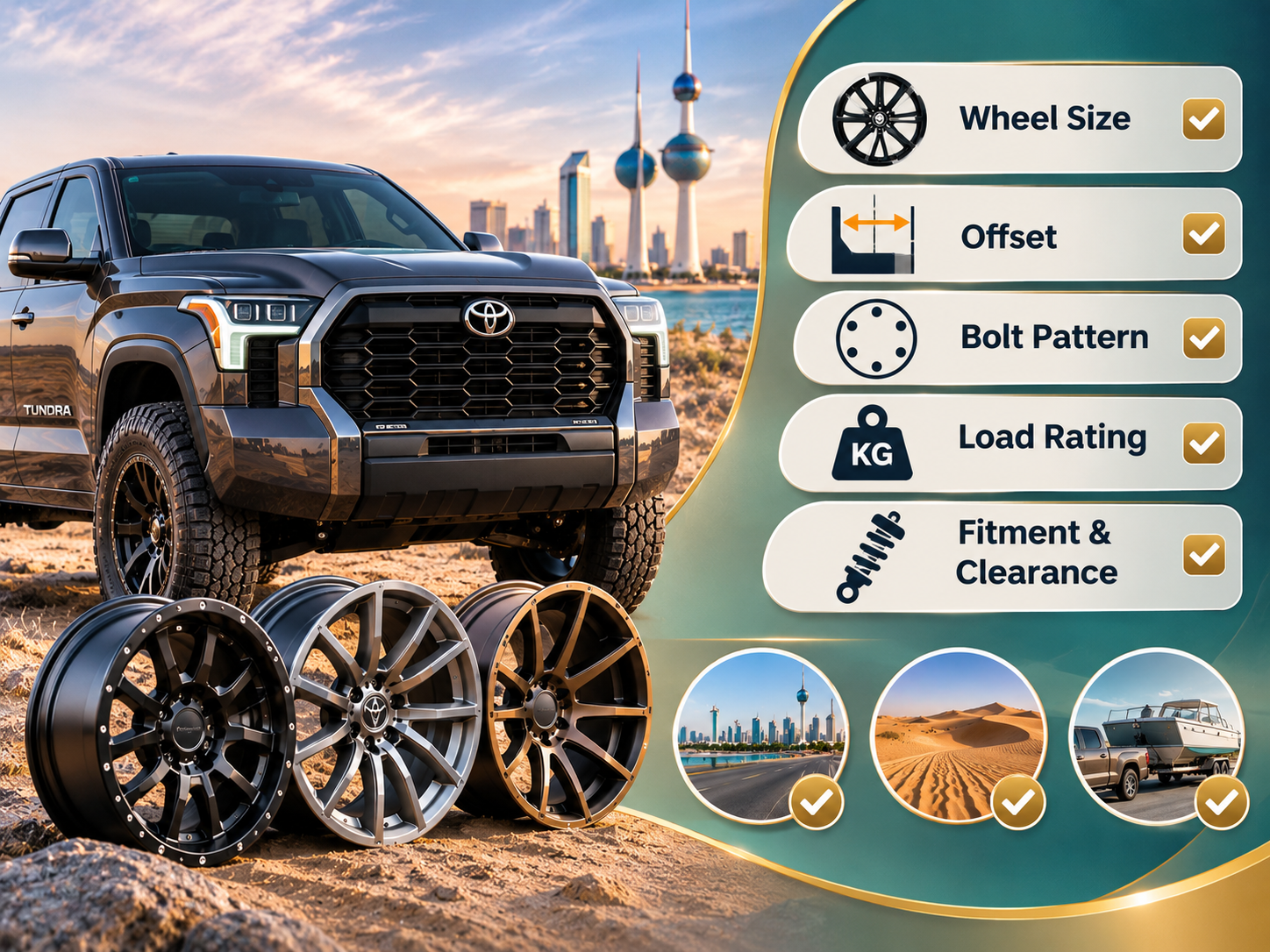
When comparing Toyota Tundra wheels, look beyond the design. Compare wheel diameter, width, offset, bolt pattern, center bore, finish, and load rating.
Explore the available wheel options at FormulaWheel and check the specifications of each model before purchasing.
For additional technical information about wheel and tire upgrades, visit the Tire Rack Upgrade Garage.
Frequently Asked Questions
What is the best wheel size for a Toyota Tundra?
The best size depends on the model year, trim, driving style, and tire choice. Seventeen- and 18-inch options are worth considering for practical off-road builds, while 20-inch wheels are popular for street-focused setups.
What bolt pattern does a Toyota Tundra use?
Many modern Toyota Tundra models use a 6×139.7 mm bolt pattern. Always confirm the specification for your exact model year before ordering.
Are aftermarket wheels safe for a Toyota Tundra?
Yes, provided they are properly engineered, correctly rated for the vehicle’s load, and compatible with its mounting and clearance requirements.
Are larger wheels better for desert driving?
Not necessarily. Larger wheels often leave less room for tire sidewall, depending on the overall tire diameter. A suitable wheel and tire combination is more important than wheel diameter alone.
Can negative offset wheels fit a Toyota Tundra?
They can fit some configurations, but the correct offset depends on wheel width, tire size, suspension modifications, and available clearance. Aggressive offsets can increase rubbing and alter steering behavior.
Final Thoughts
The best Toyota Tundra wheels combine correct fitment, suitable load capacity, and a design that matches your driving needs. For Kuwait and GCC conditions, durability and compatibility should come before appearance.
Before upgrading, verify every important specification for your exact Tundra generation and trim. The right wheel setup can deliver a more practical, attractive, and dependable truck.