
Choosing between 35×12.5R17 and 315/70R17 is a common question for truck and 4×4 owners planning an upgrade. Both sizes are designed for 17-inch wheels and are close in overall dimensions, but they are not exactly the same.
The 35×12.5R17 is nominally taller, while the 315/70R17 has a metric size designation and a slightly narrower nominal width. The right choice depends on your vehicle, wheel specifications, tire model, and driving conditions.
35×12.5R17 vs 315/70R17: Size Comparison
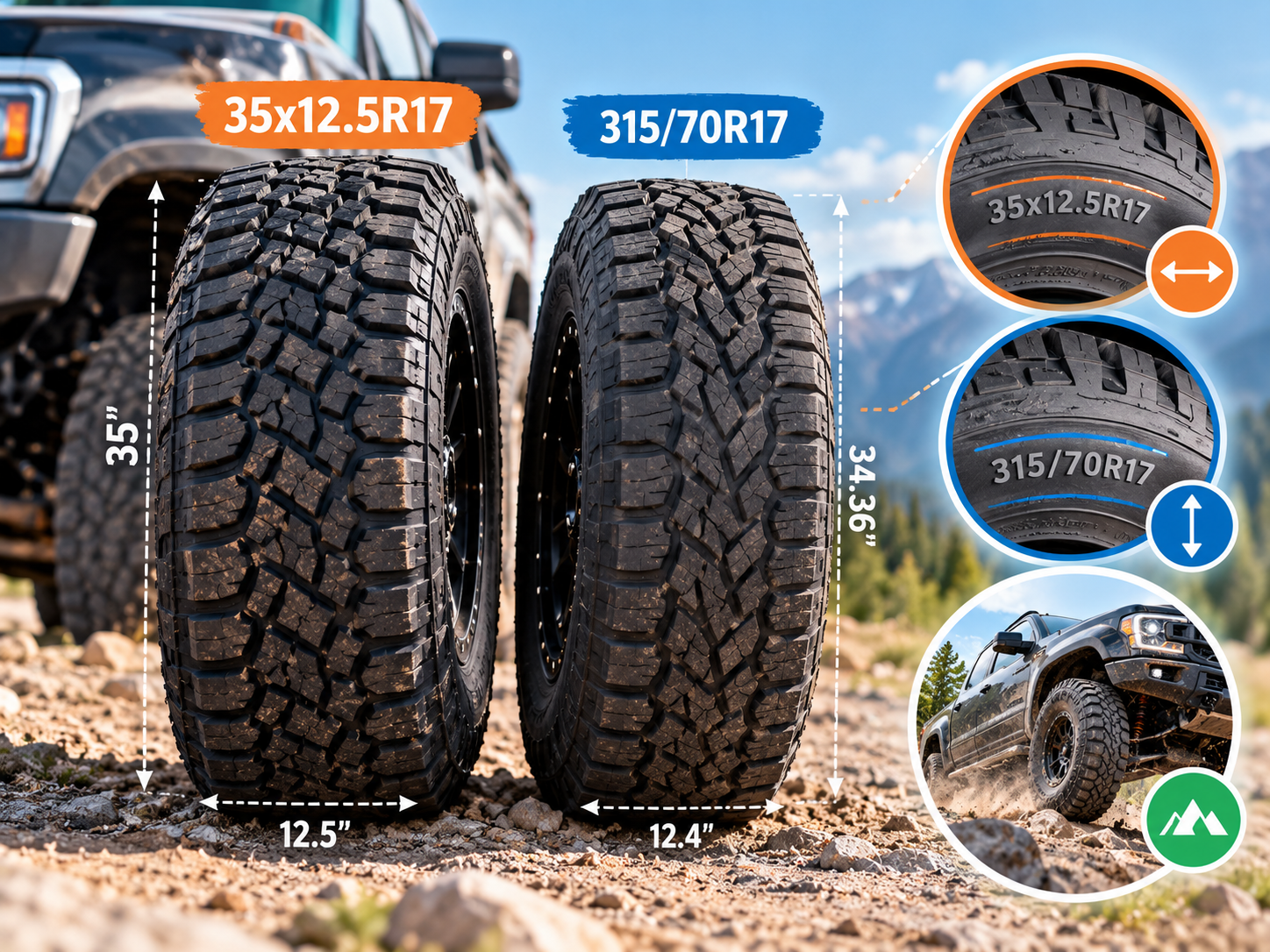
Here is how the two sizes compare using their nominal dimensions.
| Specification | 35×12.5R17 | 315/70R17 |
|---|---|---|
| Nominal width | 12.5 inches (317.5 mm) | 315 mm (12.4 inches) |
| Sidewall height | 9 inches (228.6 mm) | 220.5 mm (8.68 inches) |
| Overall diameter | 35 inches | 34.36 inches |
| Wheel diameter | 17 inches | 17 inches |
| Approx. circumference | 109.96 inches | 107.95 inches |
| Difference in diameter | +0.64 inches | — |
These figures are calculated from nominal tire sizes. Actual mounted dimensions can vary by brand, tire model, tread design, measuring rim, and inflation pressure.
The 35×12.5R17 is approximately 0.64 inches taller and 0.1 inches wider by nominal measurement. That is a relatively small difference, but it can still matter when checking clearance and vehicle calibration.
Which Tire Is Better for Daily Driving?
Both sizes can work for everyday driving when properly matched to the vehicle.
The 315/70R17 may be a practical option if you prefer a metric tire size and find a model that matches your vehicle’s load requirements and approved wheel width.
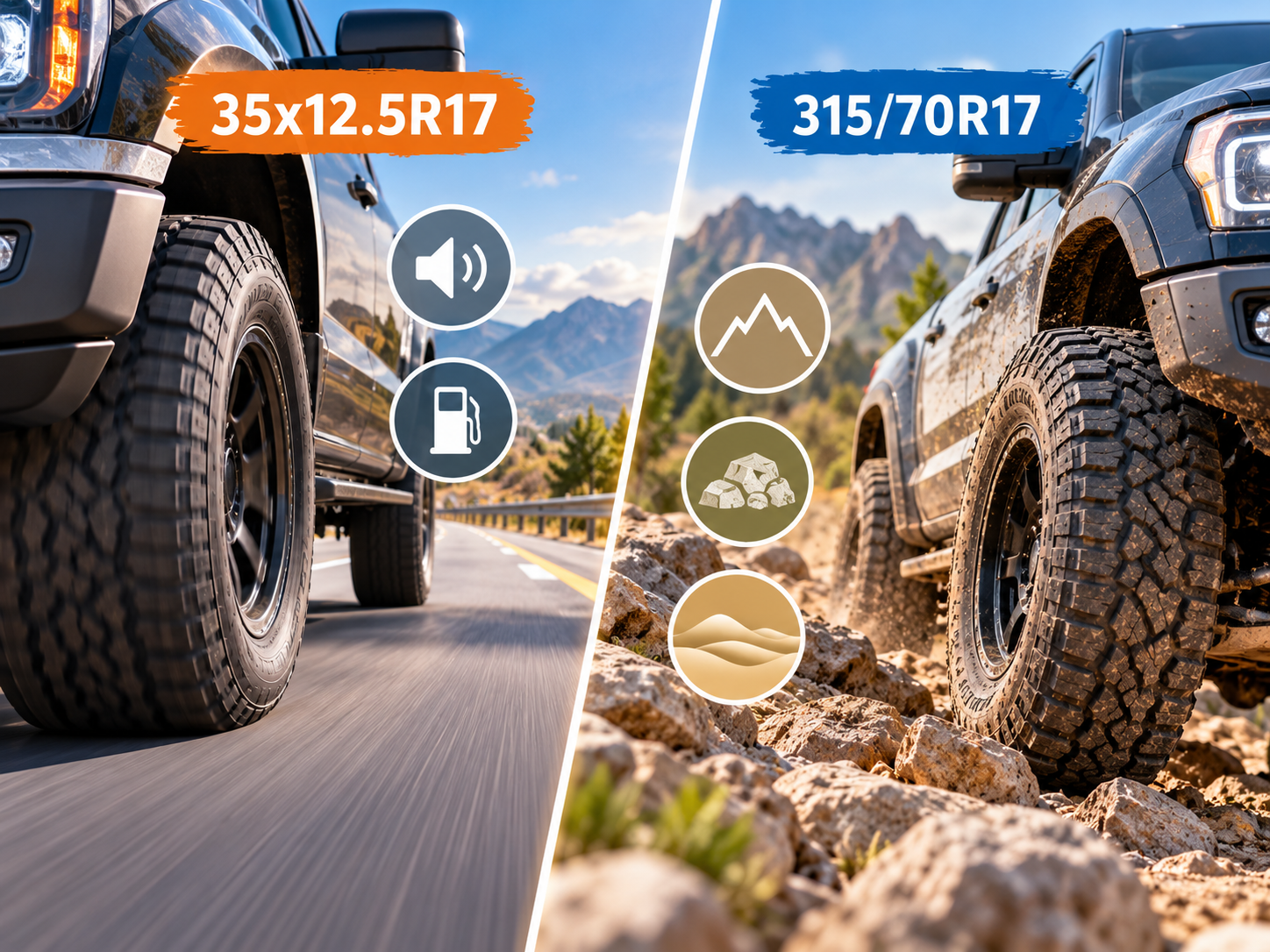
The 35×12.5R17 offers a little more nominal height and width. Depending on the tire model, it may be heavier or have a different tread design, which can affect road noise, steering response, and fuel consumption.
For highway comfort, compare the actual tire models rather than choosing by size alone. Tread pattern, construction, load range, and tire weight all influence the driving experience.
Which Size Is Better for Off-Road Driving?
Both sizes are popular choices for off-road builds.
35×12.5R17: Its slightly larger nominal diameter can provide a small increase in ground clearance. It may appeal to drivers who want a traditional 35-inch tire setup for desert trails and rocky terrain.
315/70R17: Offers very similar dimensions and can provide comparable off-road capability when the tread pattern and construction are suitable. It may be a good alternative when the exact tire model or load rating is better suited to your vehicle.
Neither size is automatically better in sand or on rocks. Tire pressure, tread design, vehicle weight, sidewall construction, and driving technique are important factors.
Will 35×12.5R17 Fit If 315/70R17 Already Fits?
Not automatically. Although the nominal dimensions are close, the 35×12.5R17 is slightly taller and wider.
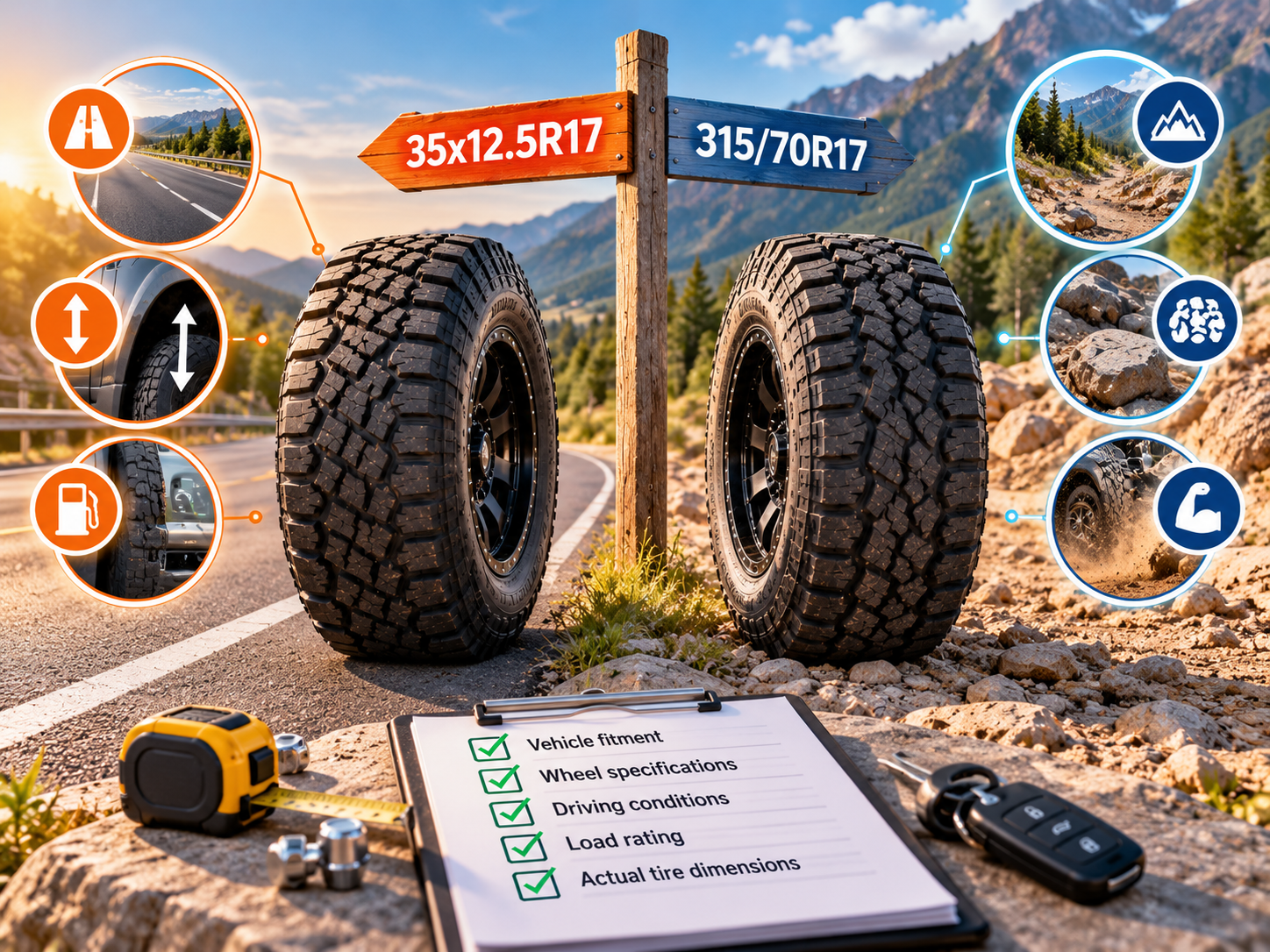
Before changing sizes, check:
- Wheel width: Confirm that your wheel is within the tire manufacturer’s approved rim-width range.
- Offset and backspacing: These affect clearance around suspension components and fenders.
- Suspension clearance: Check at full steering lock and through suspension compression.
- Load rating: Make sure the tire meets your vehicle’s requirements.
- Actual tire dimensions: Compare the manufacturer’s published measurements for the exact models.
A lift kit is not automatically necessary for this small size change, but neither size is guaranteed to fit every vehicle without modifications. Spacers should not be used as a default solution to rubbing.
Speedometer and Ground Clearance Differences
The nominal diameter difference is approximately 0.64 inches, which means the 35×12.5R17 has about 0.32 inches more theoretical axle ground clearance.
If a vehicle is calibrated for a 315/70R17 and changes to a true 35-inch tire, the larger circumference means it travels farther per wheel revolution. The speedometer may under-read slightly unless the vehicle is recalibrated. Actual results depend on the tires’ measured rolling circumference.
Which Size Should You Choose?
Choose 35×12.5R17 if you want a slightly taller, wider nominal tire and your vehicle and wheels can accommodate it.
Choose 315/70R17 if you prefer a metric size with very similar overall dimensions and find a tire model that meets your vehicle’s fitment and load requirements.
Before buying, compare the manufacturer’s actual dimensions, approved rim width, load rating and weight. At FormulaWheel, explore tire options that match your vehicle and intended driving conditions.
For additional technical information, check the Tire Rack Tire Tech resources, which explain tire sizing and fitment considerations.
Frequently Asked Questions
Is 35×12.5R17 the same as 315/70R17?
No. They are close in size, but 35×12.5R17 has a nominal diameter of 35 inches, compared with approximately 34.36 inches for 315/70R17.
Which tire is wider, 35×12.5R17 or 315/70R17?
The 35×12.5R17 is nominally about 2.5 mm wider. Actual mounted width varies by manufacturer and rim.
Does 35×12.5R17 provide more ground clearance?
Nominally, it provides about 0.32 inches more axle ground clearance than 315/70R17. Actual clearance depends on the tire’s measured diameter and inflation pressure.
Can I replace 315/70R17 with 35×12.5R17 without a lift?
Possibly, but it depends on your vehicle, wheel width, offset, and available clearance. Check the exact tire dimensions and test clearance through steering and suspension movement.
Which size is better for off-roading?
Both can perform well. The better choice depends more on tread design, tire construction, load rating, pressure, and vehicle compatibility than on the small difference in nominal size.