
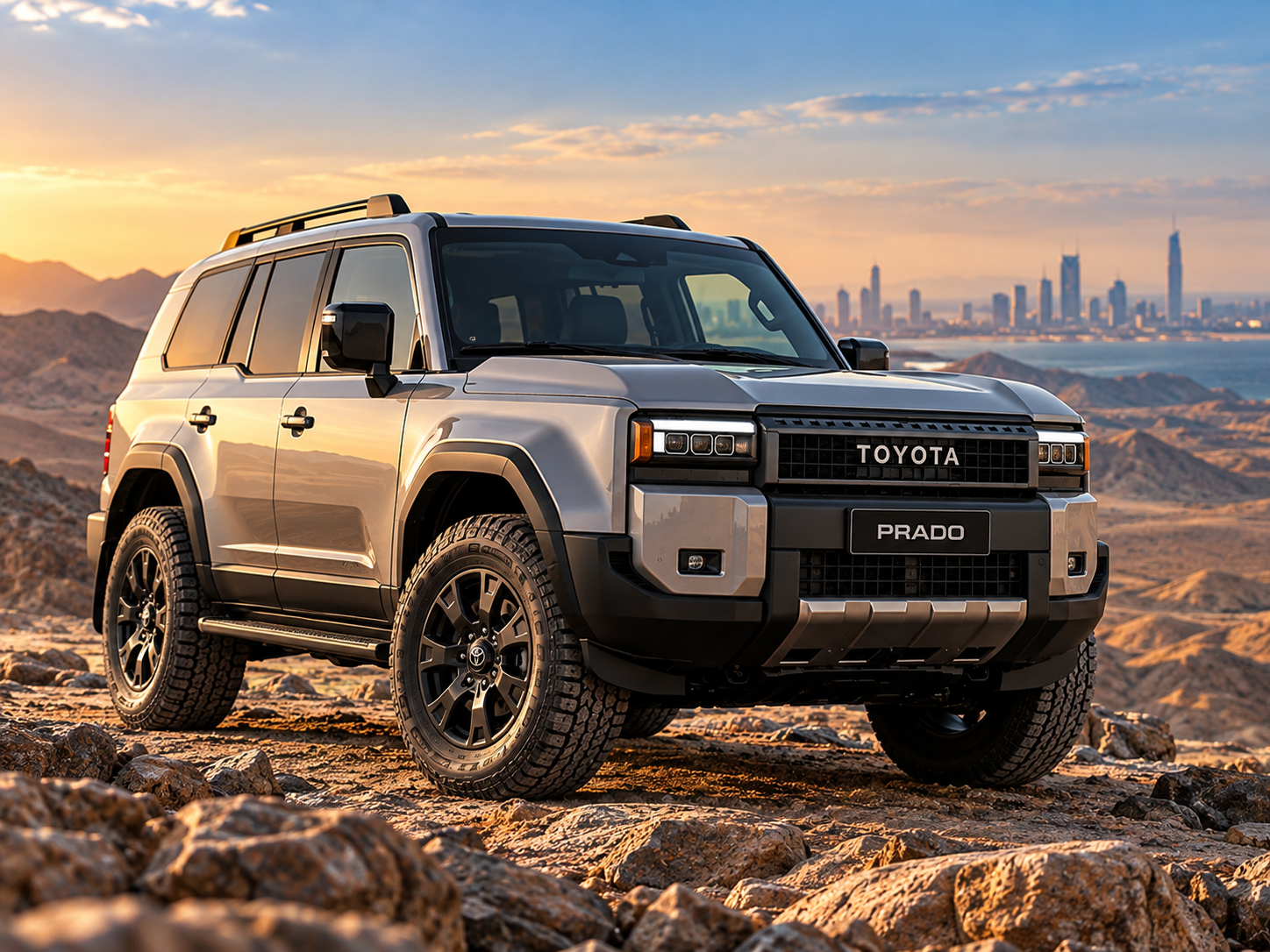
Choosing the right Toyota Prado LC250 wheel and tire size affects comfort, handling, braking, and off-road performance. The LC250 is designed for a combination of everyday driving and outdoor use, but not every wheel or oversized tire will fit correctly without modifications.
For drivers in Kuwait, the right setup depends on whether you use the Prado mainly for city driving, highway trips, desert outings, or more demanding off-road terrain. The best choice is not necessarily the largest tire available. Correct fitment matters more than tire size alone.
What Are the Factory Wheel and Tire Sizes on the Prado LC250?
The Toyota Prado LC250 is available in different grades and markets, and factory wheel and tire specifications can vary by model year and trim. Some configurations use 18-inch wheels, while others may have 20-inch wheels.
Before replacing the original setup, check the tire placard on your vehicle, owner’s manual, or the specifications for your exact model. Don’t assume every LC250 uses the same factory tire size.
Factory fitment is generally the safest starting point because Toyota has engineered the original combination around the vehicle’s braking, suspension, handling, and load requirements.
Are 17-Inch Wheels Compatible With the Prado LC250?
17-inch wheels can be attractive for off-road driving because they allow a taller tire sidewall. That extra sidewall can cushion uneven surfaces when the tire suits the terrain.
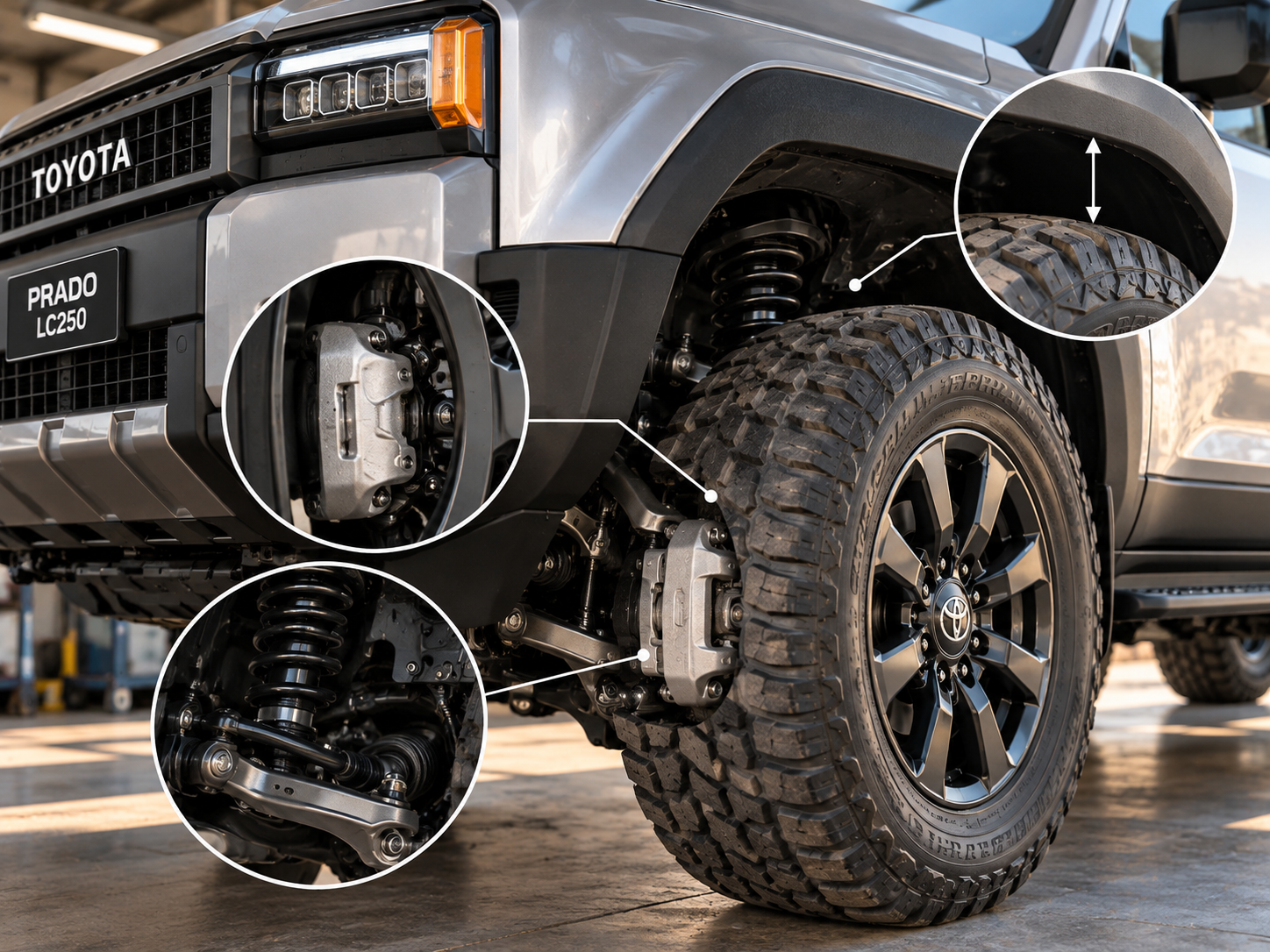
However, 17-inch wheels must not be assumed to fit every LC250. The brake calipers and other components need sufficient clearance, and compatibility depends on the wheel’s internal design, width, offset, bolt pattern, and load rating.
Before choosing 17-inch wheels, confirm fitment for the exact model year and trim. A wheel that fits another Toyota SUV may not necessarily clear the LC250’s brakes.
18-Inch vs. 20-Inch Wheels
For many LC250 owners, the choice between 18- and 20-inch wheels comes down to balancing road use and off-road capability.
18-inch wheels
- Offer more flexibility for taller tire sidewalls, depending on the tire size you choose.
- A practical option for mixed city, highway, and desert use.
- Require checks for tire diameter, wheel width, offset, and suspension clearance.
20-inch wheels
- Often selected for a more road-focused look and driving setup.
- Can work well with compatible road-oriented tires.
- Usually provide less tire sidewall than a comparable setup with a smaller wheel, which can be a disadvantage on sharp rocks and rough terrain.
Neither wheel diameter guarantees better performance on its own. Tire construction, tread pattern, load rating, and the vehicle’s intended use matter just as much.
How Should You Choose a Larger Tire for the LC250?
Before upgrading tire size, compare the proposed tire’s actual dimensions with the original tire. Two tires with similar size labels can differ slightly in measured diameter and width between manufacturers and models.
A larger tire can affect:
- Clearance around the fenders and suspension.
- Steering clearance at full lock.
- Speedometer accuracy and gearing.
- Acceleration and braking response.
- Fuel consumption and ride comfort.
Don’t assume a tire marketed as suitable for a larger off-road build will fit a standard Prado LC250. Treat very large tires, including 35- or 37-inch setups, as specialized modifications rather than standard replacement options. They may require substantial changes and a detailed vehicle assessment.
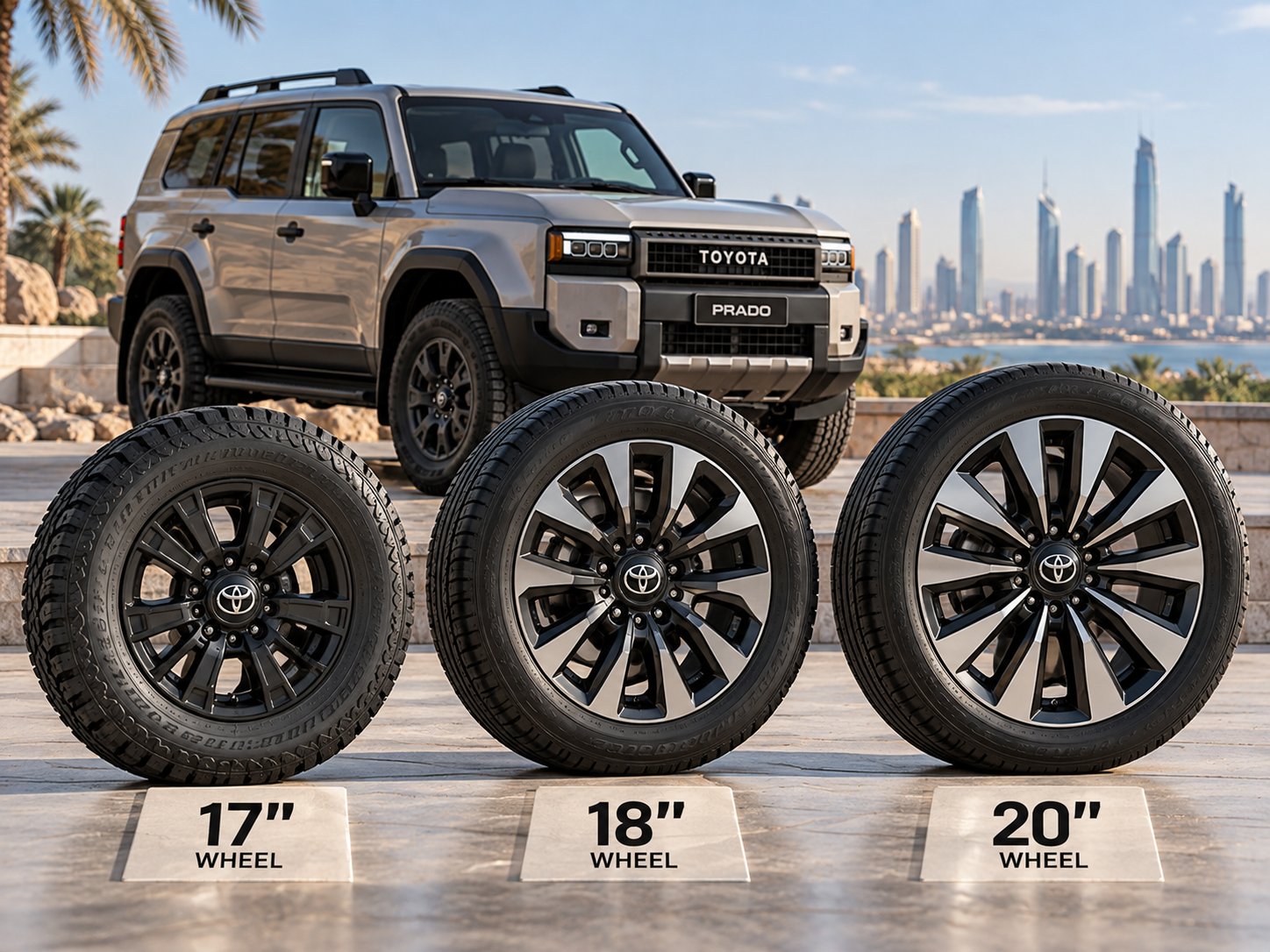
Toyota Prado LC250 Wheel and Tire Fitment Comparison
| Setup | Wheel Size | Tire Choice | Best For | Main Consideration |
|---|---|---|---|---|
| Factory setup | Original 18″ or 20″, depending on trim | Factory-specified size | City and highway | Best starting point for maintaining original vehicle balance |
| Road-focused upgrade | 20″ where approved | Compatible road tire | Daily driving and highway | Prioritize correct load rating and factory-compatible dimensions |
| Mixed-use setup | 18″ where compatible | Verified replacement size | City, highway, and occasional desert trips | Check overall diameter and clearance |
| Off-road-oriented setup | 18″ where compatible | Suitable all-terrain tire | Desert and light trails | Choose the tire for the terrain, not appearance alone |
| Smaller-wheel off-road setup | 17″ only if verified | Compatible tire with suitable sidewall | Selected off-road builds | Brake clearance and wheel specifications must be confirmed |
| Modified build | Verified wheel size | Larger-than-standard tire | Specialized off-road use | Requires a complete fitment and modification assessment |
Important: This is a fitment planning guide, not a guarantee that every listed wheel diameter fits every LC250. Exact tire sizes must be matched to the vehicle’s model year, trim, wheel specifications, brake clearance, and suspension configuration.
Does the Prado LC250 Need a Lift Kit or Wheel Spacers?
Not necessarily. A lift kit and wheel spacers solve different problems, and you shouldn’t install either automatically just because you’re considering a larger tire.
A lift may add clearance in certain builds, but it doesn’t guarantee a tire will clear the fenders, steering components, or suspension through its full range of motion.
Wheel spacers change the wheel’s position relative to the hub. Depending on the setup, they may affect clearance, wheel-bearing loads, and handling. The wheel’s offset and width should be evaluated before spacers are considered.
For a daily-driven Prado, retaining a compatible factory-style setup is often the simplest approach. For an off-road build, check the full wheel, tire, suspension, and steering clearance before buying parts.
Choosing Prado Tires for Kuwait’s Roads and Desert
For city and highway use, prioritize road stability, wet braking, comfort, noise levels, and the correct load and speed ratings.
For regular desert driving, choose an all-terrain tire that balances road manners and traction. Drivers who regularly encounter rocks and rough trails should also consider sidewall construction and damage resistance.
Regardless of the tire type, follow the vehicle and tire manufacturers’ guidance for load limits and pressure. If tire pressure is adjusted for sand driving, reinflate to the appropriate road pressure before returning to normal highway speeds.
Find the Right Prado LC250 Wheels and Tires at FormulaWheel
The right setup begins with your exact vehicle specifications and how you plan to use your Prado. Before ordering, confirm your model year, trim, current tire size, wheel diameter, and whether the suspension has been modified.
Visit FormulaWheel to explore wheel and tire options for your driving needs. Confirming fitment before purchase helps avoid incompatible wheels, clearance problems, and unnecessary modifications.
Final Thoughts
The best Toyota Prado LC250 wheel and tire size depends on the exact vehicle and its intended use. Factory-compatible sizes are the safest starting point, while 18-inch wheels may offer a useful balance for mixed driving when approved for the vehicle. A 20-inch setup is often more road-focused, and 17-inch wheels require specific brake-clearance verification.
Choose a tire for your driving conditions, verify the full fitment, and don’t assume an oversized tire will fit just because it works on another SUV.
Frequently Asked Questions
What is the factory tire size for the Toyota Prado LC250?
It depends on the model year, trim, and market. Check the tire placard or owner’s manual for your exact vehicle rather than relying on a single size for all LC250 models.
Can I install 17-inch wheels on a Prado LC250?
Possibly, but you must confirm compatibility. Brake-caliper clearance, wheel width, offset, bolt pattern, and load rating all need to be checked.
Are 18-inch wheels better than 20-inch wheels for off-road use?
An 18-inch wheel can accommodate a taller tire sidewall in a compatible setup, which may help off-road. However, the tire’s construction and dimensions also matter, and neither option is automatically best for every driver.
Can I install 35-inch or 37-inch tires on a standard LC250?
Do not assume these sizes will fit a standard vehicle. They may require extensive modifications and careful checks of the body, suspension, steering, and drivetrain.
Do I need a lift kit for larger tires?
Not always. It depends on the tire dimensions, wheel offset, suspension setup, and available clearance. A professional fitment assessment is recommended before modifying the vehicle.