
Street vs Desert vs Rock Crawling Tires are designed for very different driving environments. A tire that feels quiet and comfortable on paved roads may not provide the traction or sidewall protection needed for desert trails or rocky terrain. Likewise, an aggressive rock-crawling tire may offer capabilities that a daily city driver rarely needs.
Choosing the right tire starts with understanding where you actually drive. For Kuwait drivers, the difference can be especially important because a vehicle may be used for city roads during the week and desert trips on weekends.
Street tires prioritize road comfort and stability, desert-oriented tires focus on loose surfaces and durability, while rock-crawling tires are designed for extreme traction and protection over rocks and obstacles.
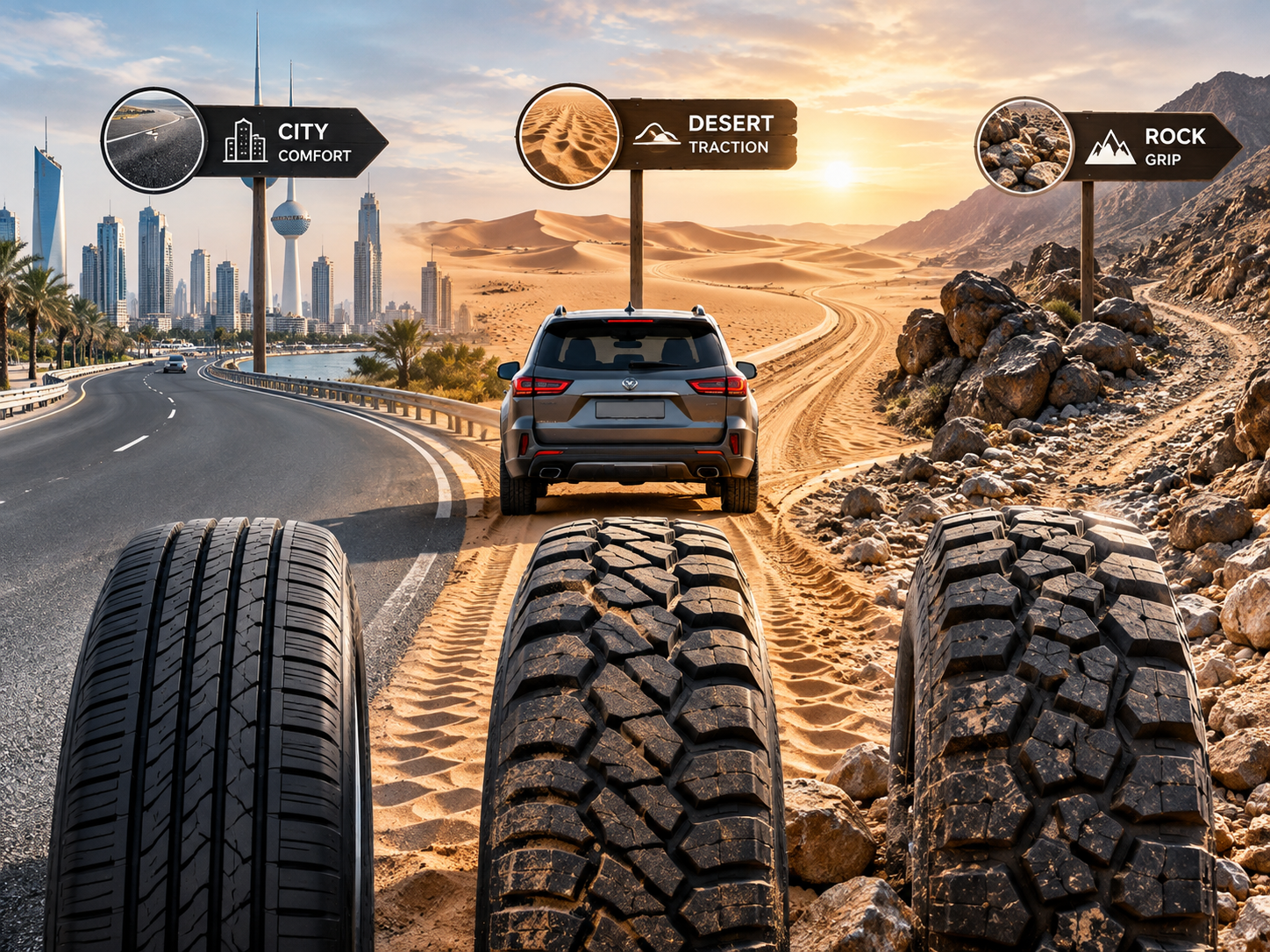
Street Tires: Built for Paved Roads
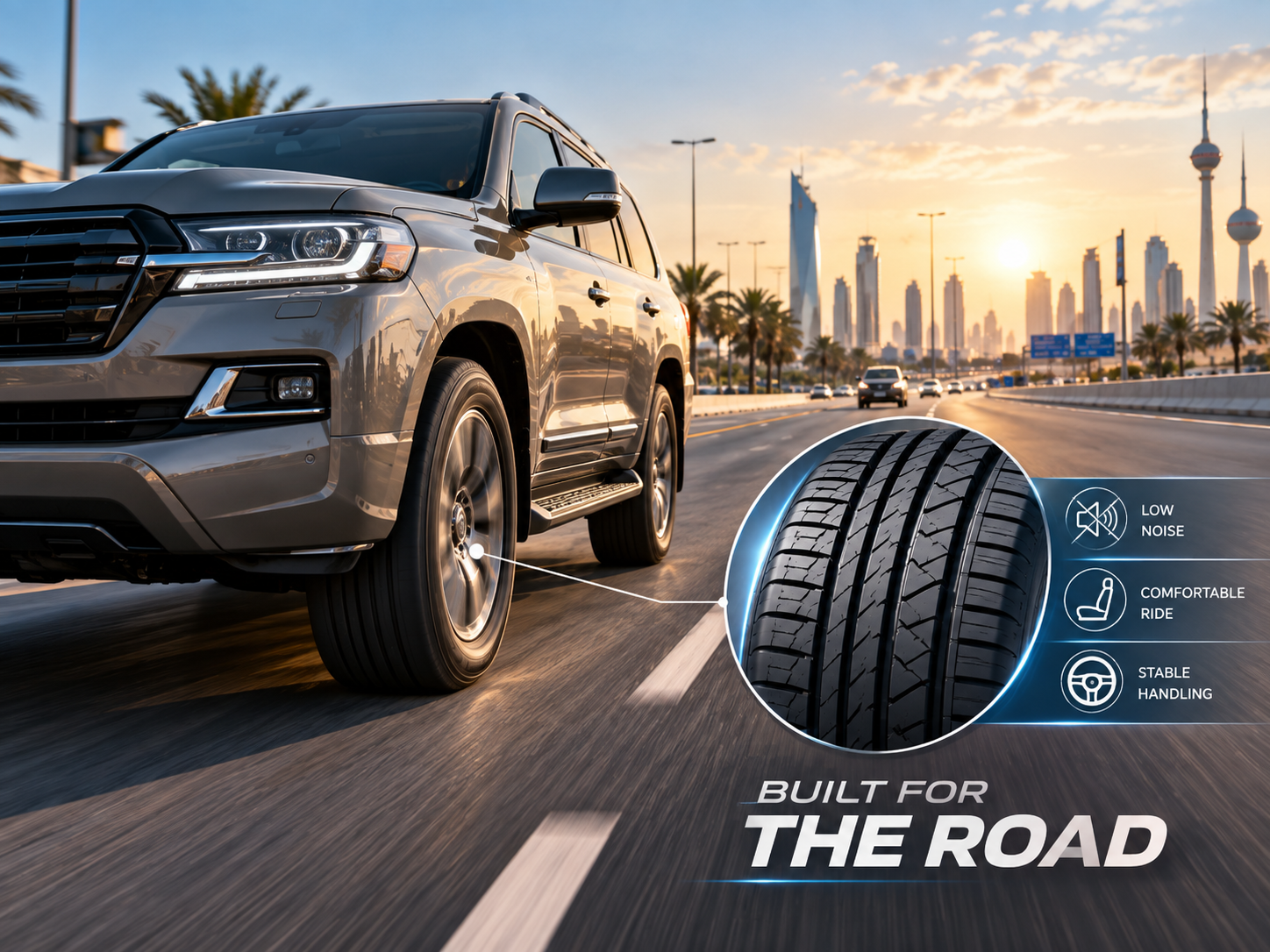
Street and highway-oriented tires are designed primarily for asphalt and other paved surfaces.
Their tread patterns generally have more closely arranged blocks and grooves designed to provide stable road contact, predictable braking, and comfortable handling.
They are often a good choice for drivers who spend most of their time commuting or traveling on highways.
Key advantages include:
- Lower road noise
- Comfortable ride
- Stable highway handling
- Predictable braking
- Good fuel efficiency potential
- Consistent performance on paved roads
If your SUV or 4×4 rarely leaves the pavement, a street-oriented tire can provide a better overall driving experience than an aggressive off-road tire.
There is little benefit in accepting additional noise, rolling resistance, and reduced pavement comfort if you rarely use the vehicle off-road.
Desert Tires: Designed for Loose Terrain
Desert driving creates a completely different set of demands.
Sand and loose surfaces require a tire that can maintain traction without behaving like a typical highway tire. Tire construction, tread design, and appropriate pressure management all become important.
For desert trips, drivers commonly look for tires with:
- Strong construction
- Suitable sidewall protection
- Tread designed for loose terrain
- Good heat tolerance
- Reliable traction away from paved roads
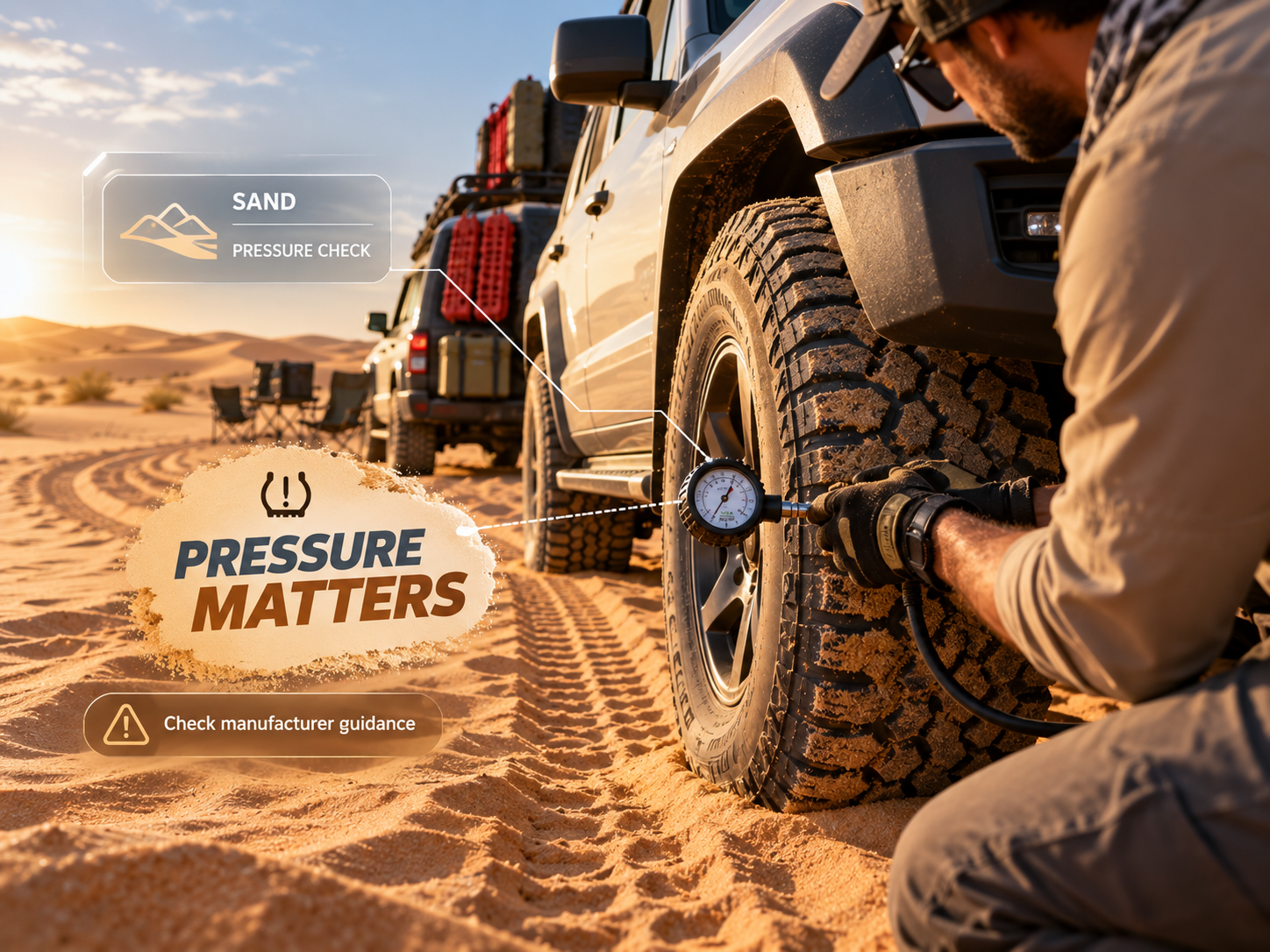
Tire pressure also plays an important role in sand driving. The correct pressure for off-road conditions depends on the vehicle, tire, terrain, load, and manufacturer guidance. Drivers should never assume that one pressure works for every vehicle.
After leaving the sand, tires should be returned to the appropriate road pressure before highway driving.
Rock Crawling Tires: Maximum Grip and Protection
Rock crawling is considerably more demanding than normal desert driving.
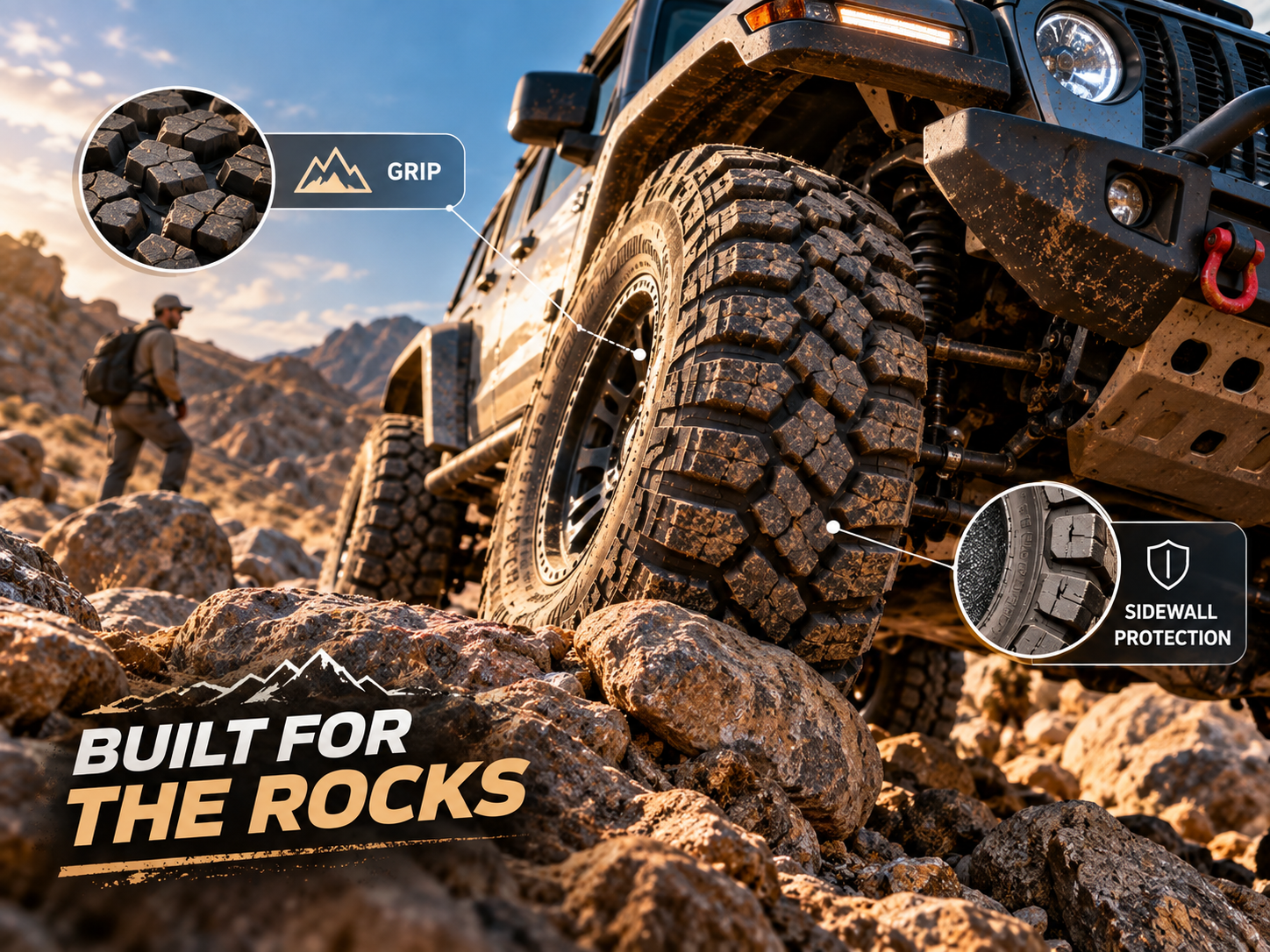
Instead of simply moving across loose sand, the tire must maintain traction while climbing over rocks, uneven surfaces, and sharp obstacles.
Rock-crawling tires typically prioritize:
- Strong sidewalls
- Aggressive tread patterns
- Flexible traction characteristics
- Resistance to cuts and punctures
- Grip on uneven surfaces
These characteristics can be extremely useful for serious off-road driving.
However, they come with compromises on paved roads. Aggressive tread patterns can create more noise and may provide a different steering and ride feel compared with highway-oriented tires.
For someone who spends nearly all their time on asphalt, these compromises may not be worthwhile.
The Biggest Difference: Where the Tire Works Best
The easiest way to understand the three categories is to match them to the surface.
| Tire Type | Best Use | Main Priority |
|---|---|---|
| Street | City and highways | Comfort and road handling |
| Desert | Sand and loose terrain | Traction and durability |
| Rock Crawling | Rocks and technical trails | Grip and sidewall protection |
This does not mean a street tire cannot travel on a dirt road or that a rock-crawling tire cannot drive on a highway. It means each design is optimized for a particular environment.
What About All-Terrain Tires?
For many SUV and 4×4 owners, an all-terrain tire can be the middle ground.
All-terrain tires are designed to balance paved-road performance with off-road capability. They can be useful for drivers who commute during the week but regularly visit desert areas on weekends.
Compared with a dedicated street tire, an all-terrain model may provide stronger off-road traction. Compared with a specialized rock-crawling tire, it may offer better road comfort and everyday usability.
The compromise is that it may not be the absolute best option for either extreme.
That can still make it a practical choice for drivers who need one set of tires for several environments.
Which Tire Is Better for Kuwait?
There is no single tire type that is best for every driver in Kuwait.
If your vehicle is mainly used for commuting, shopping, and highway travel, street or highway tires may be the logical choice.
If you frequently drive through desert areas, an all-terrain or suitable desert-oriented tire may offer a better balance.
If your vehicle is specifically built for technical off-road routes and rock crawling, a specialized off-road tire may be more appropriate.
The important point is to choose based on actual usage rather than appearance. An aggressive tire may look impressive, but its advantages only matter if your driving conditions require them.
Don’t Ignore Tire Size and Load Rating
Tread pattern is only one part of tire selection.
Before purchasing, confirm:
- Correct tire size
- Load index
- Speed rating
- Vehicle compatibility
- Tire construction
- Intended application
This is particularly important for SUVs and 4×4 vehicles that may carry passengers, equipment, or additional loads during off-road trips.
A tire that looks suitable but does not meet the vehicle’s required specifications is not the right choice.
Choose the Right Tire at FormulaWheel
If you’re deciding between street, desert, and rock-crawling tires, start with your actual driving routine.
At FormulaWheel, you can explore tire options for different vehicles and driving conditions. Instead of choosing a tire simply because it has an aggressive tread or a popular name, compare the specifications and intended use to find a model that fits your vehicle.
Whether your priority is quiet highway driving, desert traction, or serious off-road performance, selecting the right category can make a significant difference.
Visit FormulaWheel to explore available tire options and find a suitable replacement for your vehicle.
Final Thoughts
Street, desert, and rock-crawling tires are designed around different priorities.
Street tires focus on comfort, stability, and paved-road performance. Desert tires prioritize traction and durability on loose terrain. Rock-crawling tires put maximum emphasis on grip and protection in technical terrain.
For drivers who regularly switch between city roads and the desert, an all-terrain tire may provide a practical compromise.
The best choice is ultimately the tire that matches your vehicle, terrain, driving frequency, and performance requirements—not simply the tire with the most aggressive tread.
FAQ
Can street tires be used in the desert?
They can handle some light dirt or firm surfaces, but they may not provide the traction and durability required for regular sand driving.
Are desert tires good for highway driving?
Some are suitable for highway use, but aggressive off-road designs can produce more noise and a different driving feel than highway-oriented tires.
What are rock-crawling tires designed for?
They are designed for technical off-road terrain where strong traction, flexible grip, and sidewall protection are important.
Are all-terrain tires good for both street and desert driving?
They are designed to provide a compromise between paved-road performance and off-road capability, making them a practical option for mixed use.
Which tire should I choose for a 4×4 in Kuwait?
Base the decision on how you actually use the vehicle. Mostly highway driving favors street-oriented tires, regular desert use may favor all-terrain or desert-focused tires, while technical off-road driving may require specialized rock-crawling tires.
Does tire pressure matter in desert driving?
Yes. Tire pressure affects traction, tire behavior, and heat generation. Use vehicle and tire manufacturer guidance and adjust appropriately for the driving conditions.